Crazier Train
HIGH Classic compulsive Monster Train cardplay, crunchier than ever.
LOW Higher learning curve than the first. Some unclear interactions.
WTF Which one of you sickos put all these waifus in the train???
Though lots of strong roguelite deckbuilders have followed in the wake of Slay the Spire, Monster Train is the only one to have staked out a space equal to Mega Crit’s genre-establishing release. It managed to do this by being, emphatically, its own thing, accomplished by taking a mere handful of mechanical waypoints from Spire and then building out an entirely original vision on top of that framework. This is, in some narrower, less foundational way, the process by which we saw FPS titles like Duke Nukem 3D and Blood carve out separate, full identities away from the “DOOM clone” designation.
Monster Train was fresh, it felt new within a new genre. People cottoned to it, unsurprisingly, so it’s no surprise that it got a sequel. But, it is unusual because Monster Train 2 is the first sequel to a major roguelite deckbuilder we’ve seen. In fact, the larger roguelite space is light on sequels overall. It’s a genre in which the exemplars generally live forever (or near enough to it in gaming terms) growing not so much older as denser, either through official content infusions or the ministrations of dedicated communities.
In other words, whether or not Shiny Shoe realized it, they were blazing new trails for the roguelite deckbuilder genre and setting precedent for what to expect from the sequel to a foundational text.
As a sequel, Monster Train 2 is classical in its approach, focused on refinement and amplification. Many elements are carried over more or less unchanged, and there was a moment when I nearly became disappointed — almost underwhelmed — with it. But the more I played, the more I could appreciate the judicious improvements, creative expansions, and, most importantly, the enormous generosity of content. When it came fully into focus after a few hours, Monster Train 2 impressed the hell out of me.
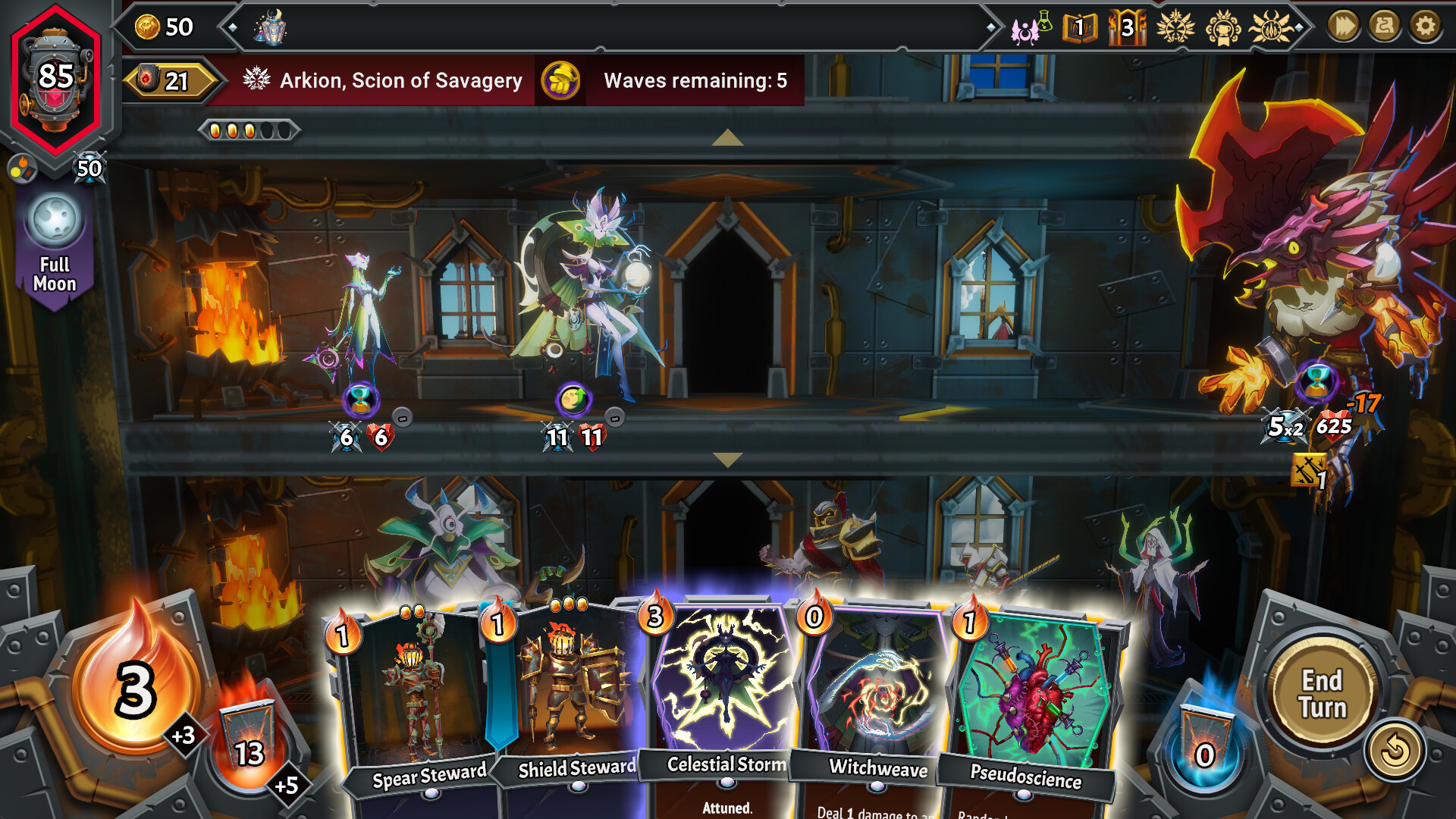
Remember, much is the same. Monster Train 2 takes place on a four-tiered train. The lower three levels are where cards — monsters, spells, and a few new things — can be played, while the uppermost fourth level houses the Pyre Heart, the train’s energy source. Each round enemies will enter from the lowest level, and any existing enemies in the train move up one level. Any goons that get to the Heart will attack it until they’re killed, but if they reduce the Heart’s HP to zero, it’s game over.
(Please, I beg, do not make me explain the story of Monster Train 1 or 2. I know there are people out there who care about this series’ goofball lore about a war between the spangled, melodramatic cartoon characters of this particular heaven and hell, but I’m definitely not one of them. There’s a train, there are monsters in it, and really, isn’t that enough?)
It certainly starts in a familiar way but the most important refinement here is the fancy new Deployment Phase.
Before the first turn, players are given all unit cards marked with a blue banner, and can place as many of them as they have energy for. Then the first standard turn occurs. This may seem insignificant to someone who hasn’t played Monster Train 1, but it’s a seismic shift. It cleans up one of the most ambiguous mechanics in the original — draw priority — making it much more legible, and much more strategic. Arranging the Deployment Phase units is a delicious tactical aperitif before hefty main course of locomotive card battling.
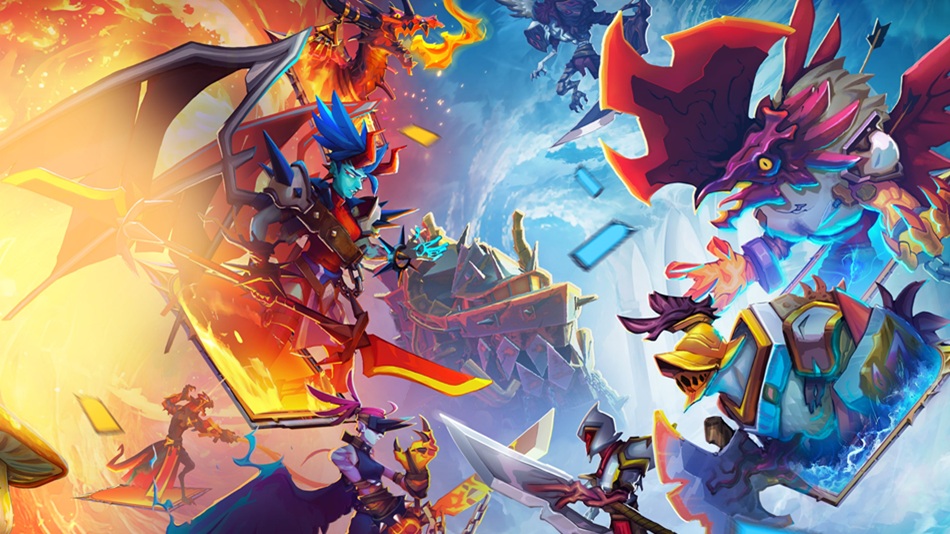
Monster Train 2 also delivers five brand new clans to play with. In Monster Train 1, the clans were unlocked in order of complexity. That’s true here too, but the introductory clans start with more complicated, oblique elements than were on offer with the first title’s Hellhorned and Awoken. All five clans have unique keywords, and two of them have a bespoke, overarching mechanic separate from the words on the cards.
In other words, things start out dense, and get denser as the player goes along. This is not a criticism, but I think Monster Train 2 is targeted at people who have played the first one a decent amount. Despite the bright, googly art style, this is a mechanically crunchy game afroth with calculations and considerations that are easier to grok with some Monster Train-ing under the belt already.
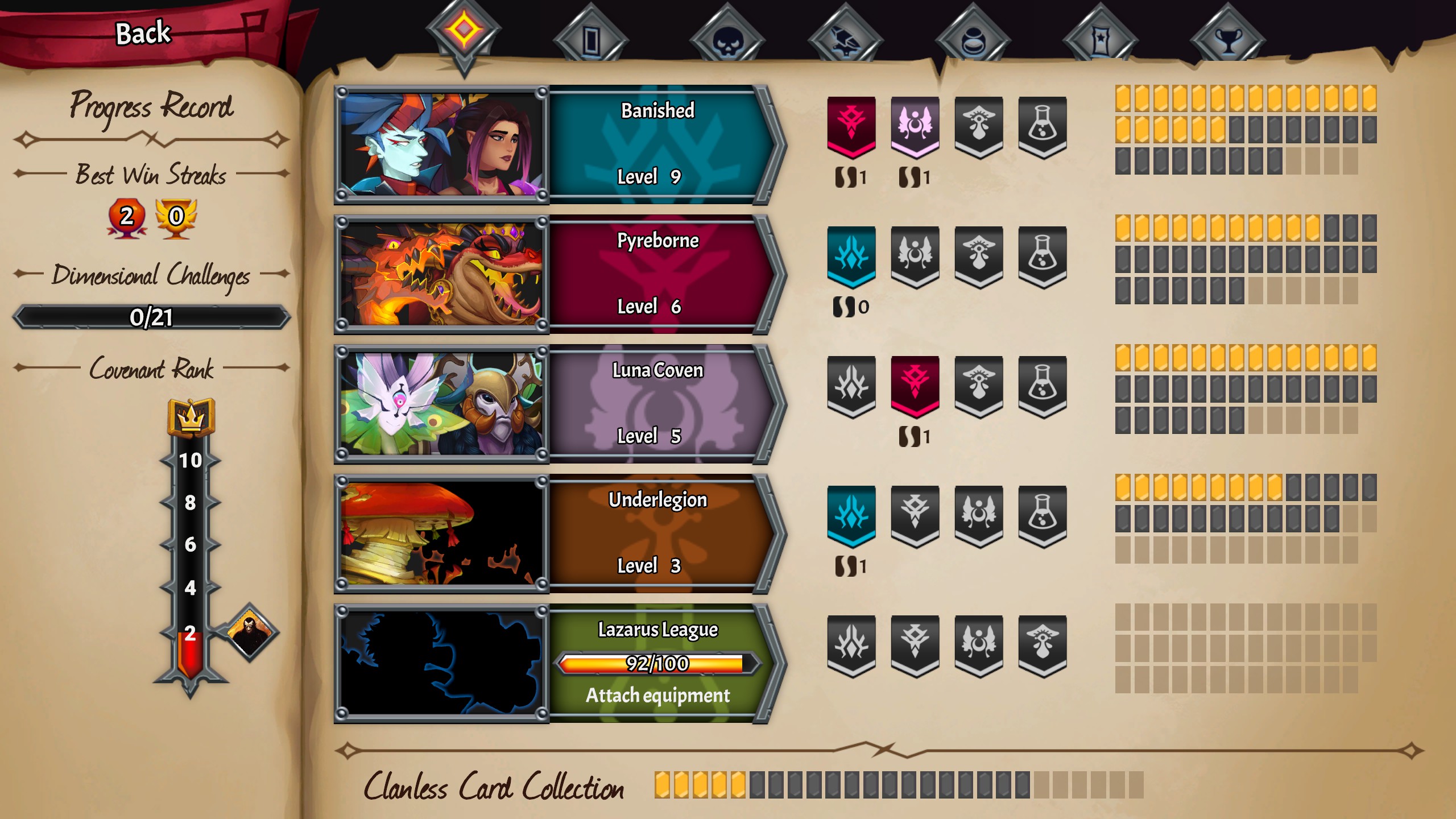
The upside to this is that the weirder, twistier, more offbeat strategies of these clans are wonderful puzzles for all the Train mavens out there. I’m partial to the Underlegion, an army of myconids with a unique “Troop” keyword that allows for massive stacks of little fungoid footmen to overwhelm opponents. The Pyreborn, a race of classic red dragons, lean into one of my favorite traditional draconic characteristics — greed for gold. Their spells and units play with the economy in unique ways.
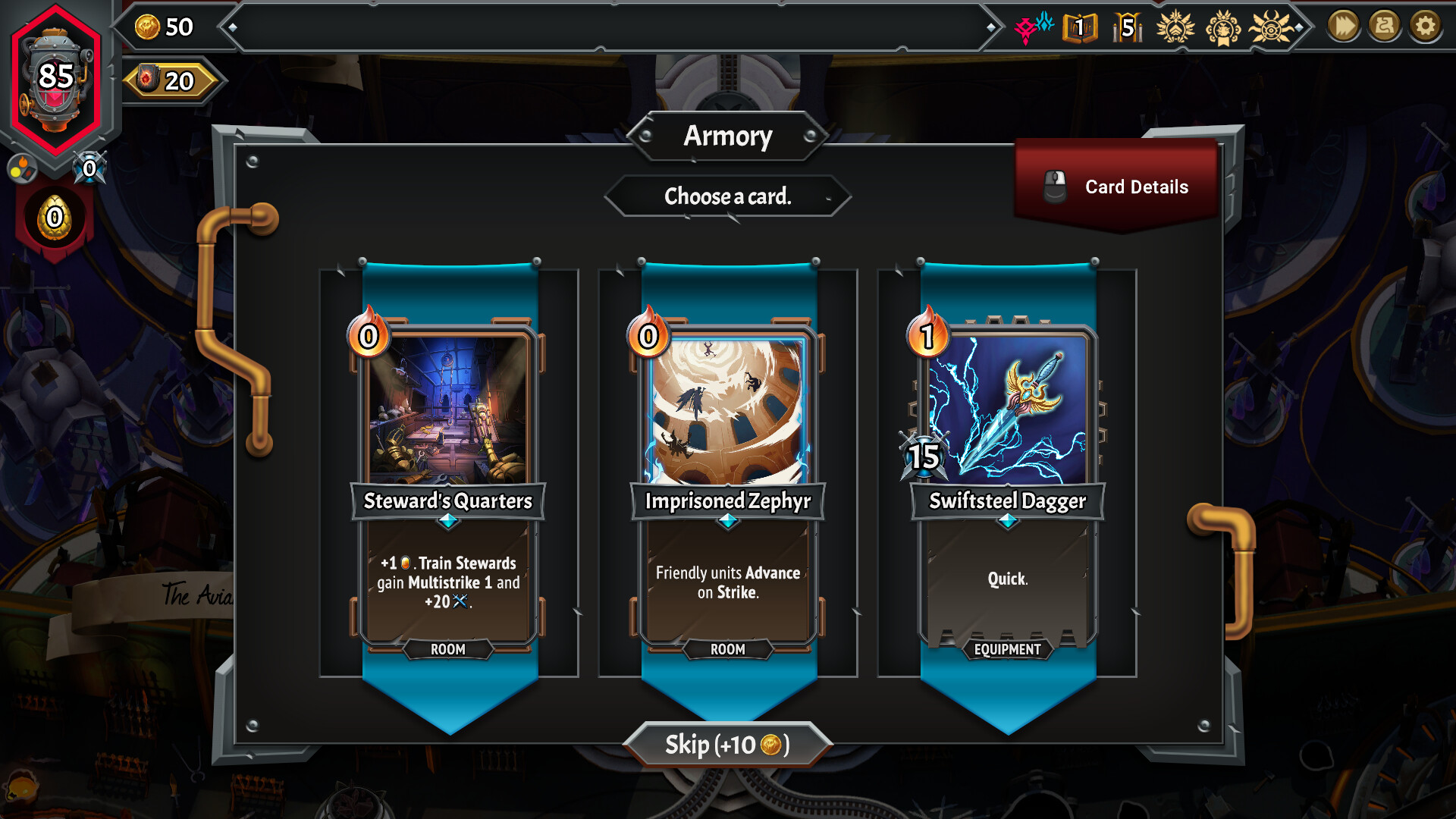
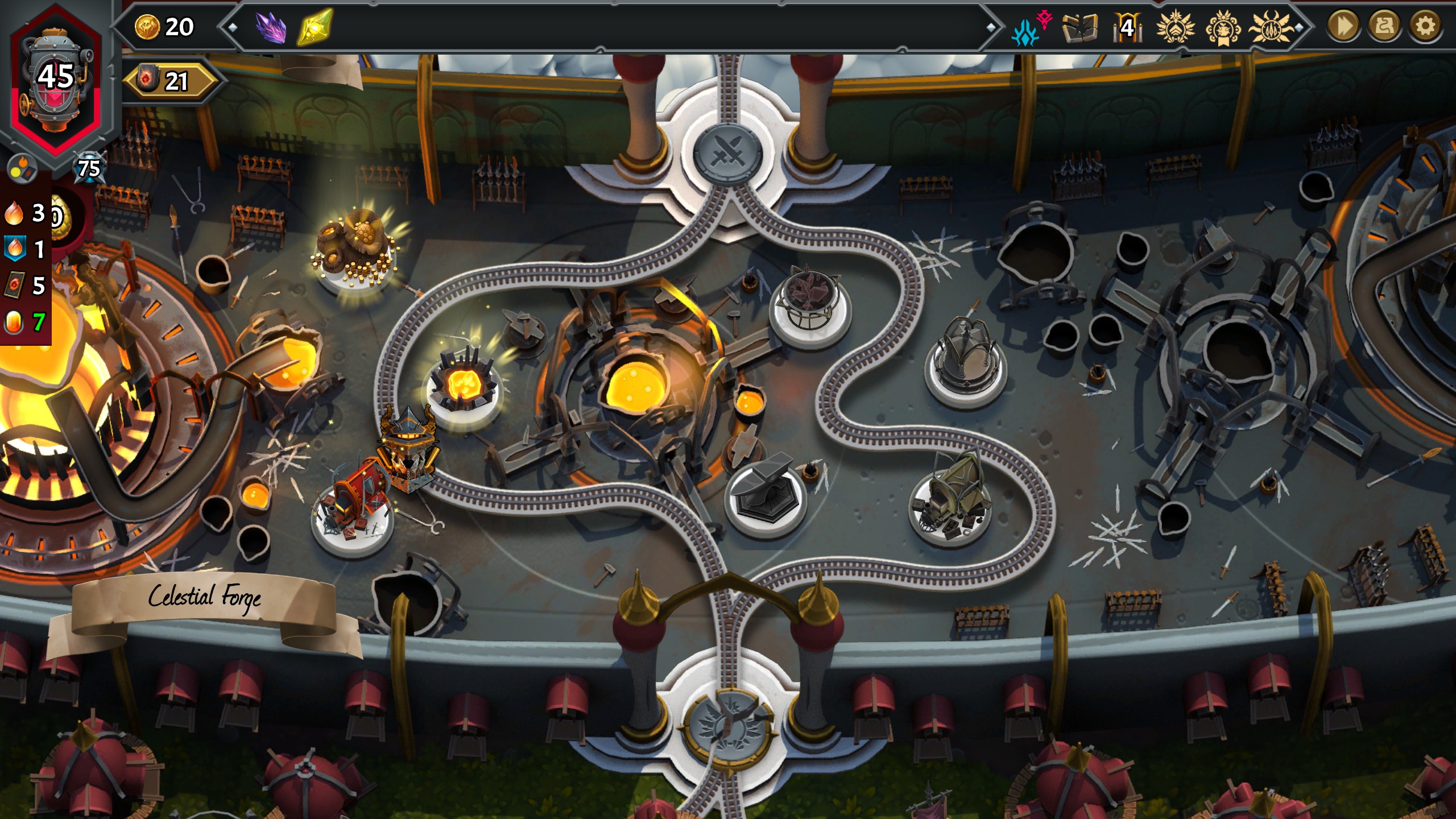
Other existing elements have been tastefully embroidered. There isn’t just a single, standard Pyre Heart, for example — more than ten different Hearts can be unlocked through play, each with different stats and traits. There are equipment and room cards now too. Equipment works just like you’d think, and the most complicated new clan, the Lazarus League, plays with these cards in some wild ways. Rooms provide a powerful effect on one entire train floor, and there are also some new units with baked-in abilities, activated manually, with attendant cooldowns between uses.
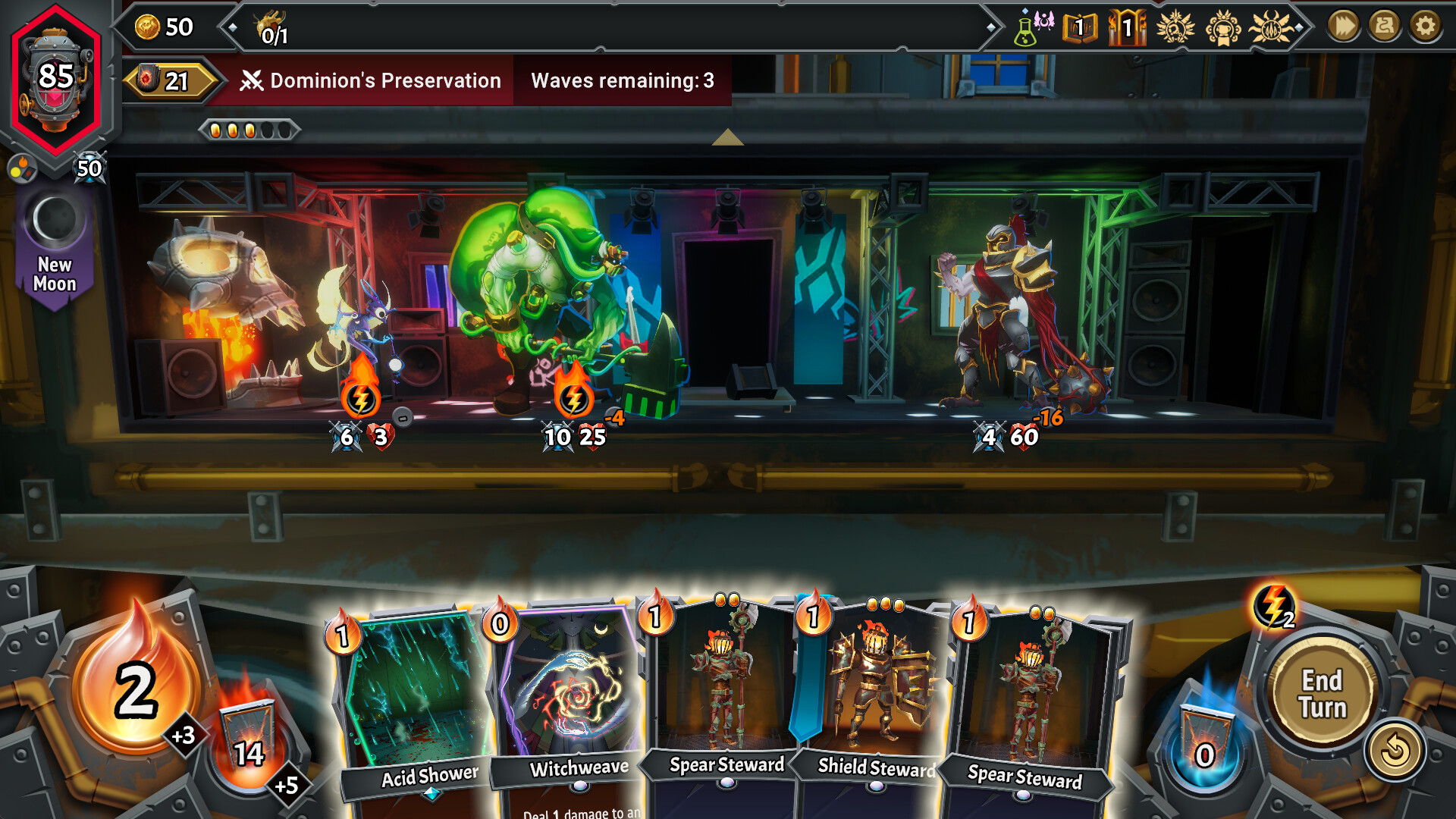
All of this adds up to a sequel built directly and unabashedly on top of the original, but in such a way as to feel fresh, compelling, and surprising all over again. Every hour I spent with it, some new idea, mechanic, mode or flourish unfurled itself. I don’t have space to go into the alternate game modes, covenant ranks, or other surprises (and wouldn’t if I could) but take my word for it — this title is absolutely stuffed with things to play with.
Monster Train 2 is more Monster Train — but it’s more in the most considered, intelligent possible way. Highly recommended.
Rating: 8.5 out of 10
Disclosures: This game is developed by Shiny Shoe and published by Big Fan Games. It is available on PC, PS5, Switch and XBX/S. This copy of the game was obtained via publisher. Approximately 27 hours of play were devoted to the game, and it was completed (at the basic level, with many covenant levels and unlocks left to get). There are no multiplayer modes.
Parents: According to the ESRB, this game is rated E 10+ and contains Alcohol References, Fantasy Violence, Mild Blood and Mild Language. The core gameplay features a lot of monsters fighting each other, but it’s mostly bloodless. The monsters themselves are, for the most part, pretty tame in their designs — although a few of the later clans’ creatures can be gory and/or creepy in ways that might be upsetting to younger players. In terms of bad language, sometimes the game says “Hell yeah,” but that seems to be about it.
Colorblind Modes: Colorblind modes are present, including a preset deuteranopia mode as well as the option to customize the colorblind settings.
Deaf & Hard of Hearing Gamers: This game has subtitles for the (very few) voiced sequences. Most of the dialogue in the game is text only. The subtitles cannot be resized, but the UI can be set to a “Large” configuration.
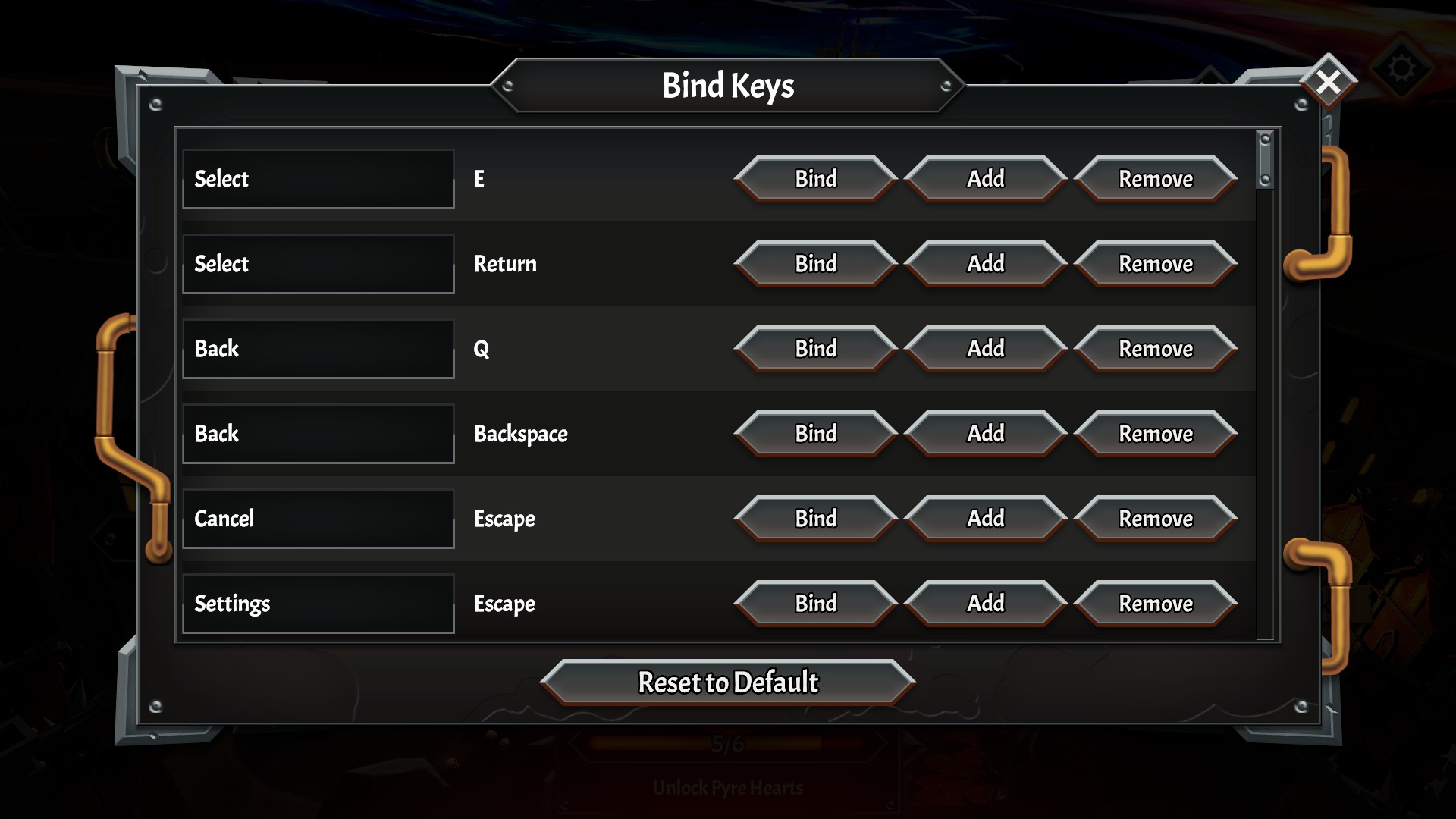
Remappable Controls: The game offers fully remappable controls for Mouse and Keyboard, but not for gamepad. The gamepad controls function much like they do in other deckbuilders — the A button confirms, B button goes back, the X button ends the turn. The left stick moves between cards in the hand and units on the field when necessary. The only unusual element of the gamepad controls relative to other deckbuilders is that the right analog stick allows for moving between the different floors of the train.

- Little Rocket Lab Review - November 2, 2025
- Roadcraft Review - September 17, 2025
- Mashina Review - August 20, 2025