The Open Road
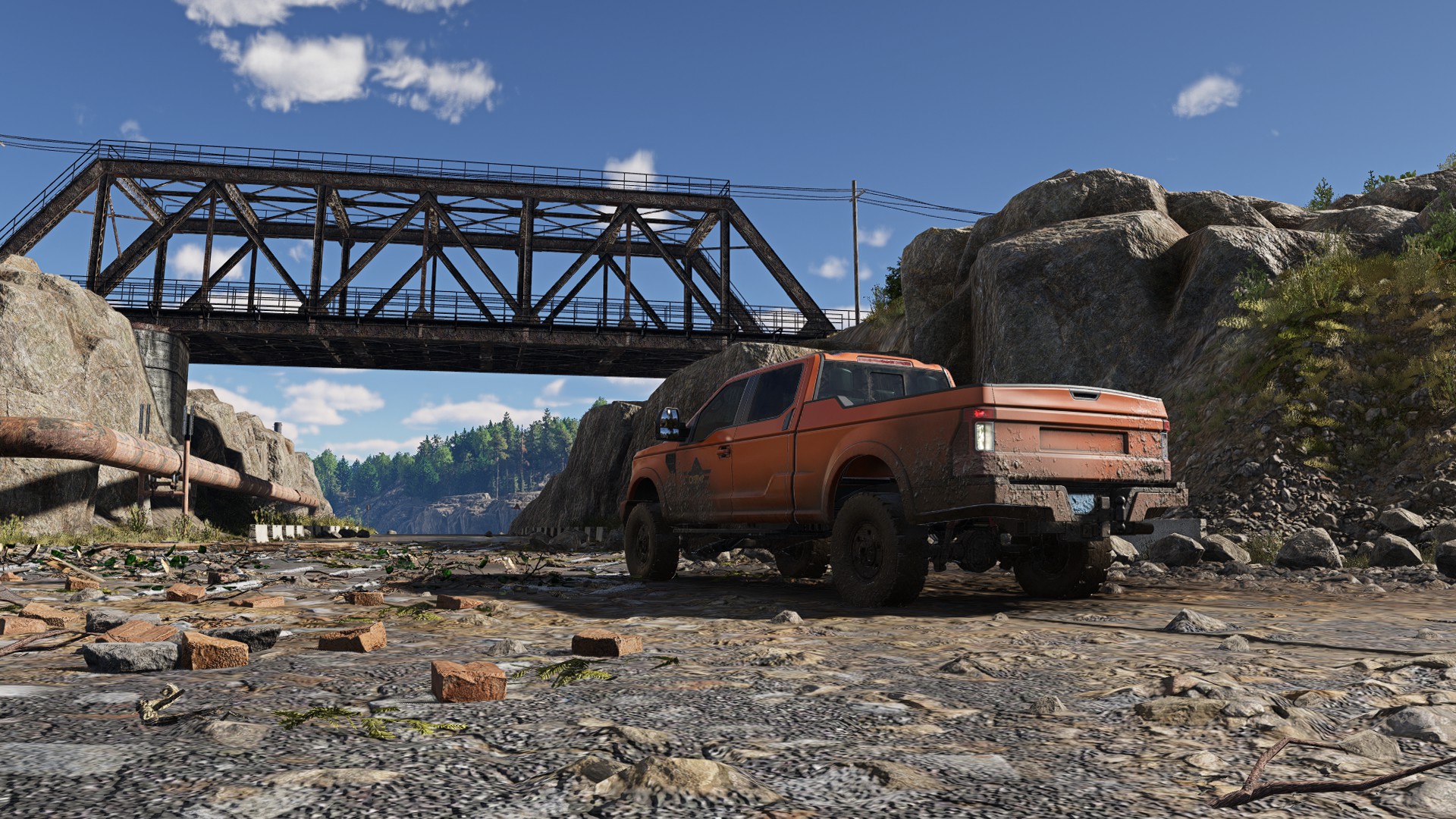
HIGH Superlative physics. Big trucks. Gnarly vistas.
LOW Saber’s UI design continues to be nightmarish.
WTF A restaurant on one of the maps is named “The Smell Out”
In 2021, Saber Interactive made history when they released Snowrunner, the greatest videogame ever made.
Bafflingly, in the years that followed, developers continued to make games despite the fact that the ultimate expression of the art form had been achieved. Saber themselves have engaged in this quixotic act, first in 2024 with the release of Expeditions (a spin-off focused on exploration) and earlier this year, Roadcraft, a construction company simulator that, like Expeditions, has been met with a somewhat mixed reception by the Snowrunner community.
I am not active in this community but, by dint of having dedicated hundreds of hours to Snowrunner, I do consider myself an honorary member, in the same way that people are awarded degrees from universities they never went to for unrelated things they did elsewhere. As such, I came into Roadcraft expecting something half-baked and disappointing — but it is not half-baked, and it is not disappointing. It’s also not Snowrunner 2. What is Roadcraft? A sloppy, weird, frustrating, brilliant, addictive, fresh-feeling title that takes core elements of its illustrious predecessor and builds on them in wild ways.
Like Snowrunner, Roadcraft is a collection of freeform levels, sandbox maps with main and side objectives to complete. As the seemingly sole on-the-ground employee of an emergency response construction company, players are deployed to disaster-stricken regions and tasked with restoring basic infrastructure, thereby laying the groundwork for regular life to begin again. Thus, in comparison to Snowrunner, the gamut of possible tasks has been expanded beyond haulage — there quarries to be drained, town documents to be recovered, map-spanning pipelines to fix, and, of course, roads to be crafted.
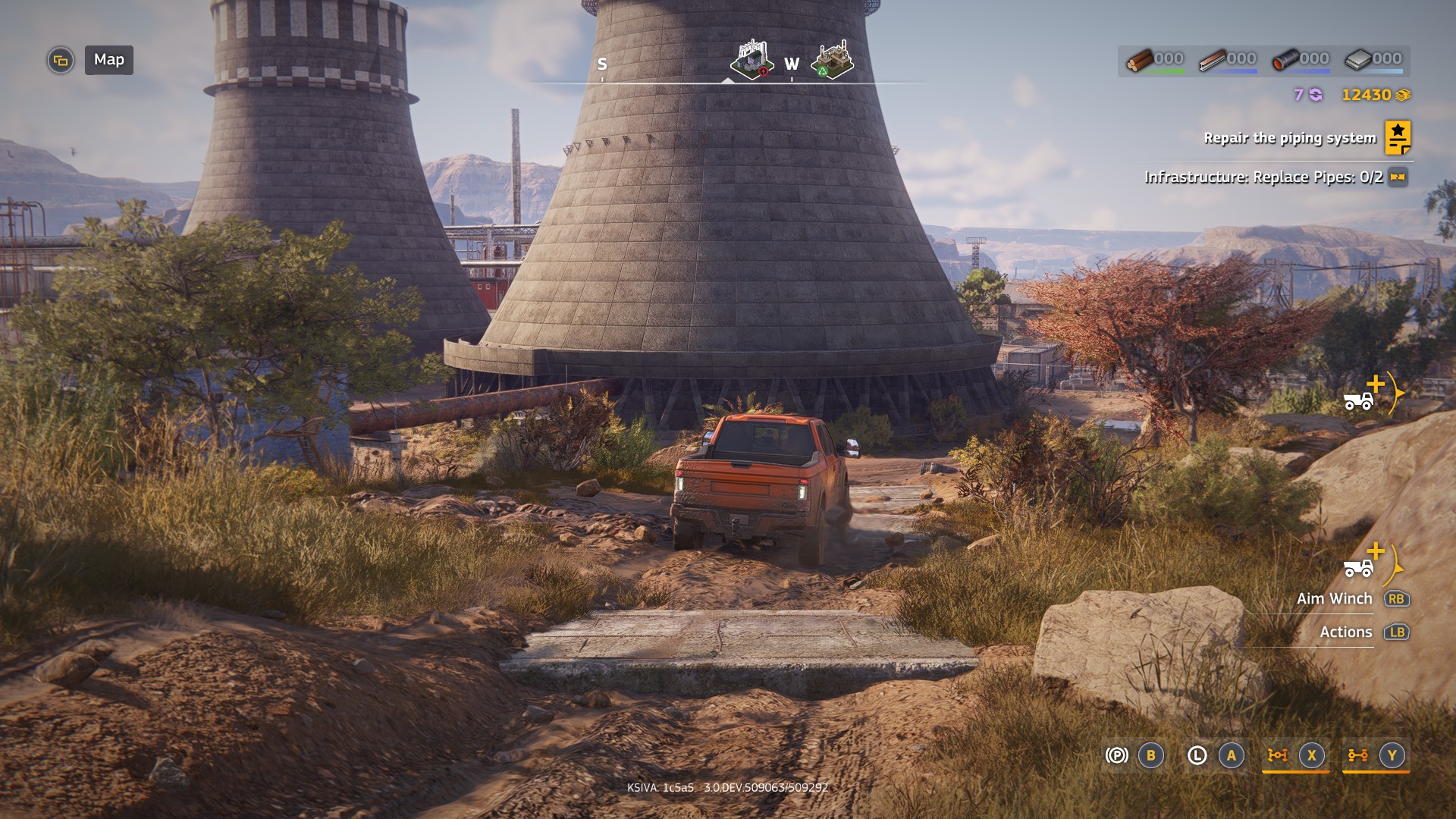
It’s a drawn-out process, this making of roads, and requires both four steps and the specialized brawn of four construction vehicles. First, sand has to be poured, done with a dump truck. Then a bulldozer needs be brought in to plane the sand to a fine and even level. Next, a paver pours steaming asphalt onto the sand. Then, finally, a roller can be brought on-site to compress that hot, bituminous slurry into a smooth and tractable asphalt causeway. Road crafted.
Keep in mind that each of these steps (usually) needs to be done by the player, including bringing each vehicle to the worksite, which is often no small task in itself. Building a short stretch of road can take 20 minutes, depending on the terrain, and the roadcrafting in Roadcraft is a perfect synecdoche for virtually every job in the campaign. This is a slow experience, slower than Snowrunner, quite possibly the most ponderous game I’ve ever played. It’s Minecraft at molasses speed, terraforming at a pace that will, frankly, turn off all but the most degenerate of sickos“ which, happily, I am.
All of Roadcraft‘s vehicular and logistical misadventures are conducted on the deep physics engine that Saber has been working with across their four previous titles. These cumbrous trucks have actual weight, their suspensions rock and shift, tires deform over rocks and rubble. Players will learn to fear steep grades or narrow passes or tight turns. Building materials can and will tumble out of flatbeds into roadside mire. Constant attention has to be paid to both the player vehicle, and the environment. It makes things feel real, every small bit of progress earned in some bone-deep and convincing way that most other virtual accomplishments simply cannot equal. The physics system is what made Snowrunner the unbelievable thing it was, and it gives vibrant life to Roadcraft too.
And so, once acclimated to its, shall we say stately rhythm, the epic length of Roadcraft stops being vexing and becomes, instead, the central gyre of its charm and addictiveness. It is decompressed and utterly chill.
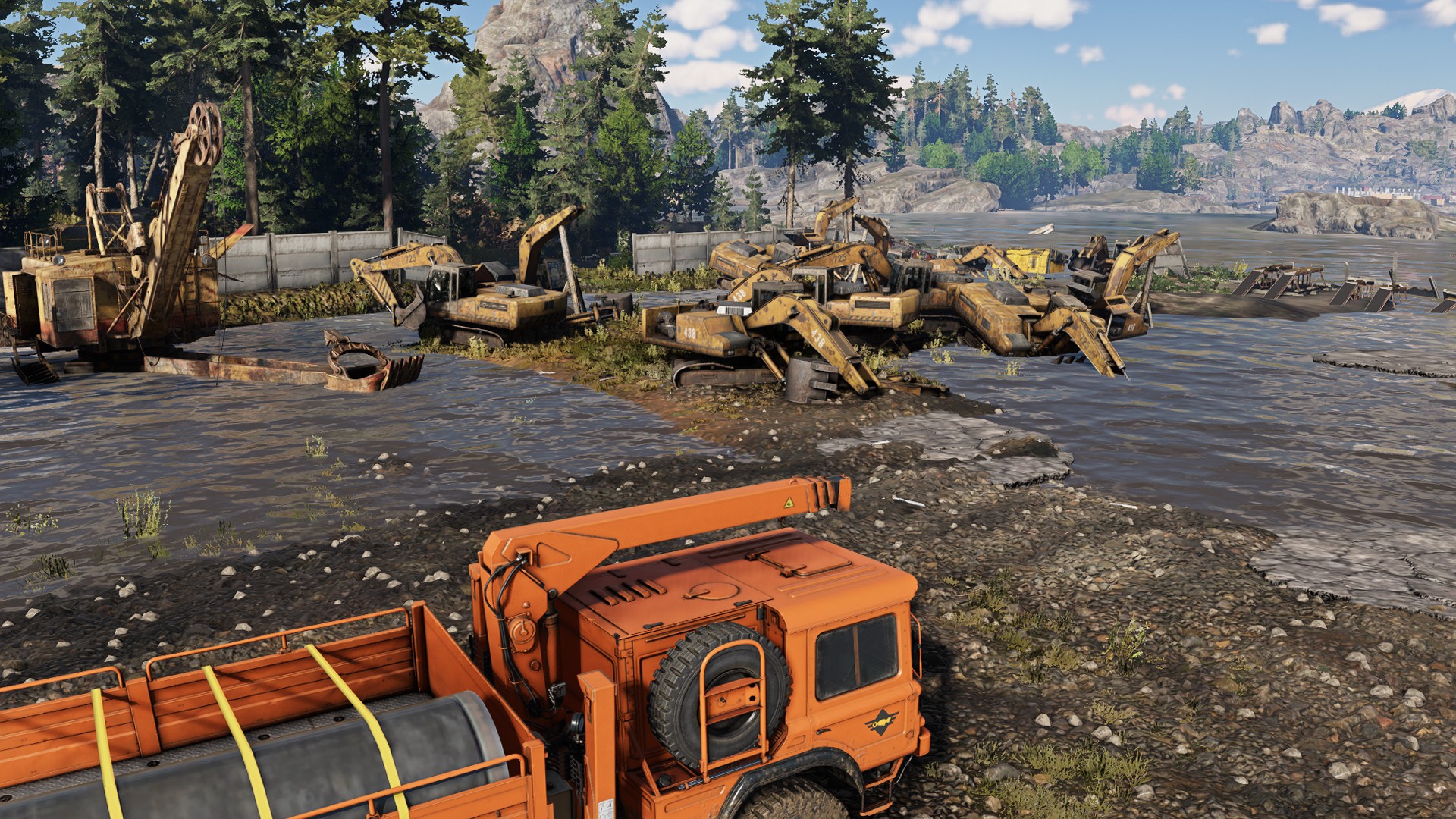
The relaxation is heightened by beautiful environs. The maps in Roadcraft are just stunning. It’s not a matter of fidelity, but of scene-setting. The vistas and setpieces players will stumble on as they crawl across these ravaged landscapes have an almost FromSoft level of stagecraft to them, lushly framed and baroquely, obsessively detailed. There are ruined towns half-submerged in water, a graveyard of rusted excavators sunk into a silt-clogged quarry, a cratered steel mill with broken, bare girders flung up into the air like the upturned legs of a dead spiders…
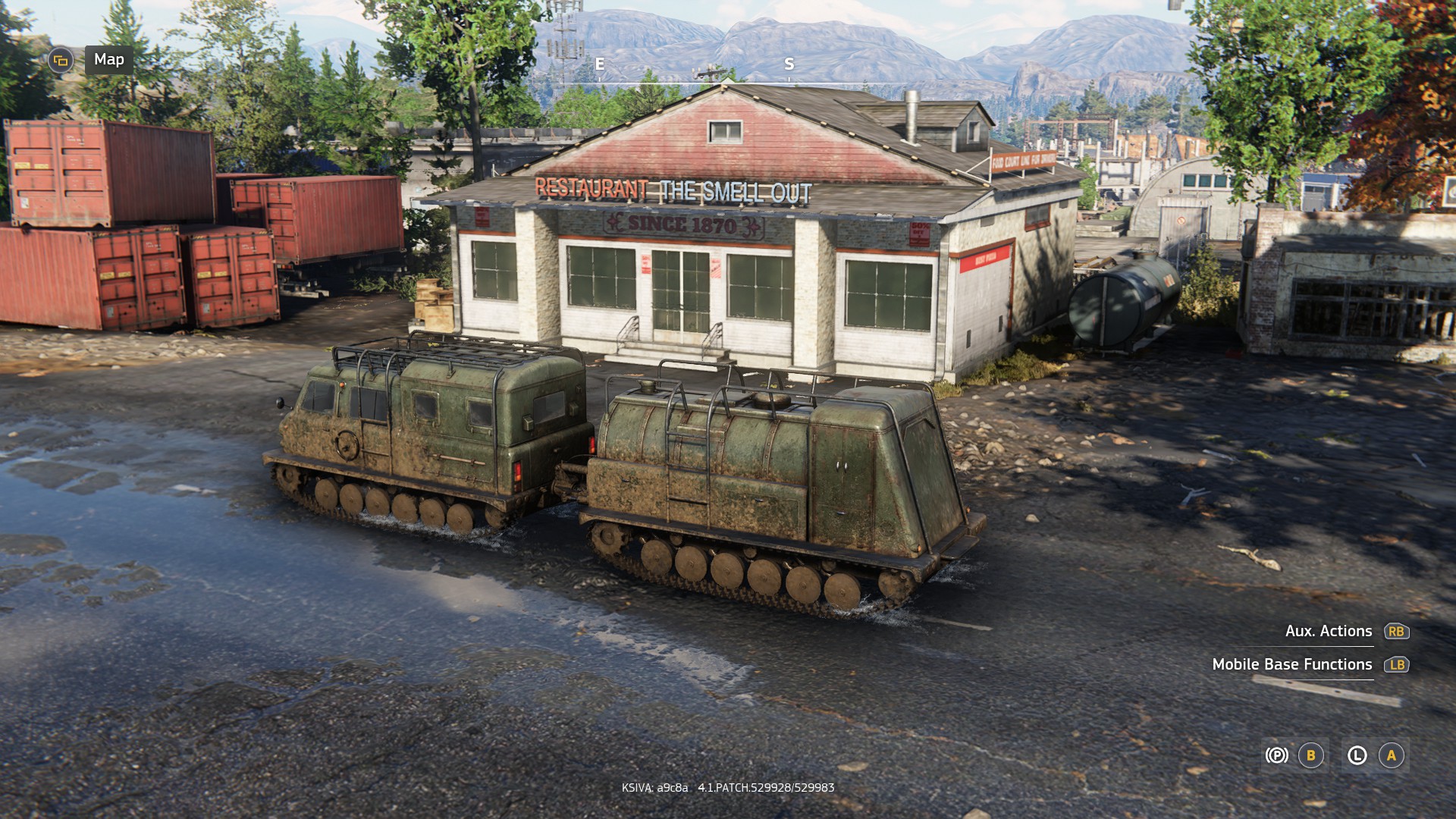
Some mechanical things are unbeautiful, to be sure. Quite a few things, actually. The Saber team has earned their place in gaming Valhalla, but they’re still incapable of making menus that that are not demonic. I’m not even sure how someone designs a UI this wonky — maybe by having a nightmare about a traffic jam in Hell and then, upon waking, committing that vision directly to interface code.
In addition to all I’ve described, Roadcraft is also wild, wooly, and full of ideas. It’s an exploratory and experimental title for Saber, and it feels like some of the systems are in their prototyping phase. See, for instance, the sub-game about drawing routes that NPC trucks then drive. I understand why it’s here, as it means that players have to find, and then make! – routes these smaller trucks, less capable than the player’s fleet, can traverse. However, the AI itself is bad. If the route waypoints are not laid with aching exactitude, the automated drivers can fumble, even if the trail for them to follow is an adequate one, which means players have to jump back into the Stygian abysses of the Roadcraft menus and redraw the route.
With that said, rough edges are to be expected in something that’s not only niche, but experimental. Roadcraft is not a game for everyone, and it’s not even for every Snowrunner fan — but that’s what makes it brilliant for those willing to tune in, and the number of potential fans is probably larger than one might guess. So, despite how eager I am for the return of the Chosen One in Snowrunner 2, I also will be keenly watching where Roadcraft goes. I can’t think of anything in the double-A space that’s more interesting, or has more potential, than this game.
Rating: 8 out of 10
Disclosures: This game is developed by Saber Interactive and published by Focus Entertainment. It is available on PC, PS5, and Xbox X/S. This copy of the game was obtained via publisher. Approximately 33 hours of play were devoted to the game, and it was not completed. No time was spent in multiplayer (but I think it’s safe to say it would be great).
Parents: According to the ESRB, this game is rated E and contains Mild Language. The ESRB summary is as follows: This is a simulation game in which players restore infrastructures in areas after disasters have struck. Players can operate trucks, cranes, and bulldozers to complete various tasks (e.g., clearing debris, rebuilding roads). The word “hell” appears in the game.
Colorblind Modes: There are no colorblind modes present.
Deaf & Hard of Hearing Gamers: All of the (sparse) dialogue is accompanied by on-screen text, but the subtitles cannot be resized. No action requires audio cues to successfully complete. I played the game with the sound down for most of my 30 hours with it, and didn’t have any issues. This game is fully accessible.
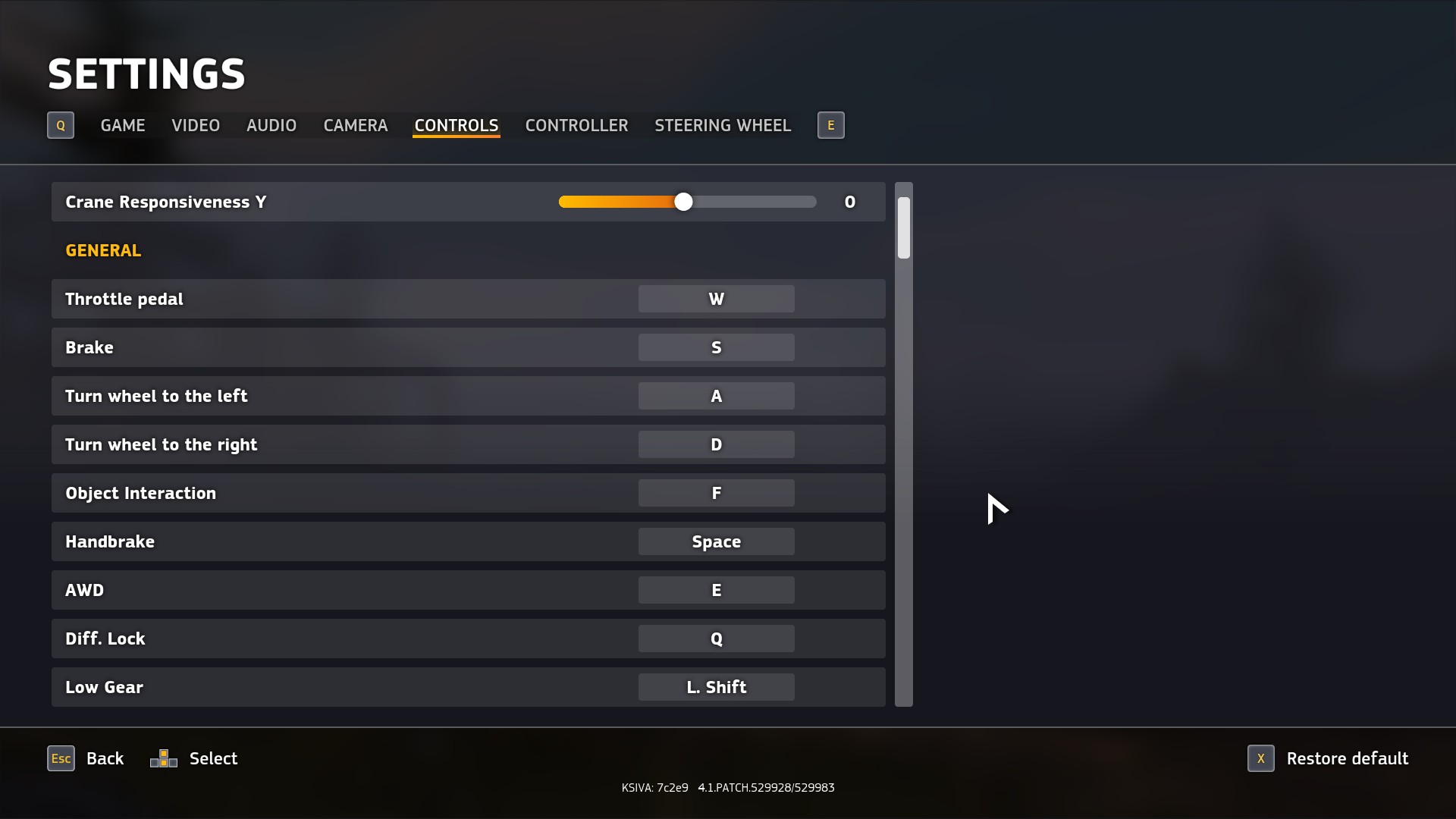
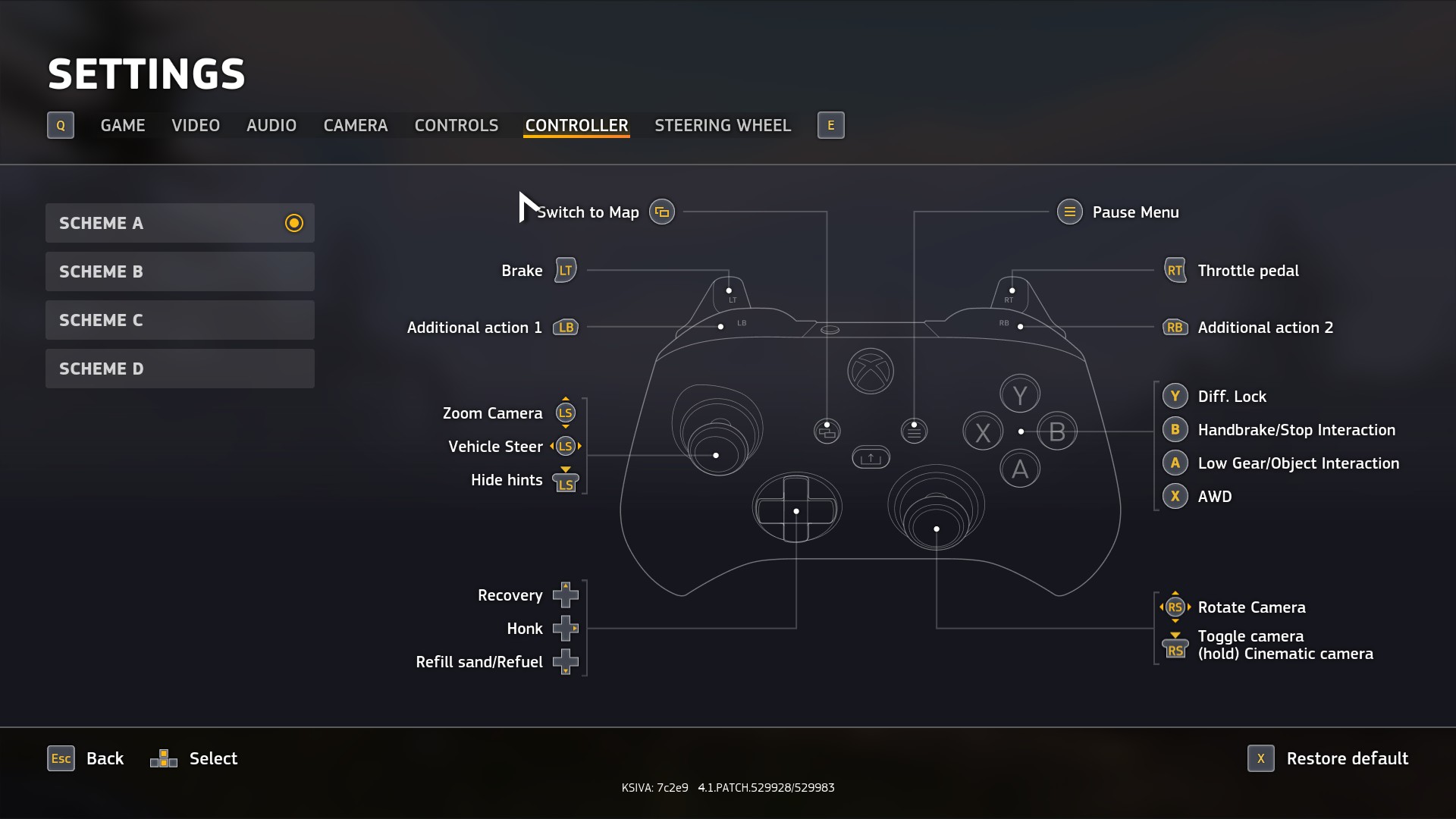
Remappable Controls: KB+M controls are fully remappable. There are four different gamepad control presets available, but they are not remappable beyond that. Steering Wheels are partially supported, but not ideal for this game.

- Little Rocket Lab Review - November 2, 2025
- Roadcraft Review - September 17, 2025
- Mashina Review - August 20, 2025