A Time to Chill
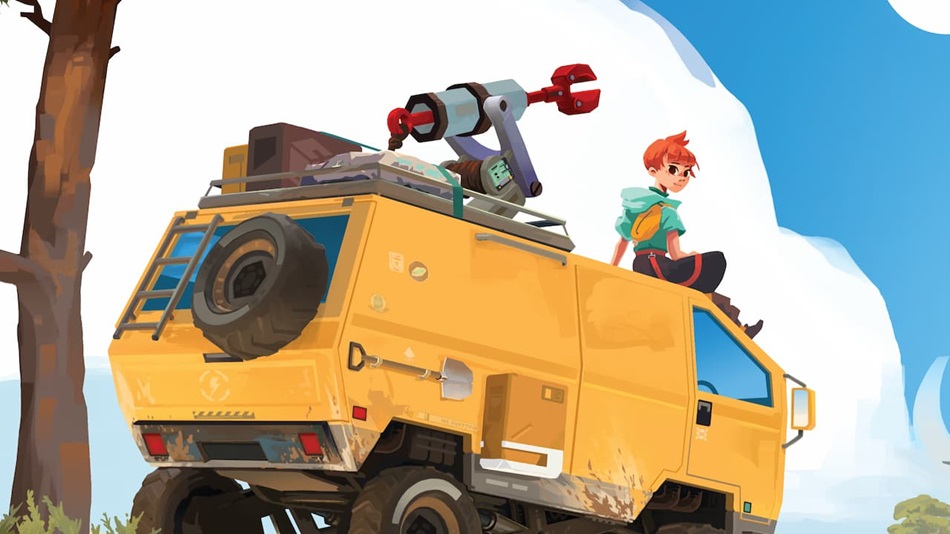
HIGH Simply chilling in high places and taking in the view of the world.
LOW The ending, which is poorly designed and written, and riddled with bugs.
WTF Oh, so that’s not a frog statue.
The planet Cigalo is dying. Its ecosystem has been shattered, its swamps drained, and its surface strip-mined in order to build a spaceborne array of solar panels that will eventually block out its sun. An environmental catastrophe interrupted the project and forced the exploiters to depart, leaving behind abandoned facilities and mountains of scrap.
As Caravan SandWitch begins, players step into the role of a teenage pilot trainee and Cigalo native named Sauge. She’s just received a distress signal from her sister, who was assumed dead after disappearing on on this half-ruined planet six years ago. Although that premise sounds grim, Caravan SandWitch itself is anything but. The desiccated world of Cigalo is rendered in attractive, saturated, cel-shaded graphics. There’s no combat whatsoever, and most of its play loops are built around exploring, collecting items, and driving folks around in a big, bright yellow van.
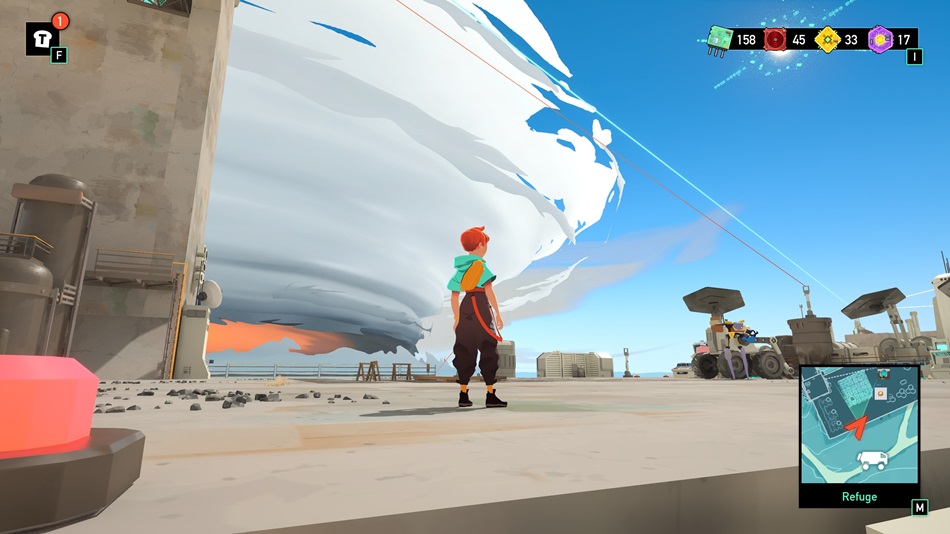
Sauge progresses the story mostly by reaching new sites in the world. Initially this is gated by a need to disable “jammers” that block communications and blot out the map, but as the plot unspools, it becomes necessary to reach specific locations to empower transmitters and link disparate decrepit industrial locations through a kind of teleportation network.
As is standard for third-person open-world games, these tasks are presented with a minimum of time pressure. A few character-related quests get locked out when Sauge gets a new tool, but more time is always available to finish these before moving on. The passage of days is noted, but nothing moves forward until Sauge collects enough scrap parts to build the next sensor or grapple gun and the player chooses to advance to the next chunk of the adventure.
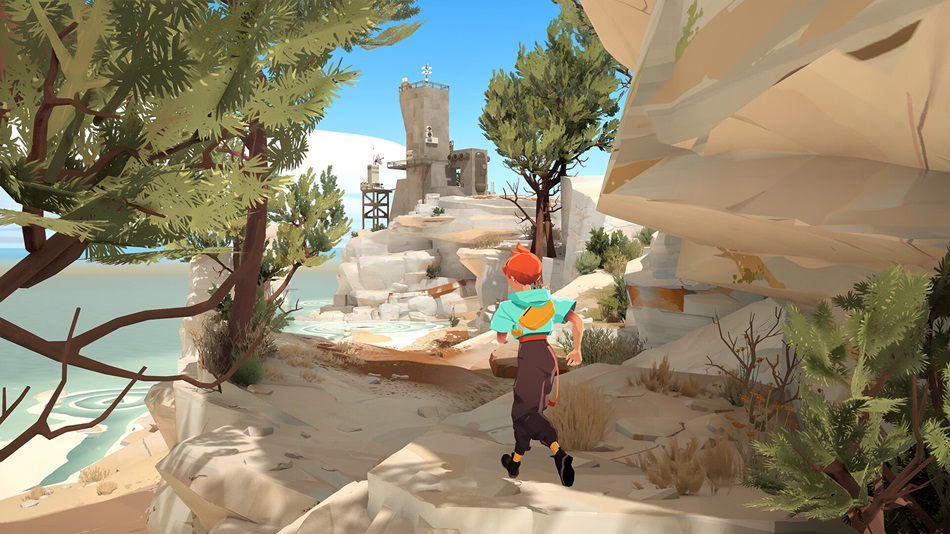
Although driving the van is generally smooth, one could complain a bit about the platforming. Sauge will frequently clip through a ledge while mantling, particularly if the shape is odd. On tight ledges, Sauge will sometimes rotate in a random direction while jumping, though they will still grab and mantle to the next ledge correctly. Even when the animations got dodgy, the result was generally what I intended, and the small number of unexpected failures didn’t result in any permanent harm since Caravan SandWitch has no fall damage.
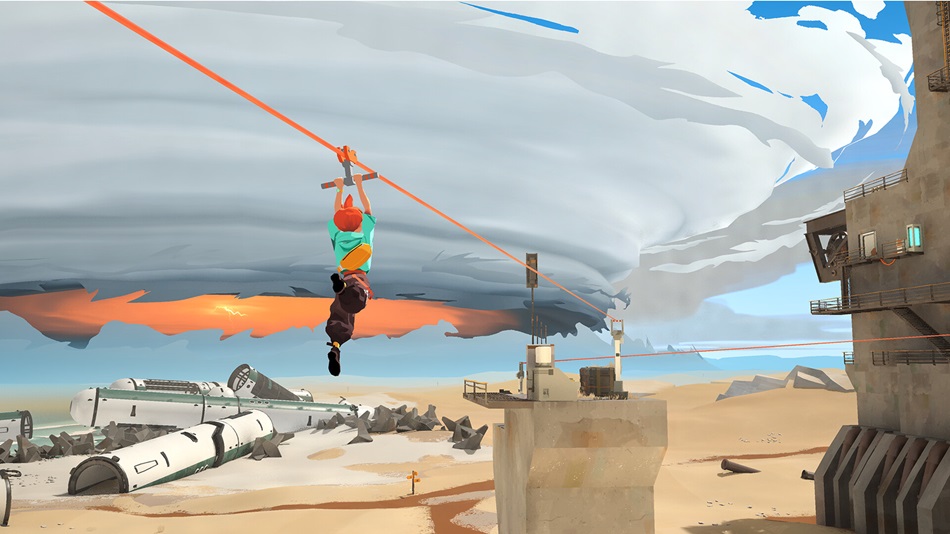
The total harmlessness of falling even from enormous heights might support a chill experience, but it also plays a part in rendering events curiously inert. It’s fine for a story not to have combat, but Caravan SandWitch feels like it goes beyond this to evict any kind of conflict entirely. Despite the desperation of the scenario players are presented with on Cigalo, Sauge gets to drift through it without truly confronting the planet’s exploiters, the elements, or even her parents.
For all her ominous looming, the eponymous Sand Witch does almost nothing directly injurious to any of the characters. The planet’s native sentient species, who suffered cultural and physical genocide, hold no apparent animosity towards the lingering humans on the planet. Only one character evinces even the slightest negativity towards Sauge and he’s quickly won over. Caravan SandWitch even shies away from confronting the damage the loss of Sauge’s sister’s caused the family.
The poorly-translated dialogue contributes to this problem. Almost every line in Caravan SandWitch is intelligible, but they’re often abrupt and unmusical, as if important nuances from the original French were elided by the translation. The conversations are functional, but any emotion comes across as perfunctory and shallow. It’s particularly bad towards the end of the campaign as the subpar dialogue interfered with the intelligibility of the action, sapping what little power there was in SandWitch’s contrived, half-baked endgame choice.
Despite its numerous charms, Caravan SandWitch just didn’t sit right with me. There is perhaps something to be said for a chill attitude in the midst of apocalypse, but this experience gets there by avoiding all of its tragedies, save one. The looming death of this world and seeming indifference from everyone inhabiting it left me too uneasy to fully accept the atmosphere Caravan SandWitch seemed to be after. While Cigalo was beautiful to see and relaxing to visit, even as the planet crept ever closer to collapse, I kept wishing that someone would rage against the dying of its light.
Rating: 7 out of 10
Disclosures: This game is developed by Studio Plane Toast and published by Dear Villagers. It is currently available on PC, PS5 and Switch. This copy of the game was obtained via retail purchase and reviewed on a home-built Windows X PC equipped with a AMD Ryzen 2700X processor, an ASRock X470 motherboard, 32 GB RAM, and a single GeForce RTX 3080 graphics card. Approximately 10 hours of play were devoted to the single-player mode, and the game was completed. There are no multiplayer modes.
Parents: According to the ESRB, this game is rated T and contains Language and Violent References. This is a terrible classification. The mentioned violence is no worse than your typical 6PM newscast and I can’t recall Sauge ever going harder than “drat”. My main reservation is that in one of its endings a character commits suicide by choosing to remain behind (offscreen) in an exploding building. Even with that, I would not put this above E10. The world’s most tedious and unlikable people (perhaps the ESRB raters are among them) will also be annoyed that Sauge has two dads and many individuals are referred to with they/them pronouns.
Colorblind Modes: There are no colorblind modes available.
Deaf & Hard of Hearing Gamers: This game is fully accessible. All dialogue is in text, but text cannot be resized or modified. There are no essential sound cues in gameplay.
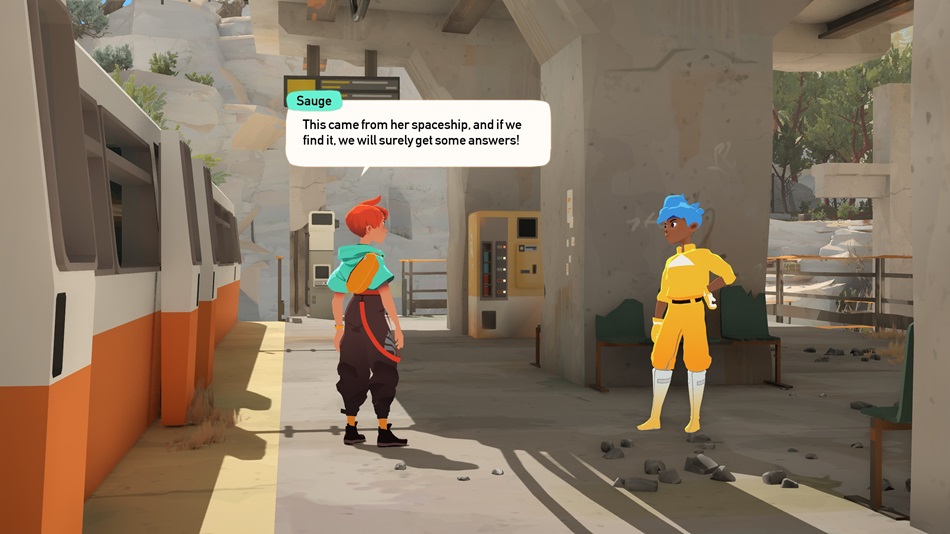
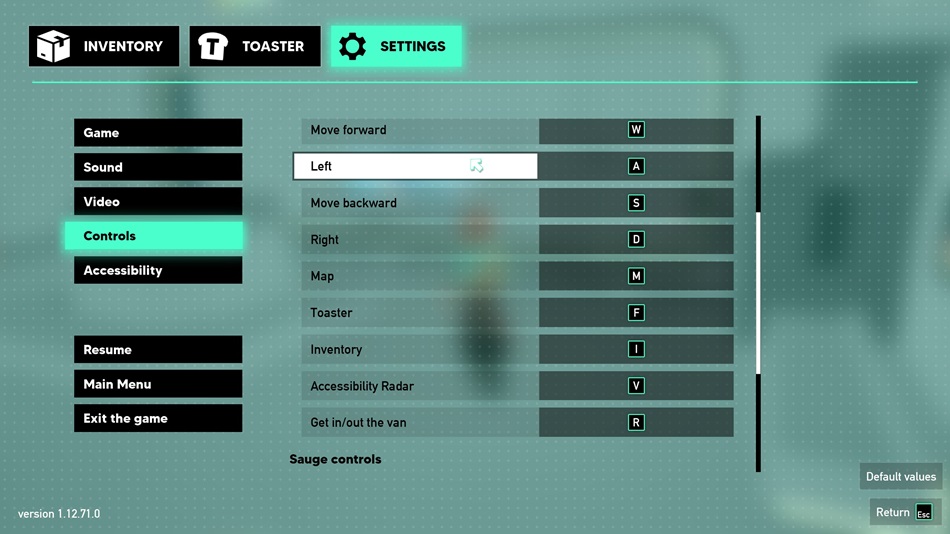
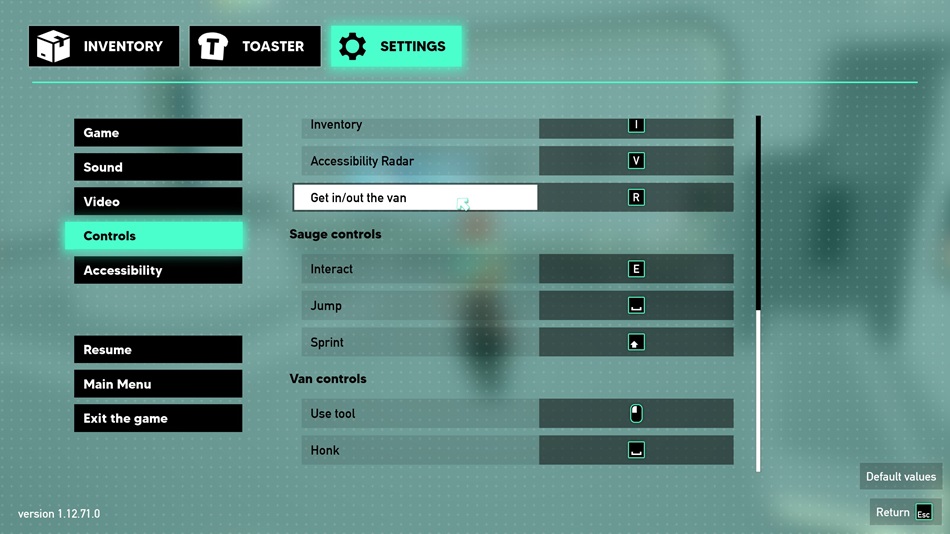
Remappable Controls: Yes, this game offers fully remappable controls on PC. MK controls are as shown in the attached images. Controller defaults to X for interaction, Y for exiting / returning to van, A for jumping or acceleration boost (in van), B for exiting dialogues. Left and right sticks default to move and look, respectively, left and right triggers default to decelerate (in the van) and accelerate (on foot and in the van).

Currently Sparky works as a scientist in Rhode Island, and works gaming in between experiments and literature reviews. As a writer, he hopes to develop a critical voice that contributes to a more sophisticated and interesting culture of discourse about games. He is still waiting for a console port of Betrayal at Krondor.
- Becastled Review - December 1, 2025
- Drop Duchy Review - May 6, 2025
- Caravan SandWitch Review - October 10, 2024