The Mundane City
HIGH Nuking the dragon with an array of archers before it torched anything.
LOW Wounded swordsmen taking space in my army without ever returning to action.
WTF This is obviously a fantasy world, yet there are no fantasy buildings or units?
The past decade has seen a flood of creative city-builders setting a new standard for the genre. It’s unfair, of course, to expect every indie team to turn out a Frostpunk or The Wandering Village, but the bar has been raised. That means some reasonably competent titles that don’t stand out will be forgotten, and unfortunately, that’s the fate I expect to befall Becastled.
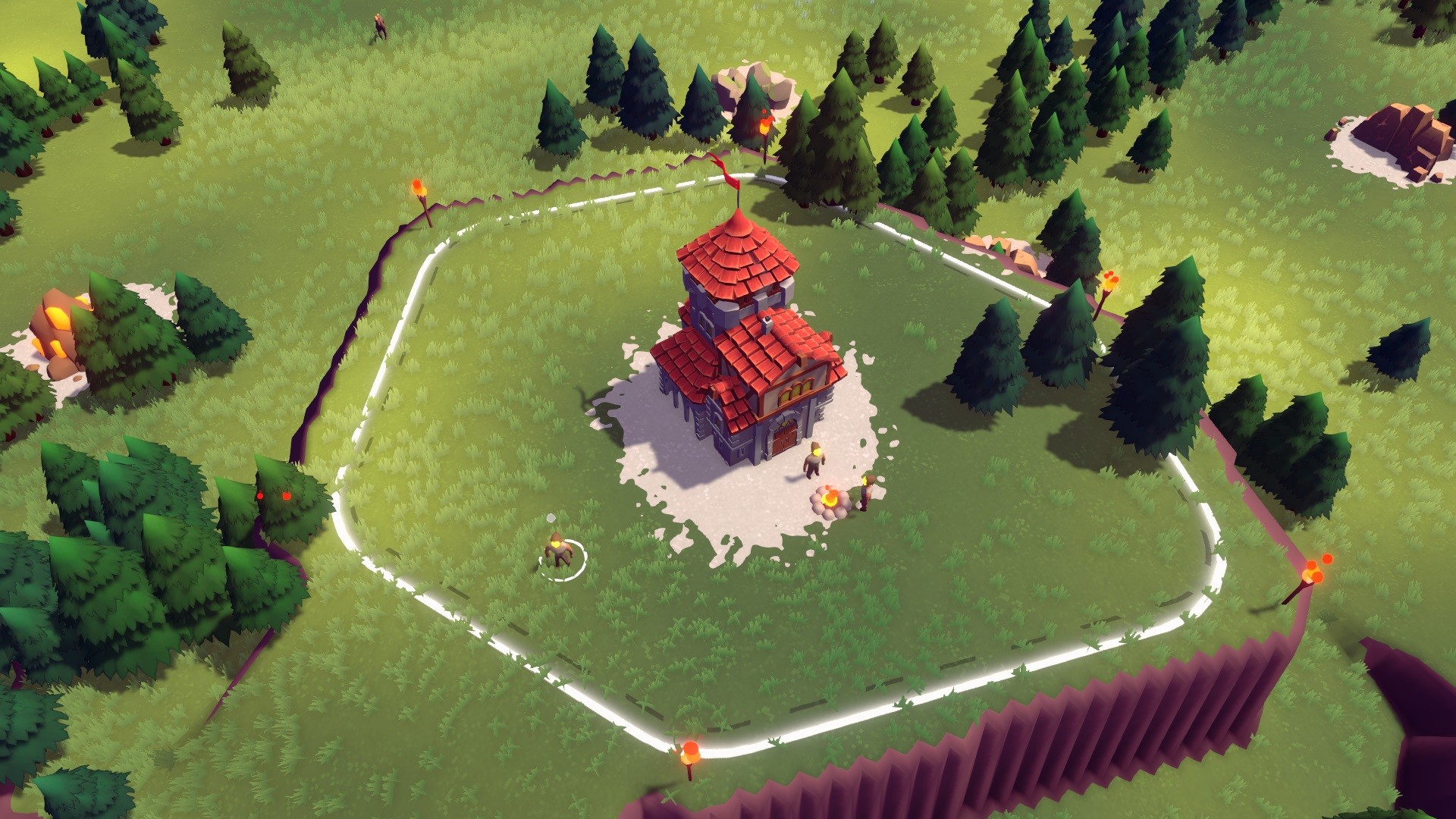
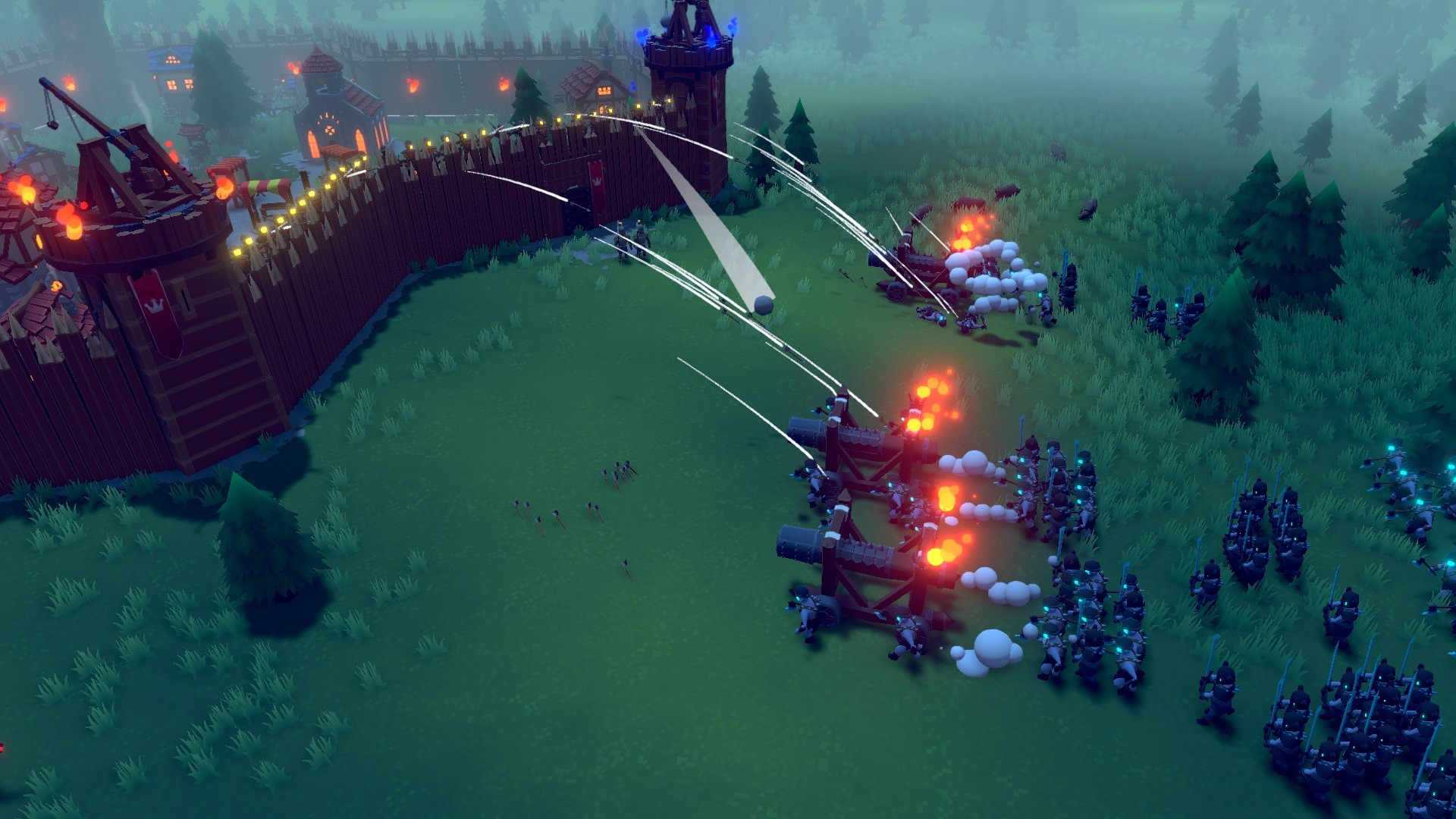
Becastled is a phased-combat city-building game. The player’s forces can only build, recruit units, and gather resources during the day. Every night, “Lunar” enemies attack from a nearby spawn point and follow predictable paths. On each fifth night, a more powerful force attacks. At the edges of the map are a few towers that, when destroyed, provoke a more powerful attack featuring a boss. Destroying all of these towers grants victory.
There’s no campaign to speak of – the closest thing Becastled offers is a series of tutorials – and the meat of the experience is the freeplay mode described above. There’s also a sandbox mode that feels somewhat pointless, as it removes the core resource management aspect of play. A limited map editor is also available. For purposes of this review I tested the sandbox mode, made a few maps, completed the tutorial, and played five full rounds of varying difficulty in freeplay (each of which ran 2-4 hours).
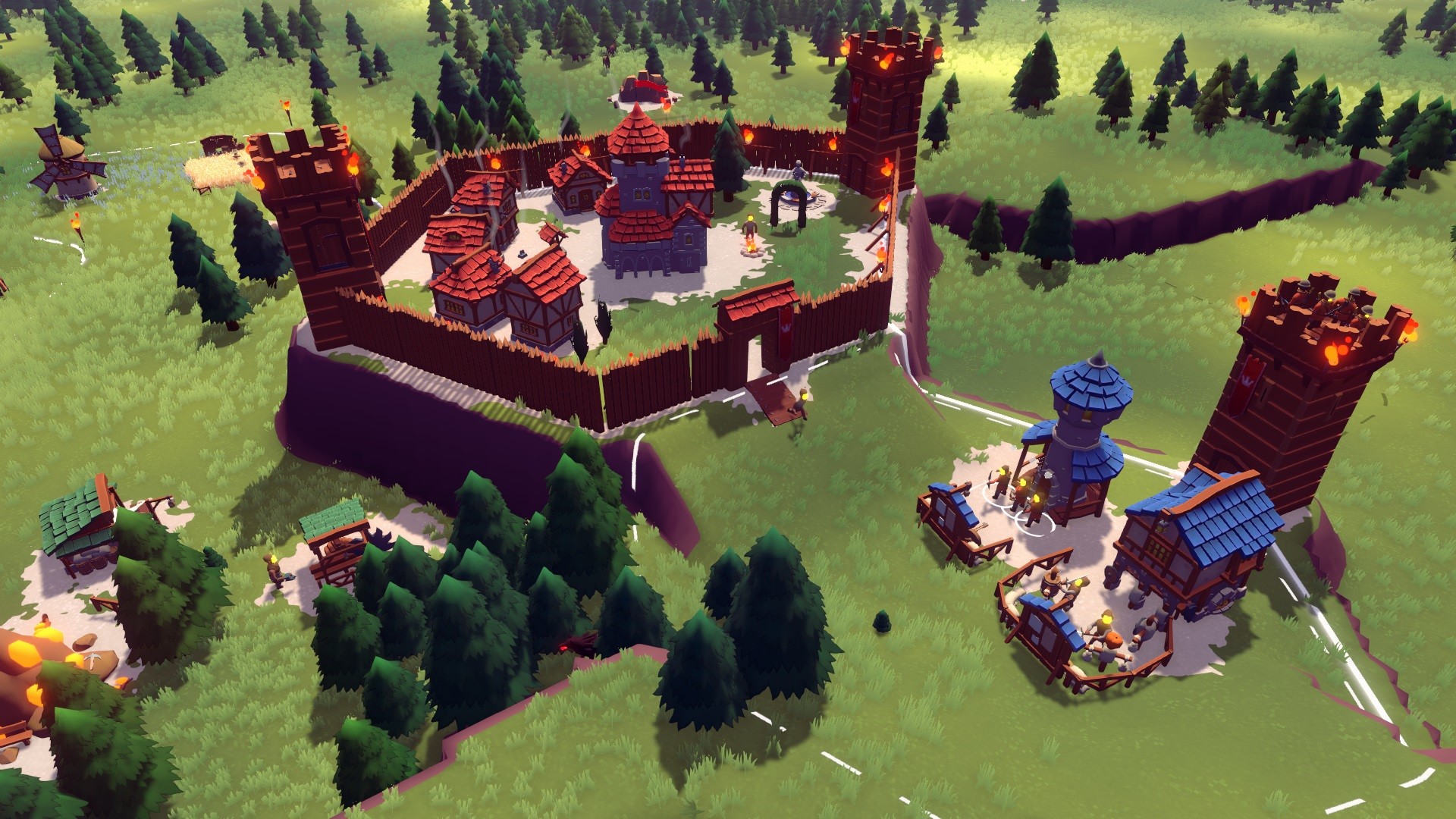
Becastled’s maps are made of irregular polygons of territory, each of which can have a resource and trees, and one curious feature about these resources is that they don’t really deplete. Even on higher difficulties I never had a mineral or food resource run out. Except in the winter season, forests regenerate completely every day. This bounty eliminates the typical progression of city-builders, and among other things, it leads to oddities in city planning like massive stone walls that completely enclose a forest. Another curiosity is that the world of Becastled is clearly one that’s full of magic – the game’s “Lunar” enemies include a golem, a dragon, and a necromancer – but the player can’t create a building or unit that has any obvious magic capability — the closest one can get is an herbalist.
That herbalist building is not initially available, and must be researched on the rudimentary tech tree, which is only about two steps deep on average. Researching new techs is instantaneous and requires only that the player spend resources, primarily wood. This points to a significant resource imbalance in Becastled, as the need for wood is awfully steep since it’s needed to create every early building and also research every tech to get additional resources. Even obtaining the ability to trade other goods for wood requires 2000 units of wood in research, not counting what’s needed to recruit and sustain manpower and gather gold.
The lack of any other resource can be worked around, but if the player spawns in a map with no wood next to the initial position, they might as well restart. Strangely, the bare-bones map editor has no method for adjusting the position or density of forests, so even when creating a specific optimized world, one is utterly dependent on the RNG to get enough wood in the early game to survive.
I also noticed that units sometimes had trouble getting where they needed to go, or that they would make strange movements. This was most notable with the military units — archers would sometimes teleport outside of walls and troops would sometimes get trapped by a cluster of their comrades. Workers would also sometimes get stuck on terrain or be mysteriously unable to reach their work sites, even when nothing had changed from the previous day. Also, walls laid out near lakes would sometimes simply not get built.
During my time with Becastled, I noticed it being patched almost daily, yet each patch seemed to make pathfinding worse. The last time I played, military units would regularly fail to move at all when I clicked on a destination, and numerous workers failed to reach their work sites every day. This leaves me with some doubt that the pathfinding problems will be addressed.
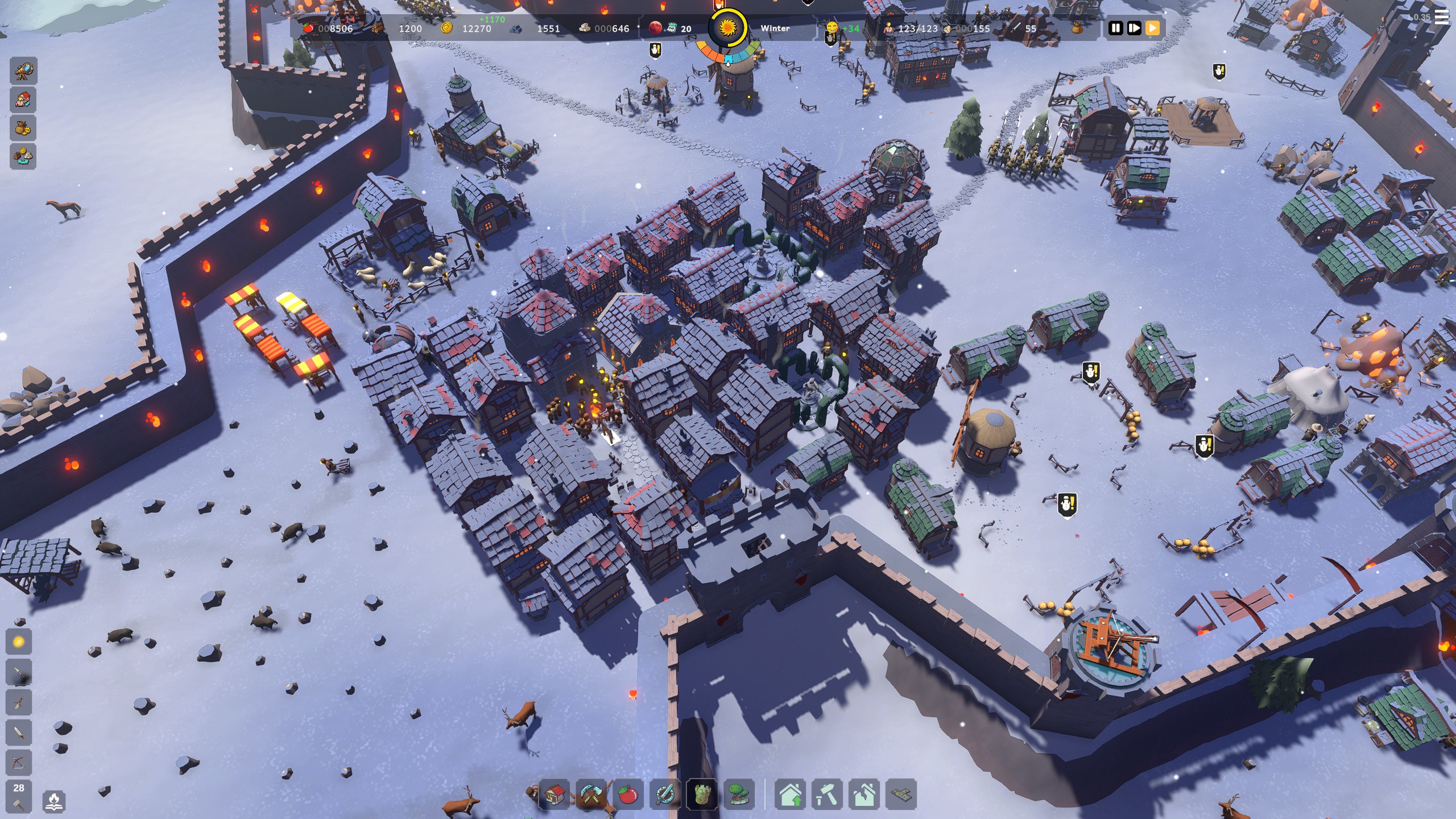
While those are serious shortcomings, the fundamental problem with Becastled doesn’t really lie in its systems — the key issue is that there’s just no hook here. There’s no unique resource, no unusual mechanics, and no unexpected interplay between units or buildings. There’s not even anything approaching a graphical twist. Becastled is simplistic and straightforward to the point of being generic, and the magic that’s missing from the player’s build menu is also absent from the experience as a whole.
Becastled is certainly a game a person could spend hours playing, but in a genre crowded with unique and fascinating takes on the concept, I can’t think of a reason why one should put time into a title with so many annoyances and so little to recommend it.
Rating: 4 out of 10
Disclosures: This game is developed by Mana Potion Studios and published by Mana Potion Studios and Pingle Studios. It is currently available on PC, PS4/5, Switch, and XBO/X/S. This copy of the game was obtained via publisher and reviewed on a home-built Windows 11 PC equipped with a single GeForce RTX 5080 graphics card (driver 581.80), a Ryzen 7 processor, and 64 GB of RAM. Approximately 15 hours of play were devoted to the single-player mode, and the game was completed (as described above). There are no multiplayer modes.
Parents: According to the ESRB, this game is rated E10 and contains Fantasy Violence. The violence is totally bloodless, just little guys falling over. If it can hold their interest, this is an all-ages joint.
Colorblind Modes: There are no colorblind modes available.
Deaf & Hard of Hearing Gamers: During main play there is no dialogue. In tutorials, dialogue is accompanied by text boxes (not true subtitles, example of text below) that cannot be resized. There is narration in the opening movie but no subtitles. During play there are no essential audio cues. This game is not fully accessible.
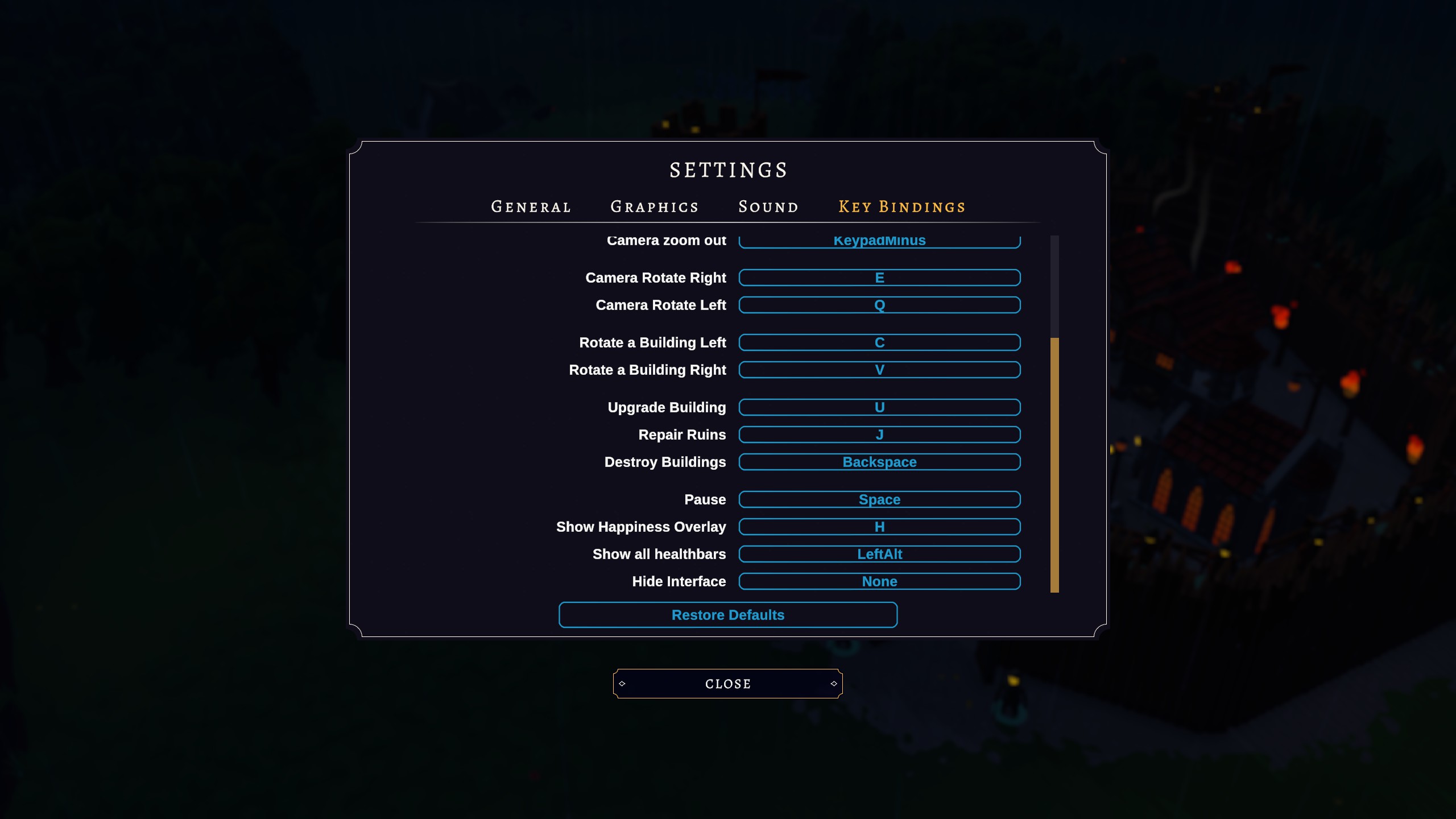
Remappable Controls: On PC, this game offers partially remappable controls. Keyboard and mouse bindings can be changed, but it is not clear whether controller mapping can be changed (indeed I couldn’t find a page that even had the mapping on it). In KBM mode panning and rotating the map is primarily on the keyboard while the mouse is primarily for zooming. While hotkeys to perform a few functions on selected buildings are available, most selection and other functions uses clicking and dragging of the mouse. I found the game awkward to play with a controller. The left stick controls cursor movement (sluggishly) and the right stick adjusts the view. Buttons are used to select but once a building is selected the D-pad must be used to enter its menu and assign workers (using the face buttons).

Currently Sparky works as a scientist in Rhode Island, and works gaming in between experiments and literature reviews. As a writer, he hopes to develop a critical voice that contributes to a more sophisticated and interesting culture of discourse about games. He is still waiting for a console port of Betrayal at Krondor.
- Becastled Review - December 1, 2025
- Drop Duchy Review - May 6, 2025
- Caravan SandWitch Review - October 10, 2024