HIGH Robust roots meet new ideas!
LOW The artificial Intelligence is not so intelligent!
WTF The phrase “balance is key” comes to mind.
There was a time when strategic games were the new live service — back in the golden age of real-time strategy titles made by Westwood and Blizzard. Those days are long gone and those great names are either trademarks of another company or forgotten in the mists of time, but what if we could get another great like Command & Conquer the way they used to be made? The answer is Slipgate Ironworks’ Tempest Rising.
Tempest Rising is a love letter to those days of old, and the devs aren’t shy about it. Play is set in an alternate version of the Cold War during which the Cuban Missile Crisis, but instead of disaster being averted, the result is an all-out nuclear war.
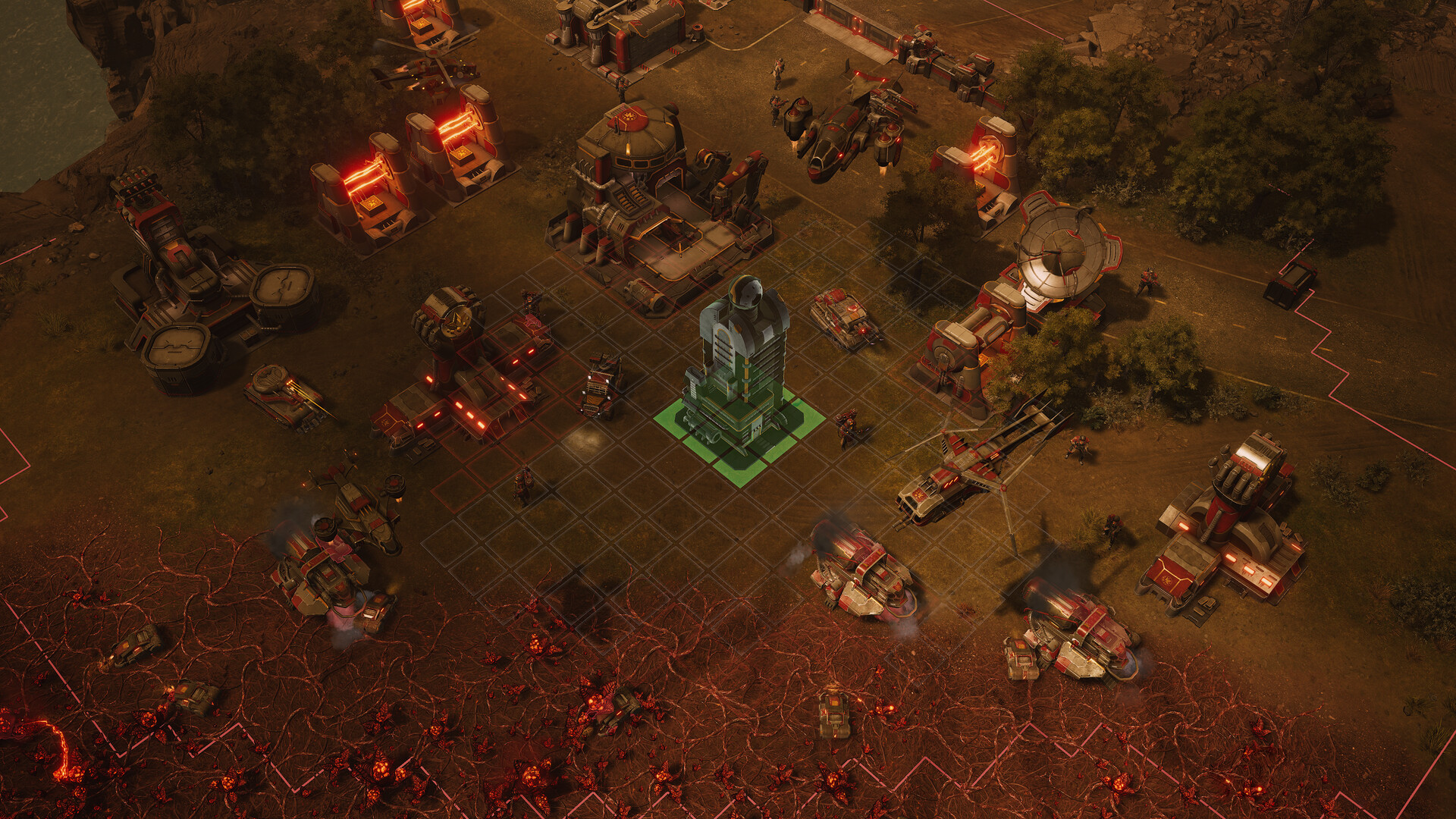
Almost three decades later in a world covered in nuclear radiation, an ivy-like flower blooms across the globe feeding off the fallout. This flora called Tempest, and becomes a great energy source. Thus begins a new war between the Global Defense Forces (GDF) and the Tempest Dynasty for the control of Tempest.
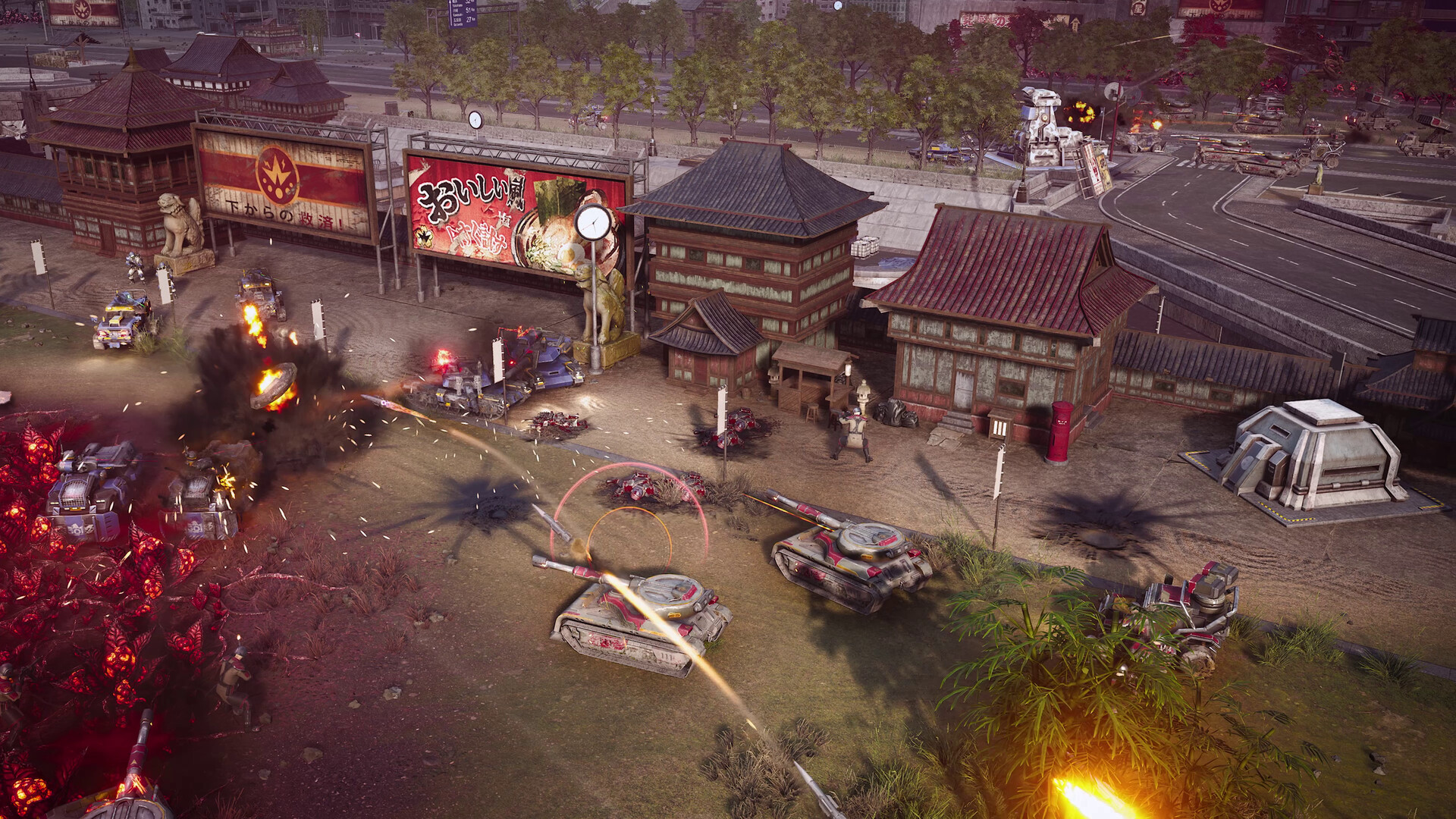
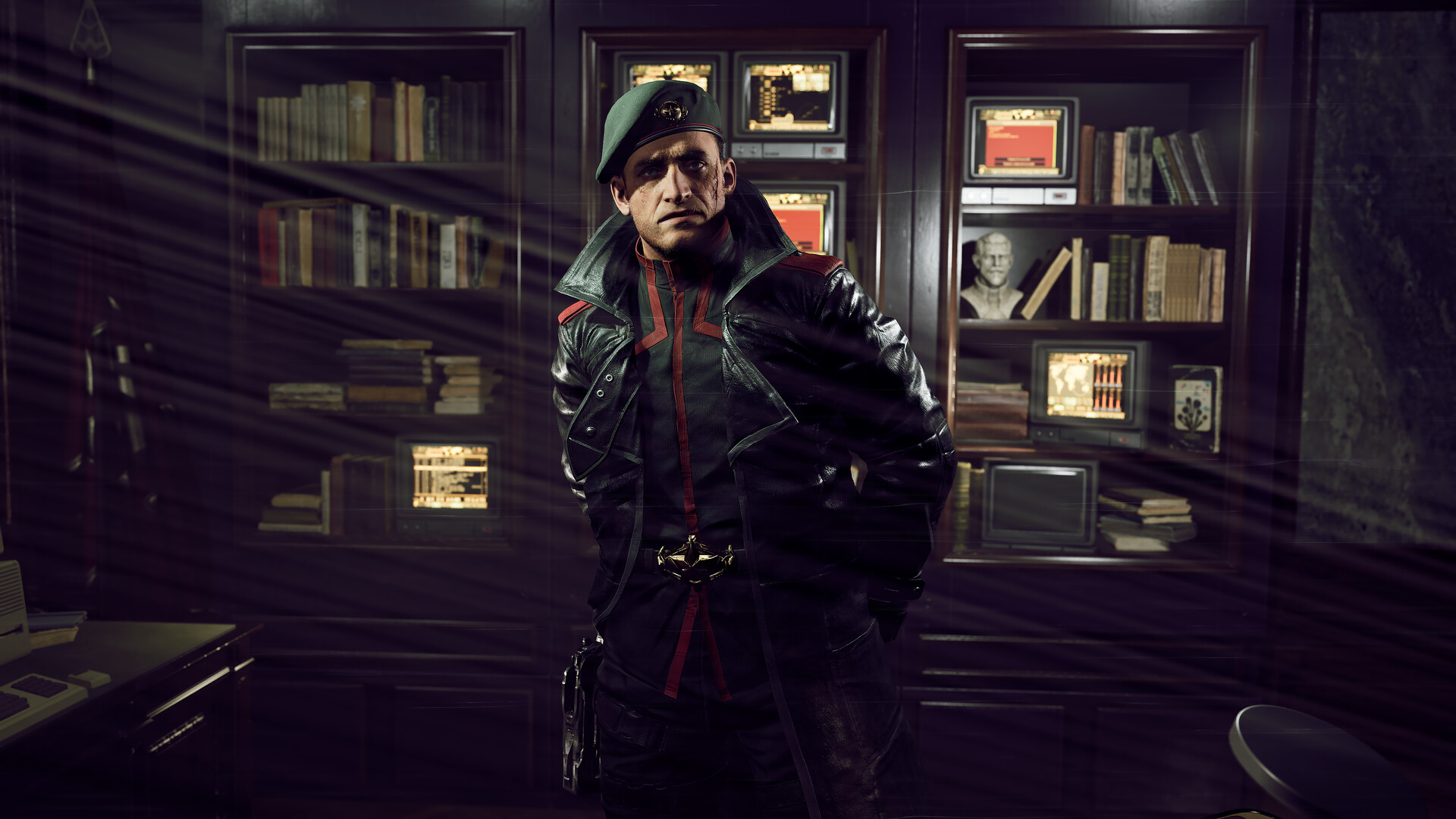
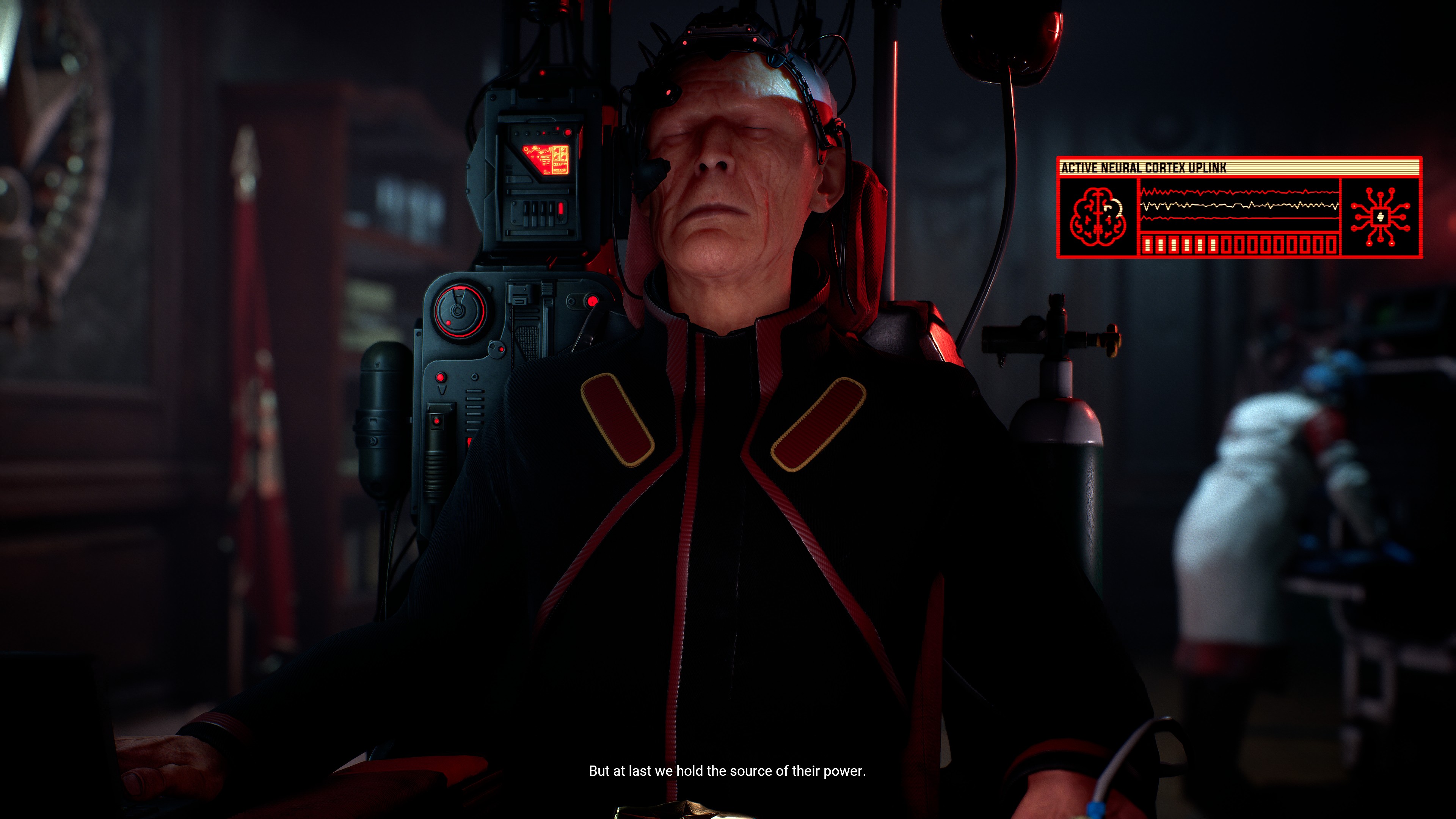
As mentioned, Tempest Rising is clearly inspired by things like Command & Conquer, especially Command & Conquer 3: Tiberium Wars. The devs use both pre-rendered and in-game cutscenes as narrative devices akin to the live-action counterparts in the C&C franchise. but it tries to add to that formula by allowing players to ask questions during mission briefings and gather info about the history and the world.
The core gameplay loop is like many classic RTS titles. Players should harvest Tempest and expend it to build an army and complete objectives. The two playable factions each come with different units, but they don’t have dedicated buildings, special weapons, or upgrades like modern titles. Each side has eleven campaign missions that provide different scenarios, such as hit-and-run tactics, seizing control of an enemy base, and using stealth and special units. This variety in design is great, as it prevents repetition and often forces the player to switch up their tactics.
There are four different unit types in each faction — infantry, specialists, ground vehicles, and airborne units. The GDF troops were my favorite due to their flexibility and engagement options. Multiple GDF troops such as the Drone Operator infantry and Drone Control Unit aircraft are equipped with drones that can heavily hit ground and air vehicles. On the other side of the battlefield, Dynasty forces are more focused on high-risk/high-reward tactics in which units use the raw power of Tempest to gain a damage boost at the cost of their health.
Almost every unit on both sides comes with a secondary power. Some units can be garrisoned by the infantry and become a moving fortress, while others can turn invisible or become a mobile artillery station. This is where Tempest Rising combines the unit variety and class-based combat with more modern intuitive functions mostly seen in current strategy and tactics titles.
This structure as described is solid, but there is a downside — there’s a significant lack of balance, and that is no small issue when it comes to a RTS title.
The GDF forces have the upper hand when it comes to combat capabilities. They have multiple S-tier ground and air units that can engage with both airborne and ground targets, while the Dynasty troops are mostly focused on one target type each. The GDF’s Trebuchet tanks can also turn into artillery stations and effectively deal with ground targets from long distances, but there are no long-range troops among Dynasty ground units. The drones used by the GDF can be destroyed, but as long as the mothership/operator is alive, the drones will be respawned — essentially, this provides the GDF with an immortal army. Though Dynasty troops can be trained faster and is much more flexible when it comes to gathering Tempest, that fails to cope with GDF endgame tactics and scenarios.
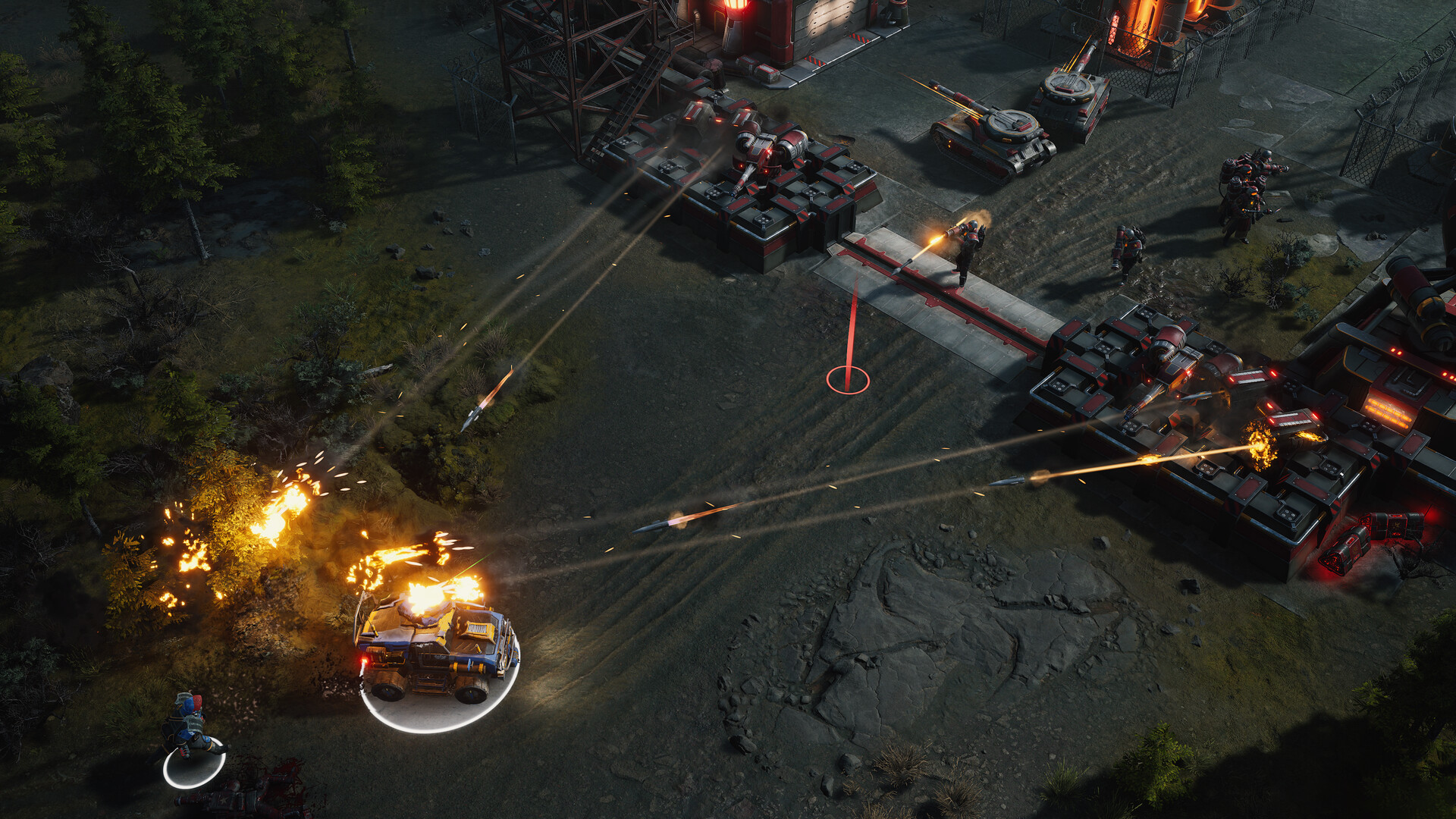
Unit AI is also problematic when it comes to automatically dealing with a mix of enemy troops. When issuing an “Attack Move” to a group of different units, they engage with enemy troops based on distance, not priority. This leads to scenarios where anti-infantry troops focus fire on a tank in front of them, while enemy infantry is cutting them down while remaining unharmed because they’re places a few feet further away than the tank.
Tempest Rising is what I would call a neo-classic RTS — and it’s something we need and hunger for in the modern gaming landscape. The story, gameplay mechanics, and strategic diversity of engagement scenarios make it one of the best RTS titles of the past few years, yet, the lack of balance and problematic AI behaviors prevent it from becoming a perfect experience for avid RTS fans. However, with such a promising debut, I’m excited to see more from this developer in the form of DLC and stand-alone titles the future.
8.5/10
Buy Tempest Rising: PC
Disclosures: This game is published by 3D Realms and Knights Peak and developed by Slipgate Ironworks. It is available on PC. This copy was obtained via publisher and was reviewed on PC. Approximately 23 hours were spent in single-player and the game was completed. There game has multiplayer mode.
Parents: The game is not rated by the ESRB but there are scenes of violence, warfare and human conflicts, as well as running human soldiers over with military vehicles.
Colorblind Modes: Colorblind modes are present in the options menu.
Deaf and Hard of Hearing Gamers: There are subtitles and visual options available in the game, all of which can be adjusted. There were no audio cues of note. This game is fully accessible.
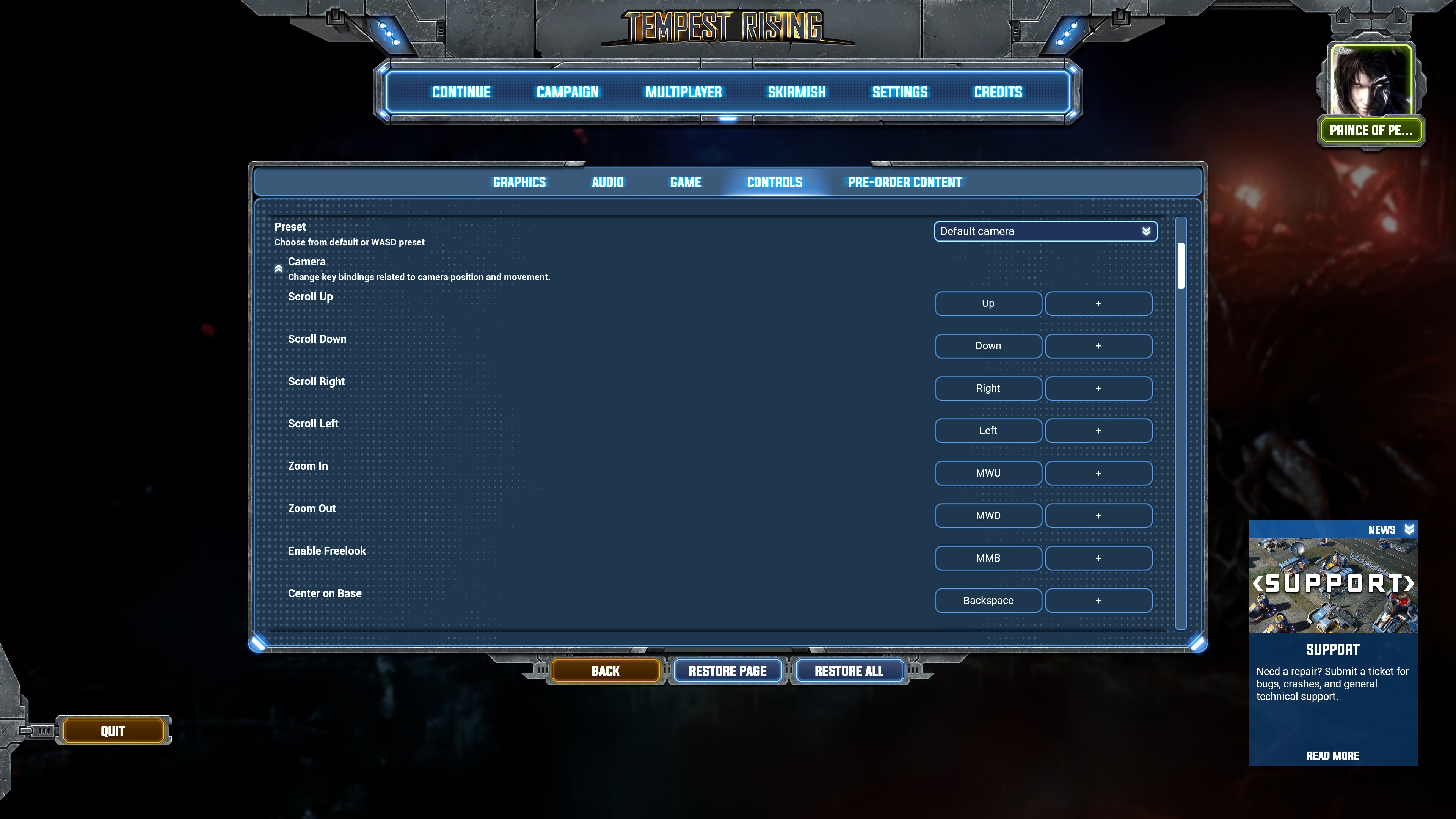
Remappable Controls: The controls can be remapped.

- Tempest Rising Review - November 10, 2025
- OPINION: The Good & Bad – Gamescom 2025 - October 1, 2025
- Atomfall Review - April 9, 2025