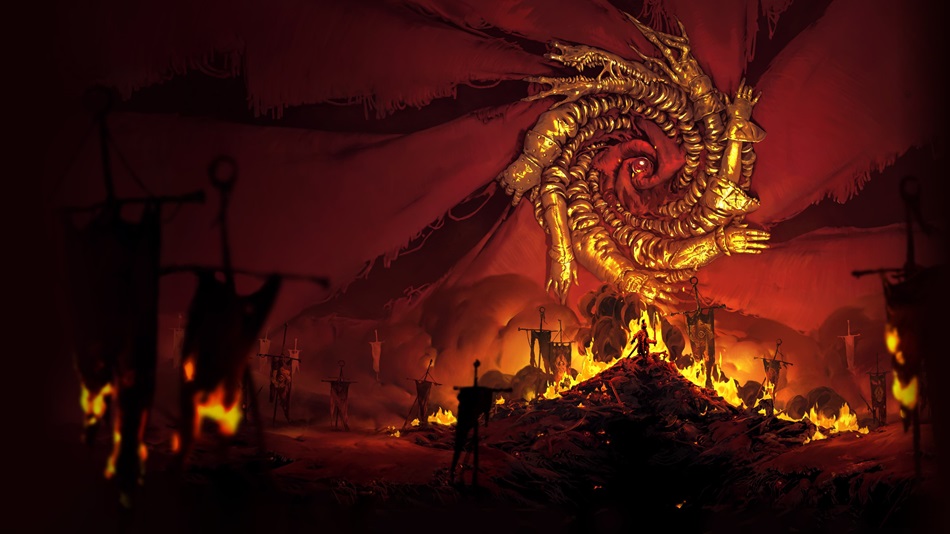
No Rest for the Wicked is Moon Studio’s latest project, recently released into Early Access.
This new title from the creators of Ori and the Blind Forest and Ori and the Will of the Wisps
breaks away from their platforming/metroidvania roots and pivots into a new third person,
open-world semi-isometric soulslike direction.
In No Rest for the Wicked, players control a silent protagonist on a journey to a land called
Sacra. As a warrior of an ancient and mysterious cult, they’re tasked with purging a strange
plague that’s turning the people of Sacra into monsters.
The story is mostly told through cutscenes that are a real treat thanks to the heavily-stylized,
and somewhat cartoonish art style. The world and its characters look like hand-drawn figures
with exaggerated features such as big noses or long hands. Though a bit strange, this artistic
choice lends it a visually unique vibe.
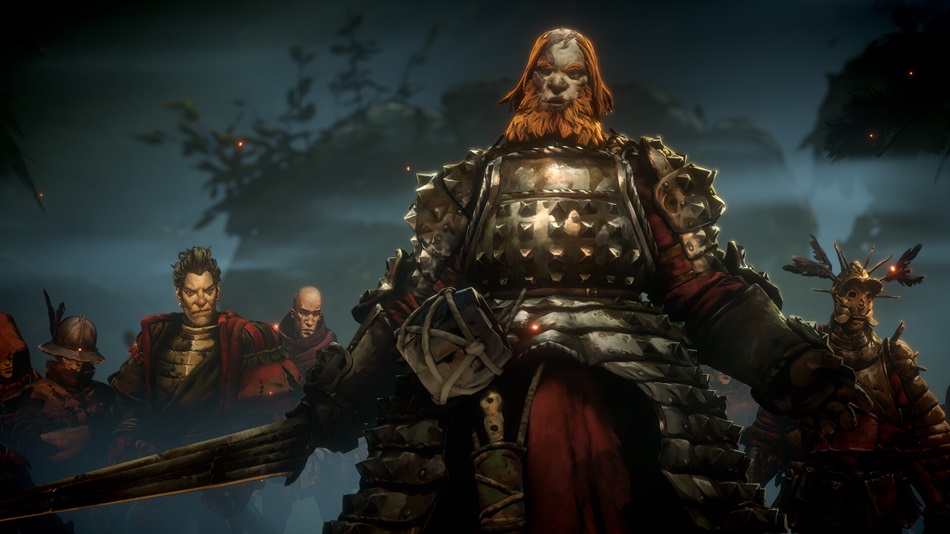
No Rest for the Wicked’s gameplay is can be simply summed up as a fusion of Diablo and Dark
Souls — combat is mostly melee, but there are some magical weapons with limited ranged
attacks, such as magic staves that shoot fireballs.
Like most soulslikes, No Rest for the Wicked tries to manage the pace of combat with a
stamina bar, so as expected, rolling to avoid enemy attacks or swinging a weapon will
consume it to prevent spamming.
Each weapon has a special move that deals higher damage or causes elemental status buildup
such as ‘burn’ or ‘frost.’ There are also weapons such a heavy sword that are infused with
elements, and the special attack deals both more damage and elemental status
buildup.
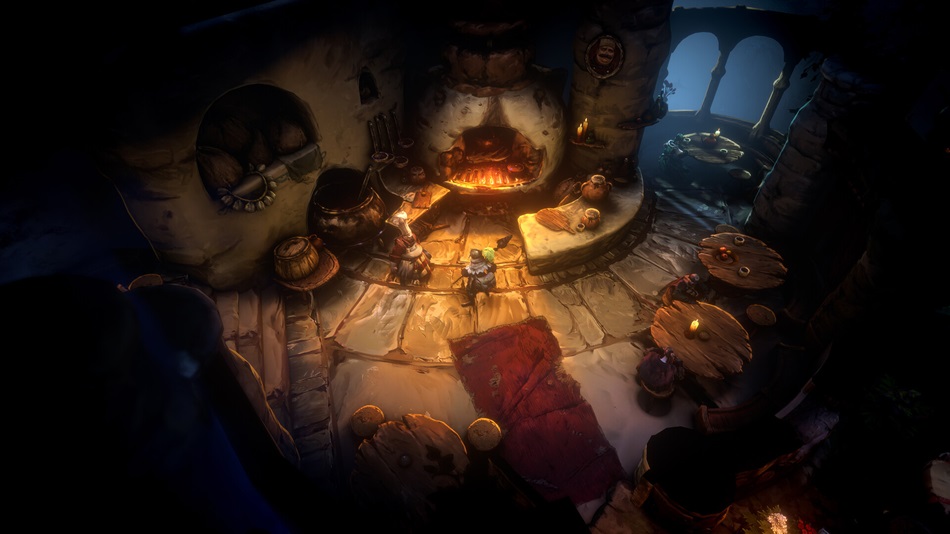
The rest of the gameplay in the Early Access build largely follows common soulslike
systems, such as such as inventory management, managing equipment load, and leveling up
using experience gathered from defeating enemies. Perhaps the only notable difference here
is how No Rest for the Wicked deals with player death.
Rather than the usual corpse run to regain lost souls (or soul equivalents) the penalty for death is losing some durability in the player’s equipped weapons and armor, causing them to underperform until they’re fixed by a blacksmith. For a soulslike, the abovementioned penalty is too soft and devoid of challenge since it doesn’t result in a heavy loss of ability.
The game also has a basic crafting system in which some throwables such as bombs can be
made. Materials to repair and craft weapons (such as wood and steel) are also gathered
through exploration.
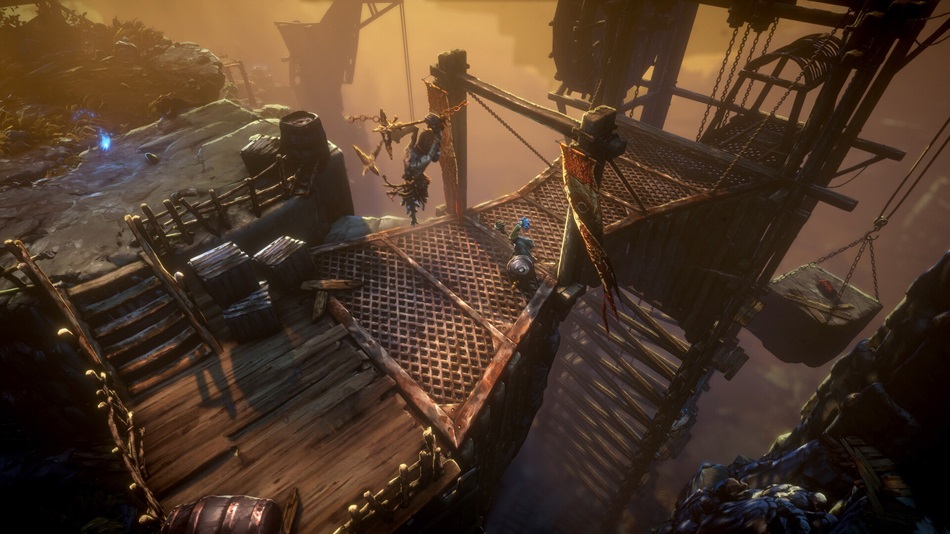
Perhaps the most controversial aspect of No Rest for the Wicked is the isometric camera. At
the start of play, a message from the dev team is displayed that talks about their hopes and
dreams of advancing the ARPG genre. However, I have to say that the camera perspective
causes difficulties in both combat and exploration, holding that advancement back.
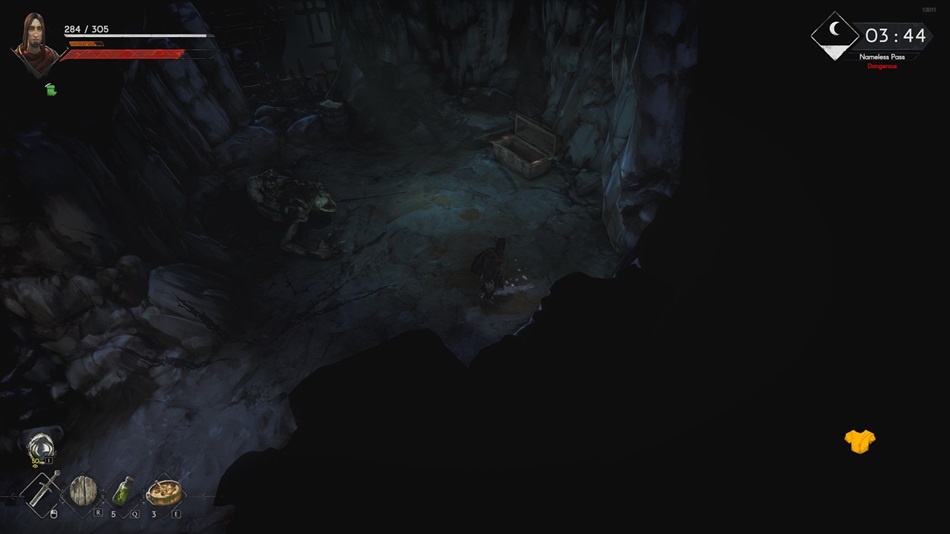
When engaging with groups of enemies, the viewpoint makes it difficult to see where the
protagonist is when and rolling out of enemy melee range. Targeting enemies is also difficult
since there are no target lock options available. Worse, in its current state, parts of the world and its assets turn into hollow black objects so that the player can see through them when in
small, closed environments. It feels like the devs are undercutting their graphics work with a perspective that doesn’t do it justice — just imagine owning a beautiful painting, but hanging it far away and backwards.
While this is absolutely still an Early Access title that has plenty of time and room to grow, I
feel that No Rest for the Wicked will ultimately be a divisive title. The design choices such as the camera angle and the painterly visual style have definitely made the experience somewhat different than one might expect, but at this point, I’m not certain that “different” necessarily means “good”.

- Tempest Rising Review - November 10, 2025
- OPINION: The Good & Bad – Gamescom 2025 - October 1, 2025
- Atomfall Review - April 9, 2025