That Certainly Is A Lot Of Bastards
HIGH Great variety of playable characters with interesting abilities. Tense combat.
LOW Some poor AI. Hard to track some enemies. Lackluster ending.
WTF The big bad had relations with robots???
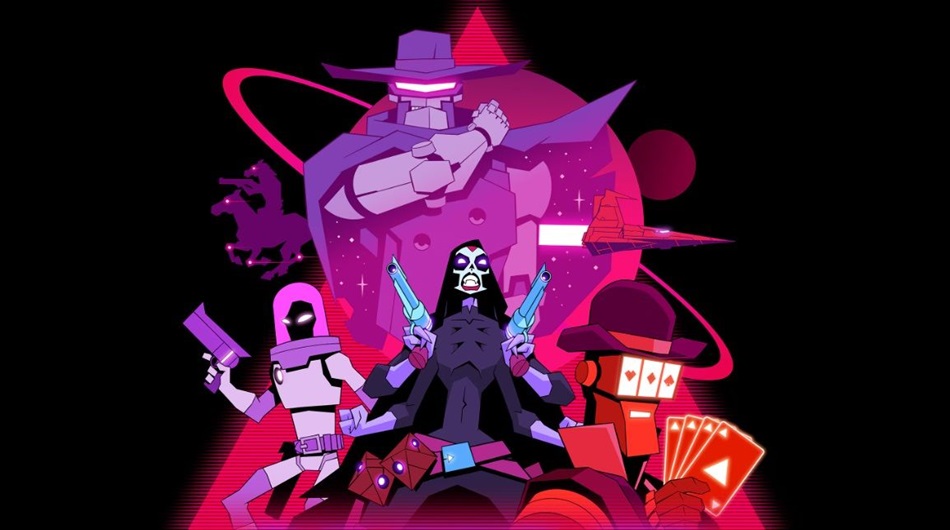
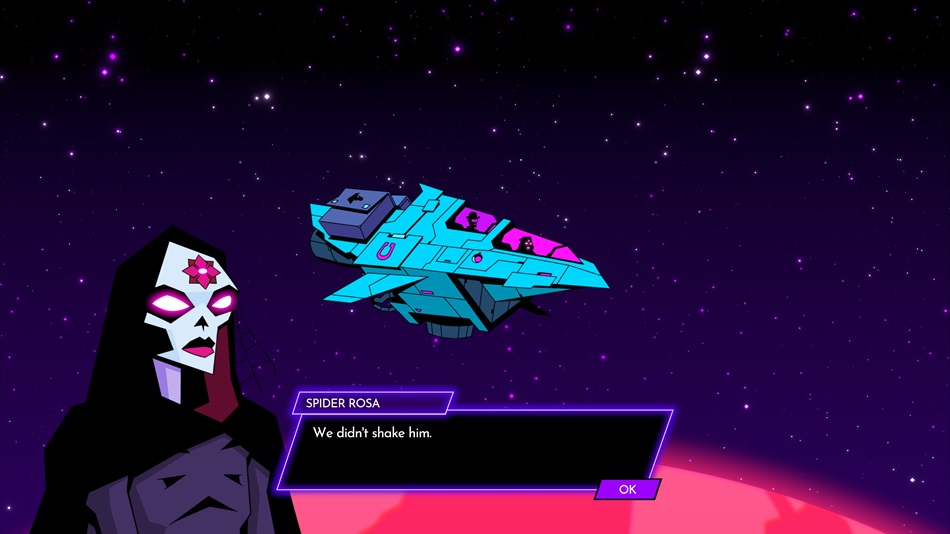
Legend tells of the Drifter — a spacecraft appearing to those in need, offering passage to a paradise known as the Homestead. The ship has decided to gather up an infamous gang known as the Wild Bastards, but why it wants them and the truth of where it’s going are a mystery. All the Bastards know know is the evil Jebdiah Chaste (hater of all things alien, robot, and criminal) is hot on their tails, looking to end them permanently.
Wild Bastards is an amalgamation of FPS and tactical roguelike play brought into existence by the same crew responsible for 2019’s Void Bastards. Players are tasked with traversing multiple star systems on the hunt for missing members of the Wild Bastards gang, of which there are 13 playable in total, each with unique abilities and playstyles.
The basic gameplay loop is broken up into three distinct phases — a navigating-the-galaxy map portion, a turn-based tactics portion, and finally an FPS portion. While all the phases have randomized elements, the basic loop follows a consistent formula.
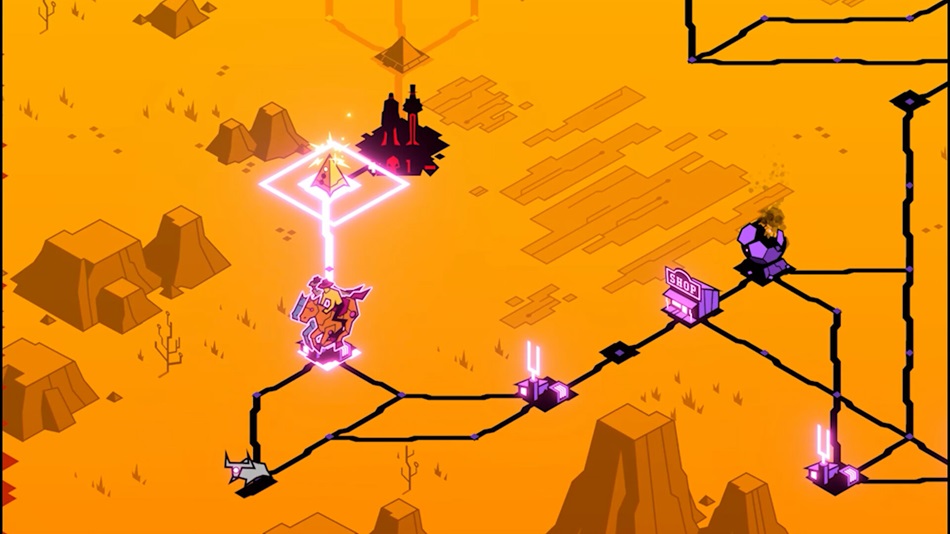
Things start on a galaxy map. As the player’s ship enters a new system, they must choose a path through a series of waypoints in a style similar to other roguelikes of the current era, evaluating each stop along the way for potential threats such as dangerous weather conditions or increased enemy damage. Each planet has a maximum number of characters who can beam down to the surface, forcing the player to strategically assemble their away team based on the characters’ abilities and possible synergies. accordingly. Overuse of a particular character increases their exhaustion level, which nullifies certain abilities until they rest or are healed with beans (it makes sense in context.)
Once on the surface, a turn-based tactical map opens. As with similar isometric tactical titles, players direct their Bastards to locations where they may be able to find temporary upgrades such as increased damage or better armor, as well as permanent “Aces.” These act like a tech tree for permanent abilities or buffs. Players are given a finite number of movement points each turn, and then enemy forces on the surface (representing Chaste’s bounty hunters) take their turn.
When the Bastards are forced to deal with enemies, combat ensues. and this is where the FPS portion of kicks in. Once combat starts, the only way to successfully complete an encounter is by finding and eliminating all enemies. A handy counter keeps tabs of the number of baddies hunting the gang, allowing players to know how badly outnumbered they are, or how close they are to winning a fight.
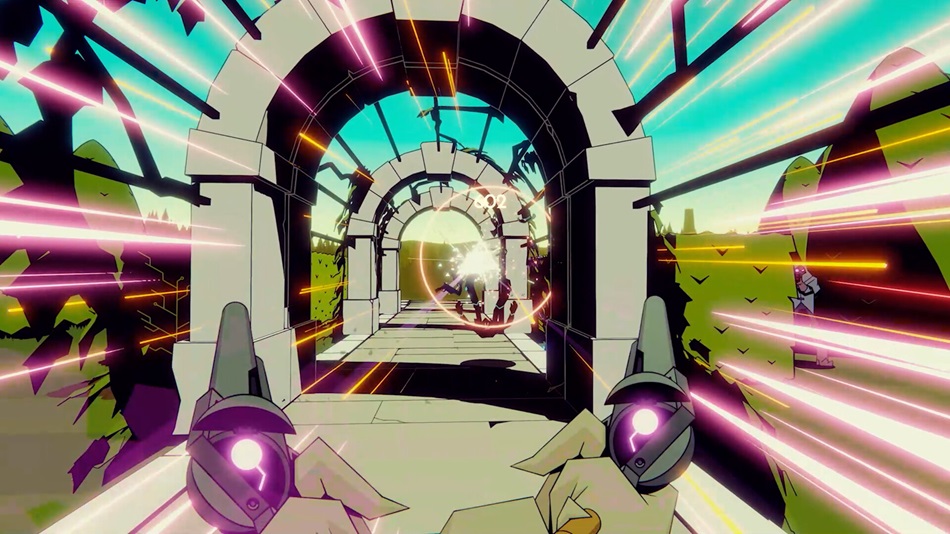
In FPS mode, players control one Bastard at a time, though they travel in pairs when they can. It’s possible to swap between teammates at the push of a button, based on personal preference or on which character’s abilities work best in a given situation. For instance, Hopalong (my favorite) has a lasso that freezes opponents while dealing DPS and an ability where he can freeze every enemy on the map for a short period. In contrast, Casino’s special ability instantly kills a random foe.
Each Bastard also has distinctive movement rates, sneakiness levels (how easily they’ll be detected by enemies) and weapons such as Billy’s custom six-shooters, Judge’s sniper rifle, and Roswell’s “mason ray” — basically, their fancy name for a big, honkin’ laser cannon. Learning the ins and outs of each character’s attacks and abilities takes some time, but makes combat encounters easier once mastered.
If a combat encounter is successful, the team can continue exploring the planet. However, there’s some risk/reward here — if a team stays too long, strong foes begin appearing. Each one is increasingly difficult to defeat, and if the team keeps defying the odds, the final foe is literally indestructible. This mechanic means players wont be able to hoover up 100% of the loot and should wisely beam back to the ship at opportune moments rather than face these enemies.
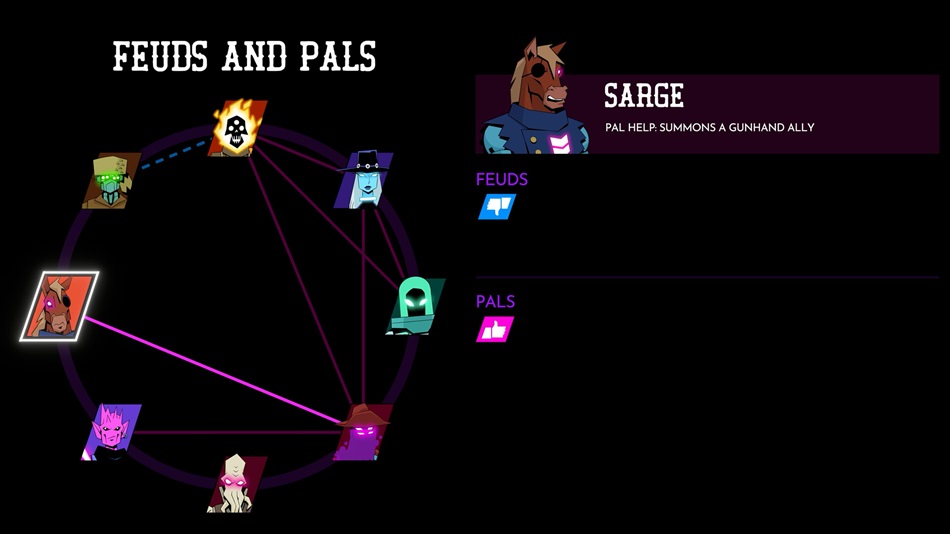
Adding to Wild Bastards‘ difficulty is that some characters might refuse to work with others while on a run. These fallings-out are random and might put a crimp in the player’s strategic plans. On the other hand, characters members may also become pals, which grants them additional boosts in battle — the Bastard known as Smoky will incinerating any enemy who damages his friend, as an example.
Overall, combat is fast and satisfying. The weapons are a joy to use, and the array of abilities cater to any playstyle. there are a few small hiccups with enemy AI, though. Once in a great while, the AI forgets to move an enemy around, leading to some incredibly easy kills and sometimes it’s difficult to locate the final enemy on a map, leading to some less than inspiring searching. However, the overall feeling of being both hunter and prey is exhilarating.
In terms of narrative, Wild Bastards tells an interesting story about loyalty, betrayal, and even the nature of faith. It deftly uses humor in even the most serious situations to keep the overall tone lighthearted — it’s a bit like an extremely profane, old-timey Western. The interactions between characters were also a treat, such as Sarge’s pontificating about his war record, or Preach’s sermonizing/lusting after Roswell. I just wish there had been a more definitive final battle, as the ending sequence was a bit too abrupt to be a satisfying conclusion to the tale, and despite the roguelike nature of the gameplay, there are definite objectives and a clear endpoint along the way.
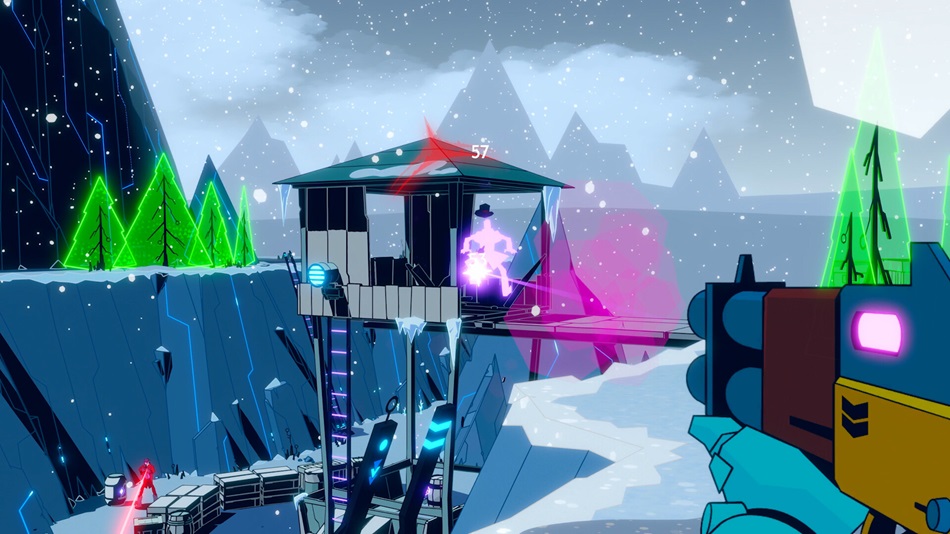
Wild Bastards was a joy to play. Despite a few small rough spots with enemy AI and the general scourge of RNG, I looked forward to each play session. Even after the campaign credits rolled, I found that the game offered a staggering number of challenge mode missions, and I plan to put more time into it as the completionist in me looks forward to unlocking the achievements while conquering every map and mission.
Wild Bastards sounds like it shouldn’t work. Its foundation is a patchwork of different genres frankensteined into a single title and the frenetic FPS portions are broken up by long stretches of slow-paced tactical movement and galactic navigation. Despite all this (and the damned RNG) I can’t deny that it all works. The story is filled with fascinating and funny (if not likable) characters I wanted to see succeed. The tactical portions present interesting choices, and the FPS sections are fast and furious. if there was ever a game where the whole was more than the sum of its parts, it’s this one — and it comes highly recommended!
Rating: 8 out of 10
Disclosures: This game is developed by Blue Manchu and published by Maximum Entertainment.It is currently available on XBX/S, PS5, Switch, and PC. This copy of the game was obtained via publisher and reviewed on the PC. Approximately 16 hours of play were devoted to the single-player mode, and the game was completed. There are no multiplayer modes.
Parents: According to the ESRB, this game is rated M and contains Strong Language, Violence. The official description reads: This is a first-person shooter in which players assume the roles of surviving members of an outlaw space gang on the run. Players travel from planet to planet completing quests, recovering lost gang members, and engaging in firefights with enemies (e.g., other outlaws, robots) across western-themed towns. Players use laser pistols, shotguns, blaster rifles, and explosives to kill enemies in fast-paced combat. Battles are accompanied by realistic gunfire, explosions, and cries of pain. Enemies disappear amid smoke and colorful light effects when killed. The words “f**k,” “c*ck,” and “c*nt” are heard in the game.
Colorblind Modes: There are no colorblind modes available.
Deaf & Hard of Hearing Gamers: This game offers subtitles. The subtitles cannot be altered and/or resized. Story-based dialogue is completely subtitled. In game, a visual signal indicates the direction from which enemy movement/speech can be detected, but in-game dialogue does not have subtitles. This dialogue does not affect gameplay, but it does represent banter between characters that assists with world-building. The indicator is not always on screen, but upon detecting an enemy’s movement or speech, a second indicator appears on the player’s compass, approximating the direction of the enemy’s location. Despite these two indicators, it is possible to be surprised by enemies. The game is not fully accessible.
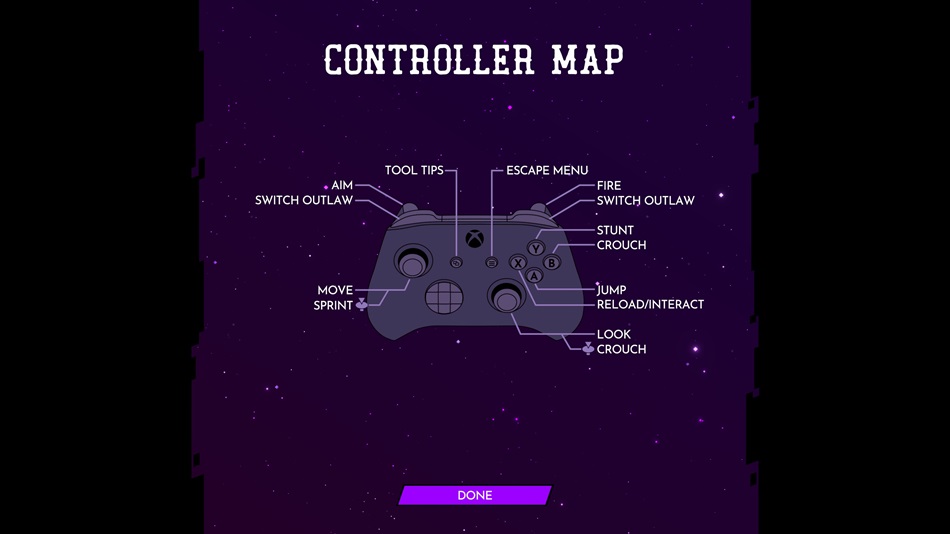
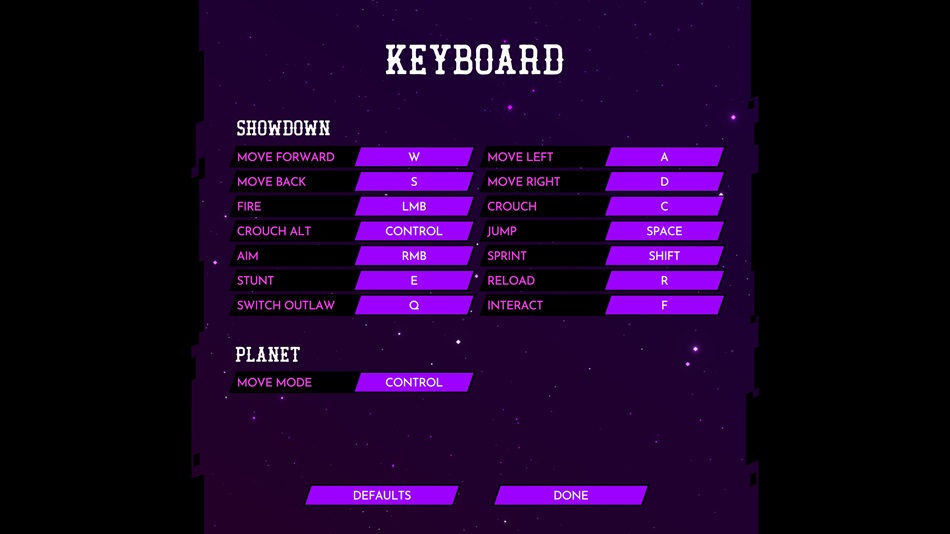
Remappable Controls: Certain functions are remappable. Keyboard controls are completely remappable, but controller functions are not remappable.

He juggles this passion for gaming with his most important job, being a husband and dad.Fortunately, his boys are growing up as gamers (with decidedly more skill, much to his annoyance) and he has a very understanding spouse.
He hangs out on Twitter sometimes as @JPSJeffOrt, Facebook FAR less frequently, and while he misses performing all the interviews from his former online life, he’s much more relaxed now!
- Axis Football 2026 - October 28, 2025
- Dungeons & Dragons Neverwinter Nights 2: Enhanced Edition Review - September 16, 2025
- MACROSS: Shooting Insight Review - May 13, 2025