The Squire Tires
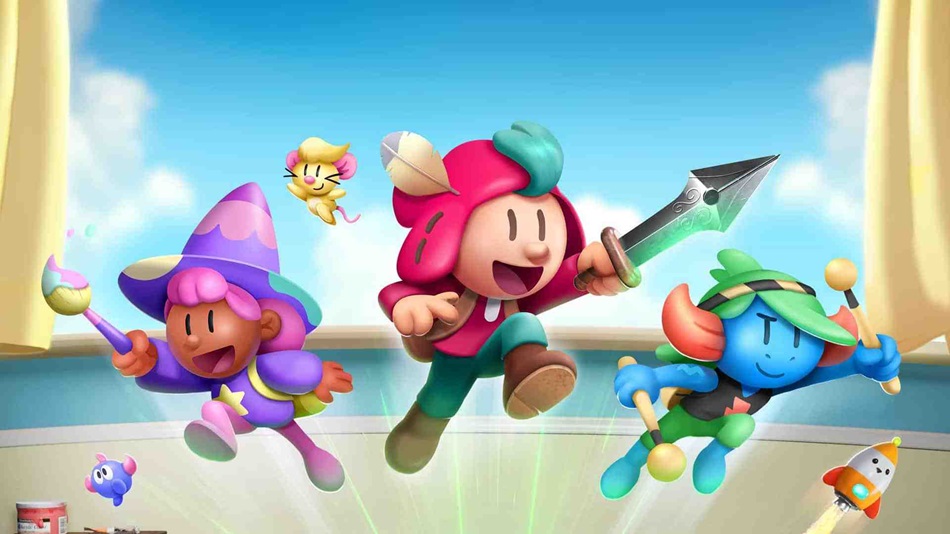
HIGH The art style has its moments.
LOW The gamefeel, the puzzles, the teeth-grittingly slow pace…
WTF The two Andy Warhols in Artia (which is two too many)
The Plucky Squire has indie smash hit swagger. The concept? Main character Jot is a Link-like storybook hero who can alter his book’s world and even venture into the ‘real world’ outside of its pages. It immediately looks like a winner thanks to a charming art style, and the mechanical ideas shown from the earliest trailers pricked up the ears of huge swathes of the market.
Sadly – and it brings me no pleasure to say this – The Plucky Squire is bad. So bad, in fact, that I’m in the ludicrous position of admitting that this bright, cheery title was the worst thing I’ve played this year, and that I gave up before I finished it.
I sensed trouble within minutes of starting — or, I should say, within minutes of being given some meaningful control, because The Plucky Squire is obsessively chatty from the start, and it remains so throughout. Everything about the way Jot controls, both in the Zelda-esque 2D, top-down world of the storybook and the Mario-ish 3D real world, feels wrong. His sword swing is sluggish, he moves slowly, and his roll has a noticeably staccato rhythm to it. Playing Squire at anything less than 60fps further compounds these issues.
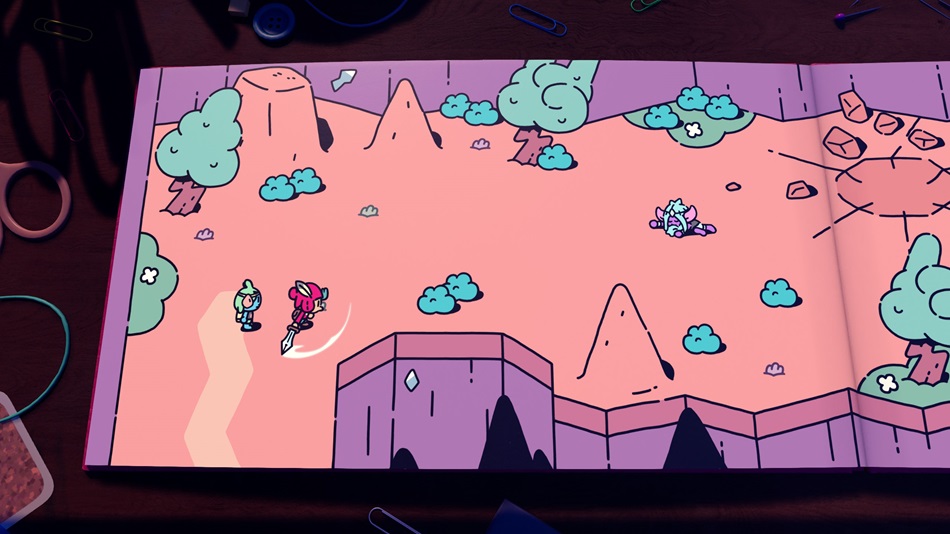
Zelda is not strictly about combat, but even in the ‘86 original Zelda, Link’s sword thrust was well-tuned and intuitive. Jot’s is not, and because many screens involve killing enemies, it’s not possible to ignore how skewed the gamefeel is. Enemy HP is too high as well, and everything takes too long to kill. There’s a half-baked upgrade system, but I felt forced to beeline for the damage upgrades to help speed things up. It’s just not good.
The other half of the Zelda equation is made up of puzzles, and Plucky Squire infuses its brainteasers with a text-based word-swapping element. Because Jot lives in a storybook, his adventures appear on the page as sentences. Certain words in these sentences can be picked up and shuffled around, and these changes alter the storybook page to suit the new sentence. The book may describe a lily pad as “small,” and it is indeed unable to hold his weight, but if Jot finds the word “big” somewhere else, he can pop it into that sentence to make the pad big enough to jump to.
Nice concept, flavorless execution. I don’t expect or want the puzzles in Plucky Squire to be brain-burning monstrosities, but what’s on offer in Squire will drop someone’s cranial temperature to absolute zero. It’s evident within seconds what’s required, there’s no room for unforeseen solutions, and it’s always just a matter of executing the sequence – and a sequence is often hampered by stodgy combat and incessant, play-stopping quips from the characters.
It also bothers me in particular that slotting in the wrong word doesn’t cause its own changes. Every valid sentence construction should enact its rule, with no exceptions. With the lily pad, if I put the word “stone” in instead of “big,” it should rightfully turn to stone. Instead, the sentence simply rejects it rather than altering the scene accordingly.
Then there are the 3D sections. While Jot’s moveset is unchanged, there’s more of an emphasis on platforming — platforming which is mediocre at best, stultifying at its (frequent) worst. The one-off concepts continue in 3D too, and I can’t help but kvetch about the fact that the first “out of the book” sequence has an instant fail stealth section that would’ve been tacky and outdated 15 years ago.
All of Squire’s good ideas stop at the flash of concept, and never generate the warmth that comes from meaningful mechanical exploration. Look at the slew of minigames it offers – these are meant to be cute riffs and homages to other games, but they’re flawed.
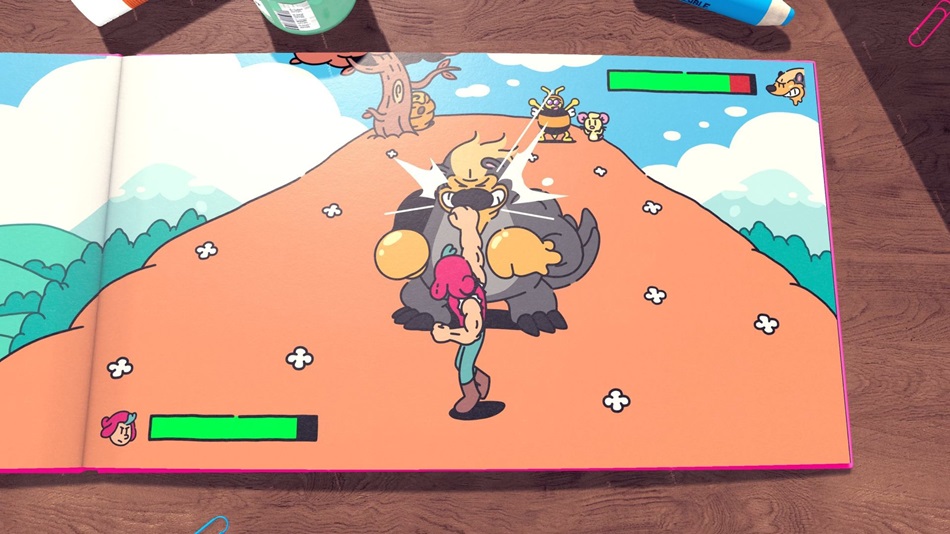
For example, the Punch-Out-style boxing episode for the first boss is terrible. Like all of his other actions, Jot’s punches and dodges just aren’t up to the standards of Little Mac’s. Furthermore, Plucky Squire is too anxious that players might not catch on to this simple fight and explains exactly how to beat it before it starts. Another early sequence that switches to a turn-based JRPG battle drags on well after the joke has been appreciated, forcing the player to sink into its fundamental mediocrity. Fortunately, the minigames can be skipped – I just wish other elements could be passed over as well…
It’s not even a matter of style over substance in Plucky Squire, because the art style, while striking and technically competent, is hollow and derivative — it lands somewhere between a twee Adventure Time with the numbers filed off and the DIY art label on a middling craft farmhouse ale. It’s sort of unique for a game to look like this, but so much art elsewhere looks exactly like this. There’s no surprising fire, no distinguishing eccentricity… no sense of character that wasn’t spooned out of a can.
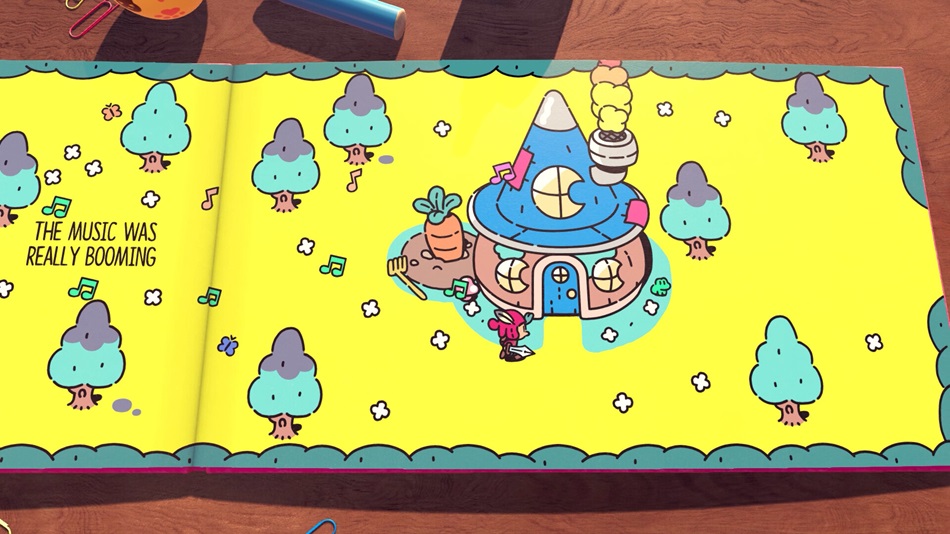
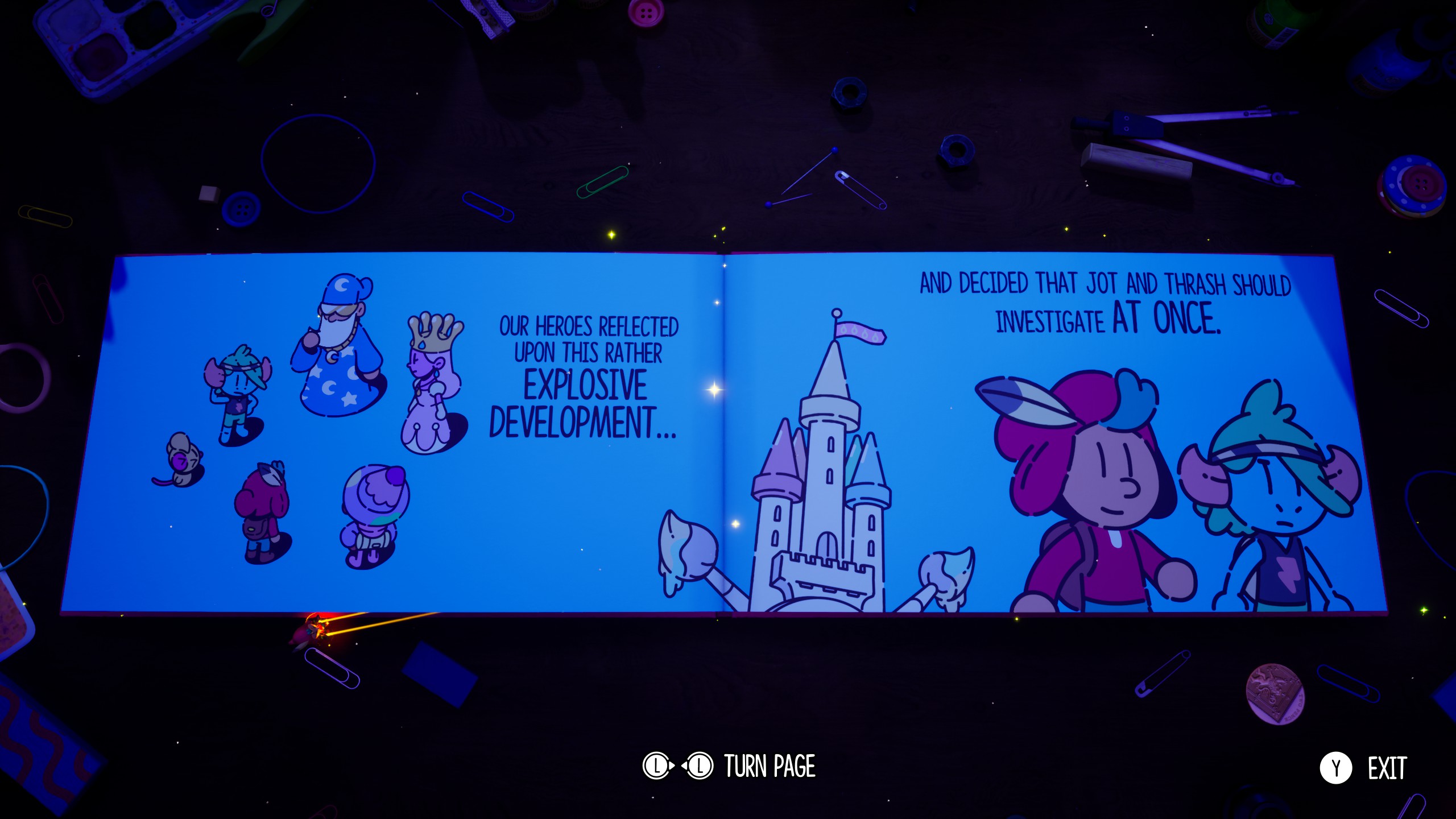
The story of this storybook also grates. One the characters is a wizard named Moonbeard who wears cool shades and is also a DJ. There’s a mountain with a candy-colored heavy metal theme called Trarrg, and a swamp full of actor-snails that speak in bad couplets. It’s all so cringe-inducing, and frankly, trying way too hard.
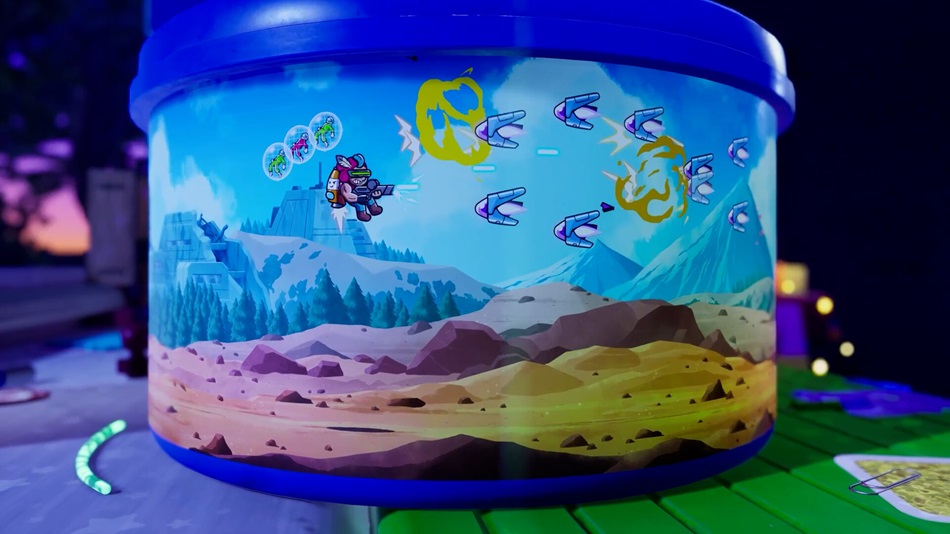
Cheeriness laid on thick can work, but Plucky Squire is so flat in its optimism that it comes across as dopey. There’s nary a shade of melancholy or maturity here, which is essential to great children’s stories. However, even if I liked the story – which I didn’t – it incessantly interrupts the gameplay.
One mandatory quest involves bringing pigs — sorry, I mean “Rubboinks” — back to their pen. After each one is dropped off, the jovial farmer stops Jot to let him know that, hey, he just dropped off a Rubboink! When dealing with the aforementioned snails, Jot must gather two different volumes of a book, one on each side of the screen, all with running commentary from the surrounding snails. When the sequence is over there’s an unskippable, joyless “skit” scene where the snail actors do their little play.
The storybook conceit itself also intrudes. Every time Jot leaves a screen, the book has to zoom out, flip the page, and zoom back in before he can move again — and some of these screens consist of a path with nothing on it that takes two seconds to traverse. Even outside of the storybook there are many long pans over the level, including ones that zoom in on keys, just in case anyone was worried about having to find it themselves. My enthusiasm was already sputtering out, but the fact that I couldn’t even move through Squire’s world at anything but a glacial pace is what ultimately killed it for me. Goodbye, Moonbeard. Don’t let the hard drive hit you on the way out.
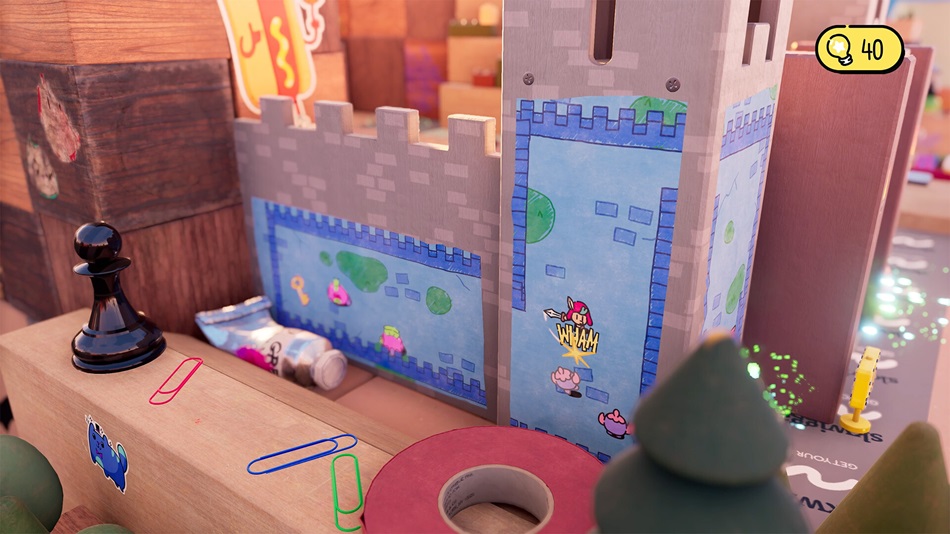
I wish All Possible Futures luck in their future ventures, but here, in today’s hyper-crowded indie scene, there are dozens and dozens of games that deserve to be plucked up ahead of this Squire.
4.5 out of 10
— Ben Schwartz
Disclosures: This game is developed by All Possible Futures and published by Devolver Digital. It is available on PC, PS5, XBO/X/S and Switch. This copy of the game was obtainedvia publisher. Approximately 8 hours of play were devoted to the game, and the game was not completed. There are no multiplayer modes.
Parents: According to the ESRB, this game is rated E and contains Fantasy Violence. The ESRB rating summary is as follows: This is an action-adventure game in which players follow the story of a squire who explores 2D and 3D realms while trying to save his friends. Players traverse platform environments, solve puzzles, and fight whimsical enemies (e.g., goblins, birds, badgers). Players use a small sword to strike cartoony enemies that disappear into puffs of smoke when defeated. One mini-game depicts an exaggerated boxing match, with characters punching and dodging to defeat each other; action is highlighted by impact sounds, brief cries of pain, and screen-shaking effects.
Colorblind Modes: There are no colorblind modes present.
Deaf & Hard of Hearing Gamers: This game offers subtitles. The subtitles cannot be altered or resized. There are no audio cues needed for gameplay. This title is fully accessible.
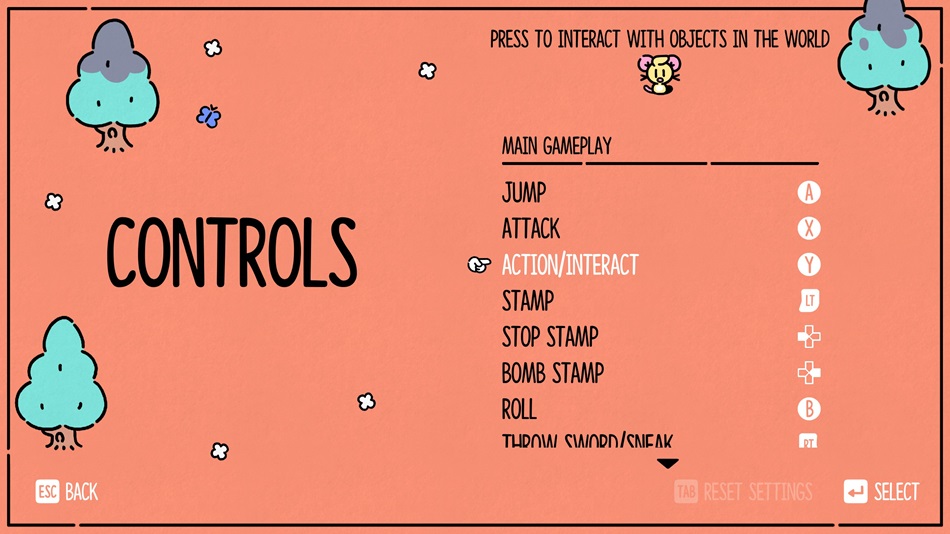
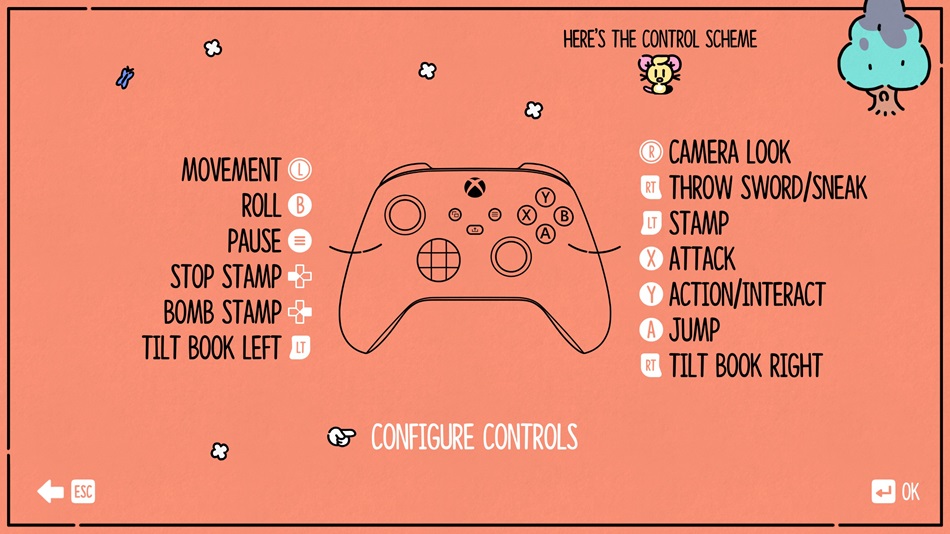
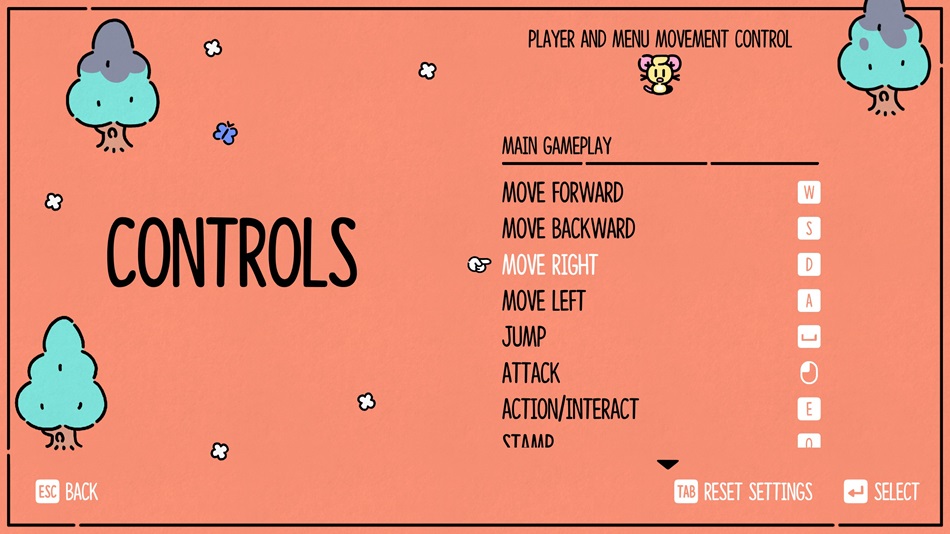
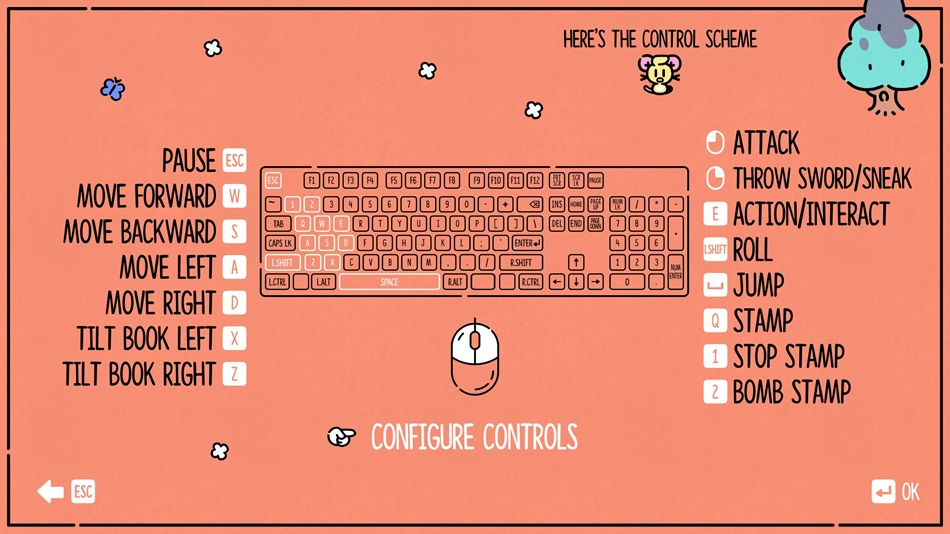
Remappable Controls: Yes, this game offers fully remappable controls.

- Sonic Forces Review - December 8, 2025
- Pacific Drive: Whispers In The Woods Review - December 2, 2025
- Slime Rancher 2 Review - November 11, 2025
Huh. I’d only heard good tings about it, but hadn’t looked into it too deeply, so I was taken aback at how negative this review is. But when I search for other reviews, I saw IGN had given it a 7. A 7 from IGN is basically like a 1/10. If even IGN doesn’t feel charitable enough to give it at least an 8, it must be terrible. There are, unfortunately, a glut of “indie” games lately that have stellar art direction and production values, but that just have no sense of game design. I recently tried Hi-fi Rush for… Read more »
In this one (possibly only) case, IGN and I agree – this is definitely a bad game! And I do agree with you on the “high production value, low quality” issue in a certain sector of the indie game scene – although I definitely enjoyed Hi-Fi Rush quite a bit. I’m terrible at it, having no rhythm whatsoever, and there are a few bad design choices (specifically with certain enemies), but overall I thought it was fresh and fun. Maybe give it another try sometime down the line – but def continue to avoid The Plucky Squire, haha. Thanks for… Read more »