Welcome Back, Zach
HIGH It’s a Zachlike by Zach. Wonderful theming.
LOW Might be too easy for the hardcore Zachheads
WTF Pachinko+Solitaire (but it rules)
If pressed to name the game designer I admire most, I’d probably say Zach Barth. Not because I enjoy his games the most (although I enjoy them a great deal) but because the Zachtronics oeuvre — beginning with SpaceChem with 2011, and concluding in 2022 with Last Call BBS — is probably the most consistent, artistically coherent body of work in the field.
Big claim, but it’s true. The Zachtronics titles are the result of intense focus — of a team working entirely within their own self-discovered ludological world, cultivating a hitherto-unexplored corner of puzzle design so sui generis that we came up with a new name for them — Zachlikes. Every Zachtronics release (excluding a couple outliers) built off a core concept of open-ended, discovery-based automation and/or programming puzzles, in which players uncover their own unique solutions to each problem at a pace that, too, belongs to each player personally. Every Zachlike borrows pieces and parts from the prior ones, but adds something of its own, pilfered in its turn by the next one.
After Last Call, Zachtronics disbanded — or rather metamorphosed into Coincidence, a company that’s the kind of outfit someone starts when they’ve made enough money to liberate themselves from the capitalist mill-wheel and can do whatever the hell they want. Coincidence released a couple of card games, an educational title to teach arithmetic, and even something called “Zach Attack!,” a scratch card-based logic affair. But sadly, nothing that could be called a Zachlike — until now.
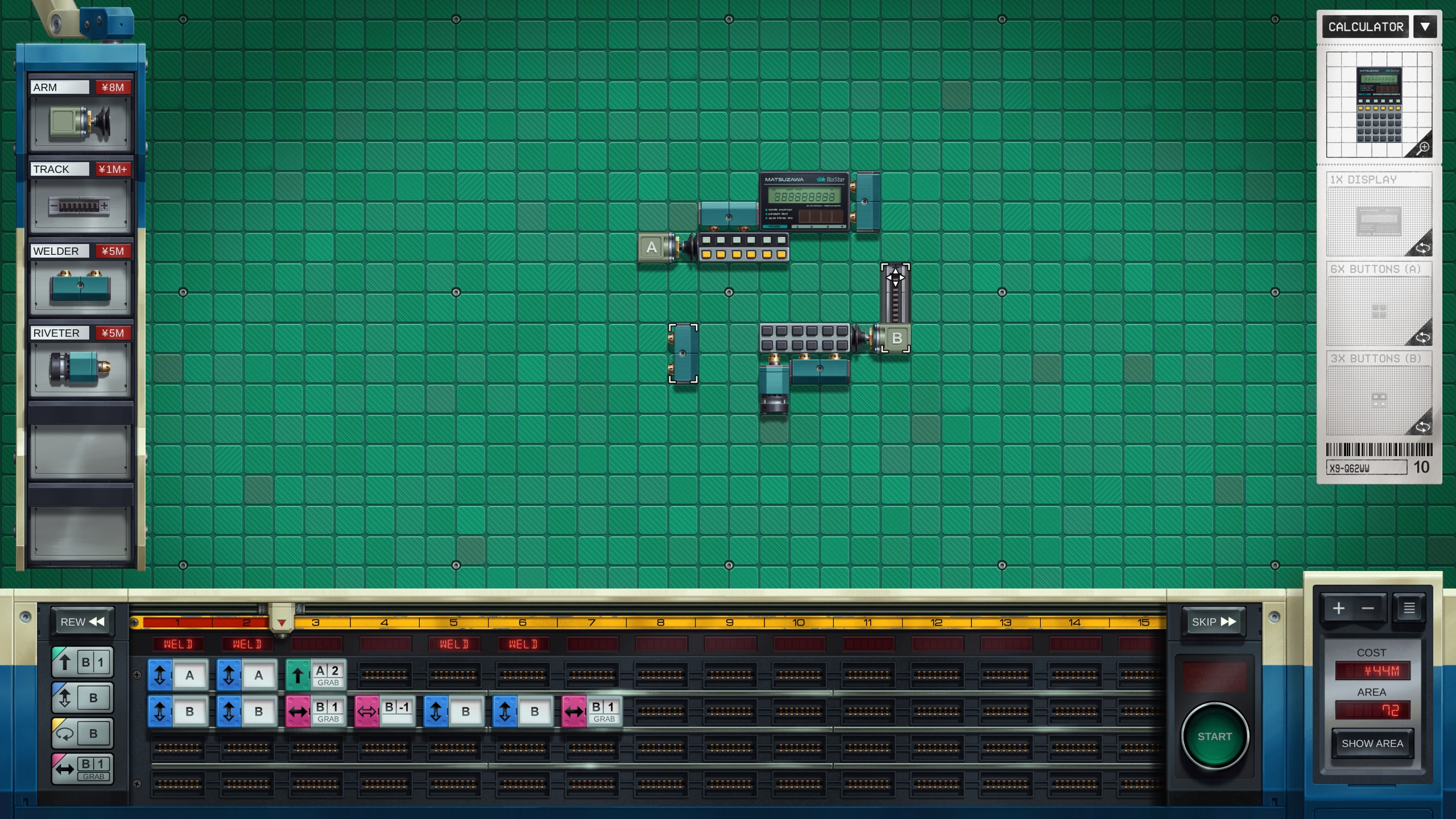
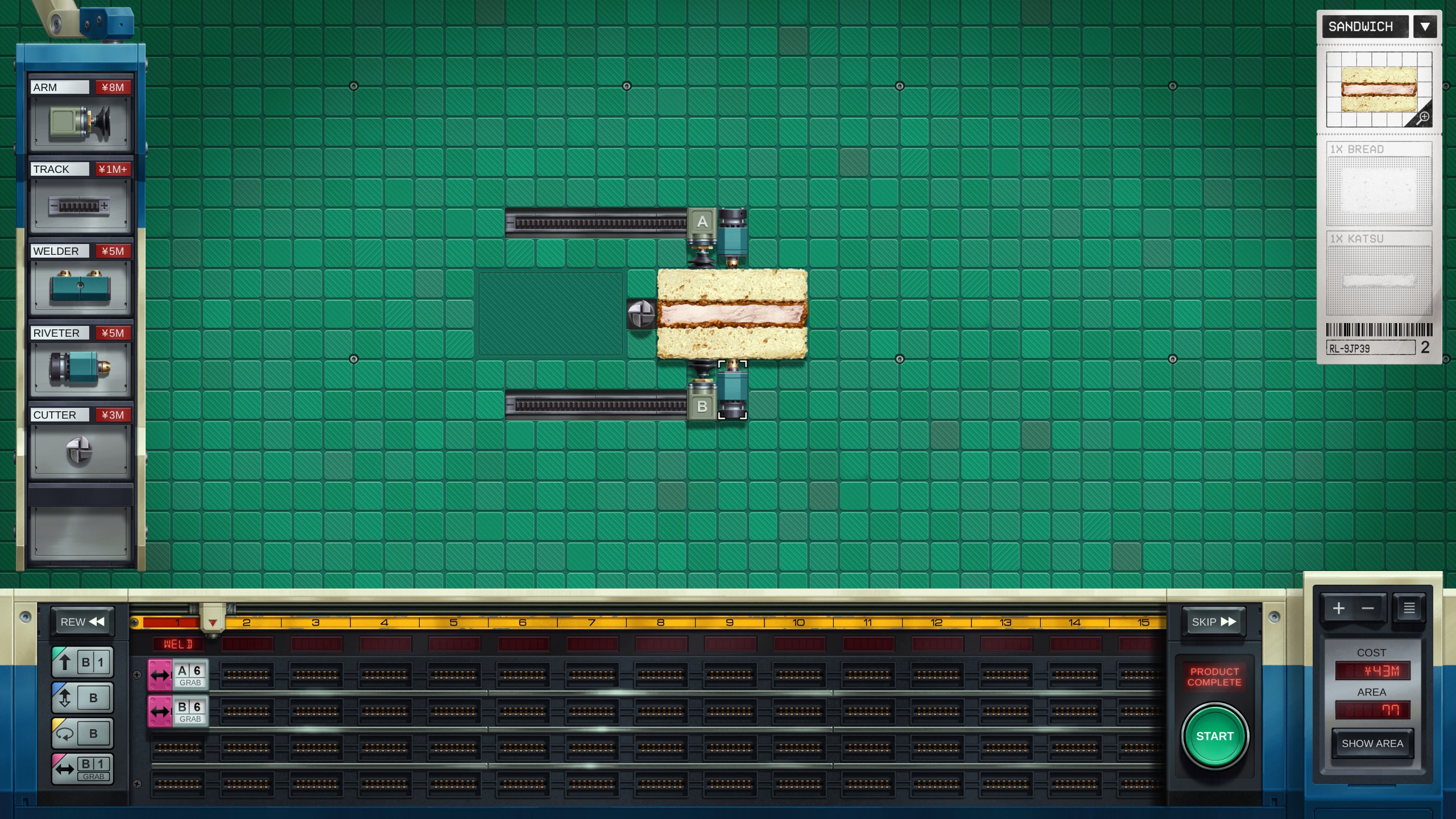
Kaizen: A Factory Story is not just something made by Zach Barth, but is a genuine Zachlike in the classical tradition. Not the most adventurous one, nor the longest, certainly not the hardest, but Barth and his crew are fully and gloriously back on their bullshit here, right down to the requisite solitaire game-within-a-game.
Kaizen takes place in Japan in the late ’80s, when the country was riding an economic boom that resulted, amongst other things, in virtuosic consumer electronics manufacturing. As David Sugimoto, a young business graduate from Indiana who goes to Japan for a sales job but ends up shepherding production factories instead, players create assembly lines for appliances, computers, video game systems, and more — it’s a comforting, nostalgia-laced parade celebrating the most appealing of era of product design before later variants of the corporate psychosis leached all character and quality from consumer goods. (Do we really think anyone is going to look back fondly on the way the PS5 looks, for example?)
The Zachtronics games don’t get enough credit for their atmospherics. Story and setting are peripheral, but realized with great taste and an eye for the historical (or fantastical) milieu being evoked. ’80s Japan is a low-hanging fruit in terms of aesthetic, but Kaizen pleases from top to bottom in this regard. The sonic landscape is a boppable city pop homage, the color palette and clean linework lifted straight from Nagai Hiroshi, and in the puzzles themselves, non-copyright-infringing homages to landmark electronics and appliances are rendered with an almost touching accuracy, down to the particular density of computer polymers, or the brushed metal of a camcorder square chassis. Even the degree to which the little red Power LEDs are recessed into the frames seems wholly convincing and accurate. This is the least abstracted, the most tangible, Zachlike puzzle pieces have ever been.
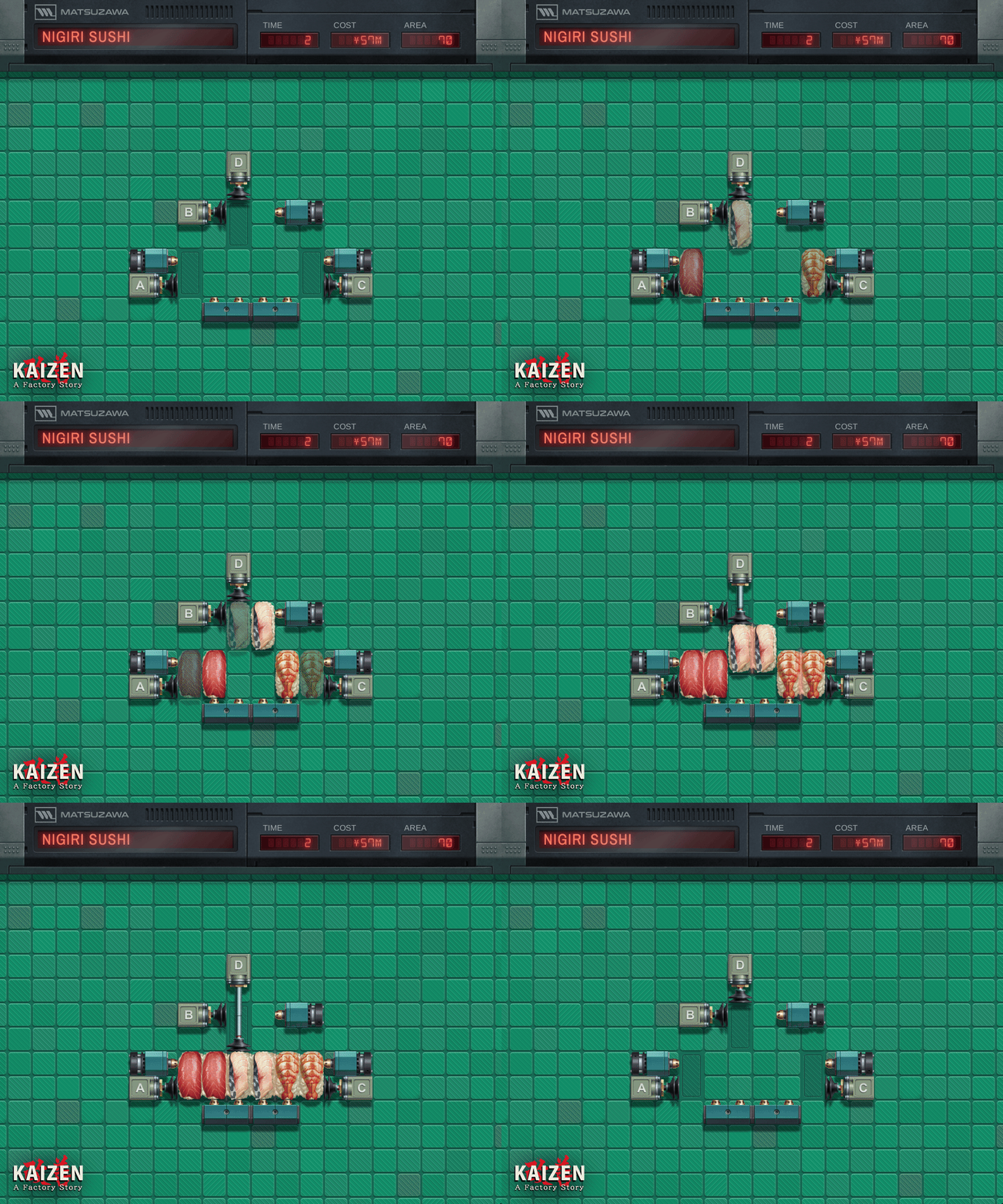
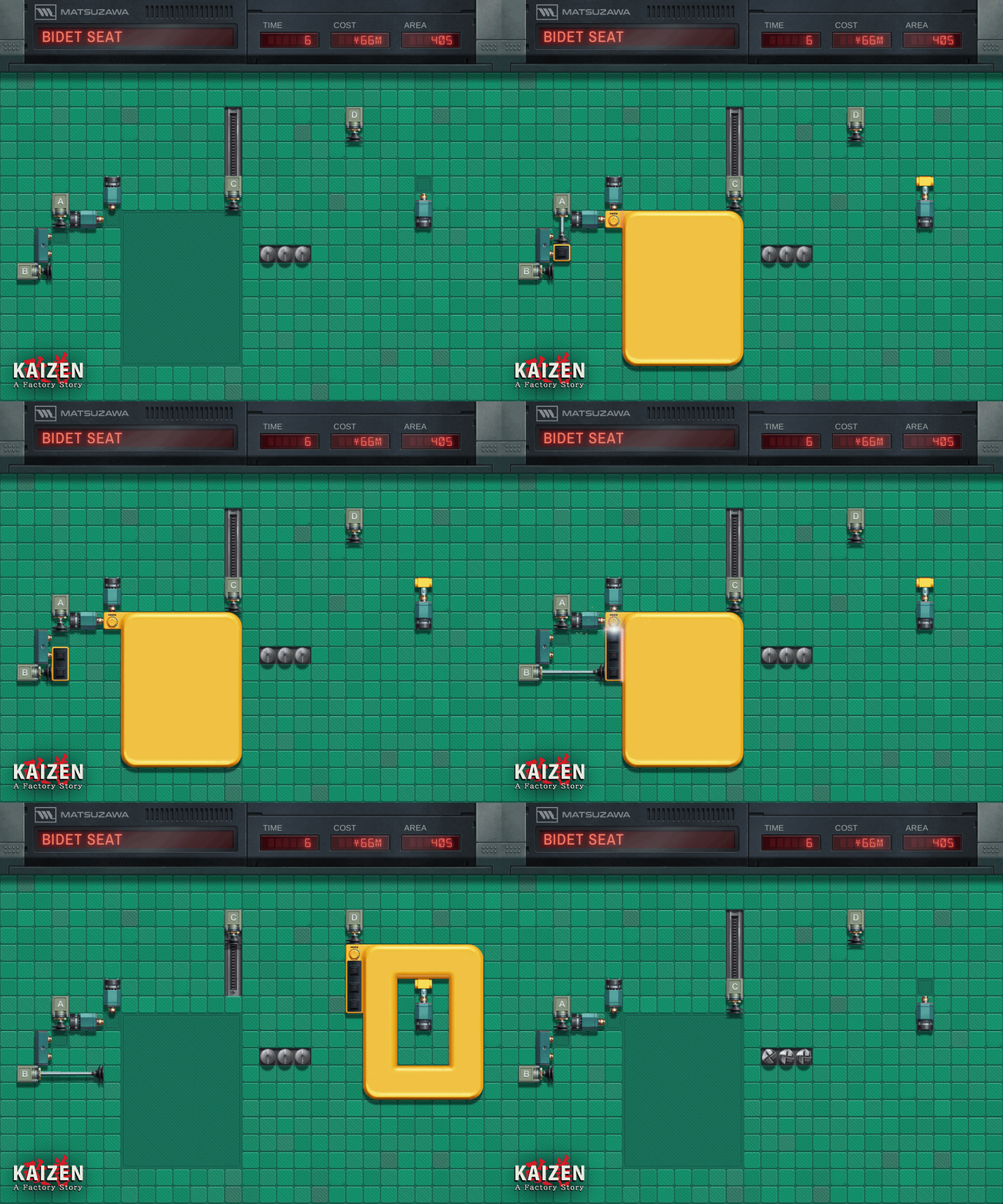
Each puzzle is a work assignment — assemble a rice cooker, a computer, or a bidet. Starting with separate, sometimes unfinished components, players have to utilize different apparatuses to modify and manipulate these pieces into a finished product. Mechanical arms push, flip, and grab components; electric saws remove material; welders and riveters fuse disparate elements together. All of these mechanisms are assigned behaviors on a timeline at the bottom of the worktable.
The challenge comes from the physicality of all of these pieces. An arm can’t be in the way of another arm, the saws will cut whatever passes through them indiscriminately, etc. As the Zachlike-likers know, much of the frisson comes from solving these micro-problems to reach a viable solution. After that, any solution can be tweaked to optimize for the three different metrics — time, cost, and size — and every solution is ranked on and compared to other players’ solutions with the signature Zachtronics histograms.
This is the proven, beloved Zachlike format, and it works just as well in Kaizen as before. All this being said, there is something every so slightly insubstantial about this particular entry.
It might be the first Zachlite, much easier and shorter than installments in the established Zachtronics canon. The Zachlikes are always joyful pain to me, as there is not a single neuron in brain with any sort of engineering bent, and I usually crawl through these games at a sub-testudinal pace — but I blazed through Kaizen. Sometimes I solved a puzzle in less than five minutes. Once, I noticed that another player had come up with more or less the exact same solution that I did — something that has never happened to me with prior Zachlikes. The difficulty does ramp up, but even later on there’s this nebulous feeling of limitation — almost as if the devs were holding back.
I feel safe saying it’s intentional — in other words, not a symptom of fatigue or disinterest on the dev’s part, but rather a purposefully lighter take on the core Zachlike themes. It’s an approach I understand, even if I personally don’t endorse it. I may not be good at Opus Magnum or Infinifactory, but their bracing, permissive difficulty is part of what I love about them, and the relative lack of challenge in Kaizen gives it less mechanical character than its older siblings, and, I would guess, less staying power in the long run. If those prior games are vast, rich, brain-pain buffets, Kaizen is a light, spritzy cerebrum sorbet.
Does that mean that I would recommend Kaizen to the Zach-curious out there? Yes and no. It’s a delightful experience, but I think newcomers would actually be better served doing what I did and jumping in at the deep end with one of Kaizen’s classic predecessors. Kaizen is best, I think, for the already-converted. It’s not on the same level as the older titles, but it’s a delightful dose of most of what made them special. A summer treat for the sickos.
Rating: 7 out of 10
Disclosures: This game is developed by Coincidence and published by Astra Logical. It is available on PC. This copy of the game was obtained via publisher. Approximately 12 hours of play were devoted to the game, and it was not completed (I got hung up on the excellent Pachi-Sol solitaire minigame for while). There are no multiplayer modes.
Parents: This game is not rated by the ESRB. There’s nothing troubling, dark, unpleasant, or violent in this game whatsoever. The vast majority of time is spent looking at a table of components and mechanisms, and the closest the game comes to toilet humor is in having players assemble a bidet.
Colorblind Modes: There are no colorblind modes present.
Deaf & Hard of Hearing Gamers: Dialogue for the dozen or so cutscenes are accompanied by subtitles, but the subtitles cannot be resized.
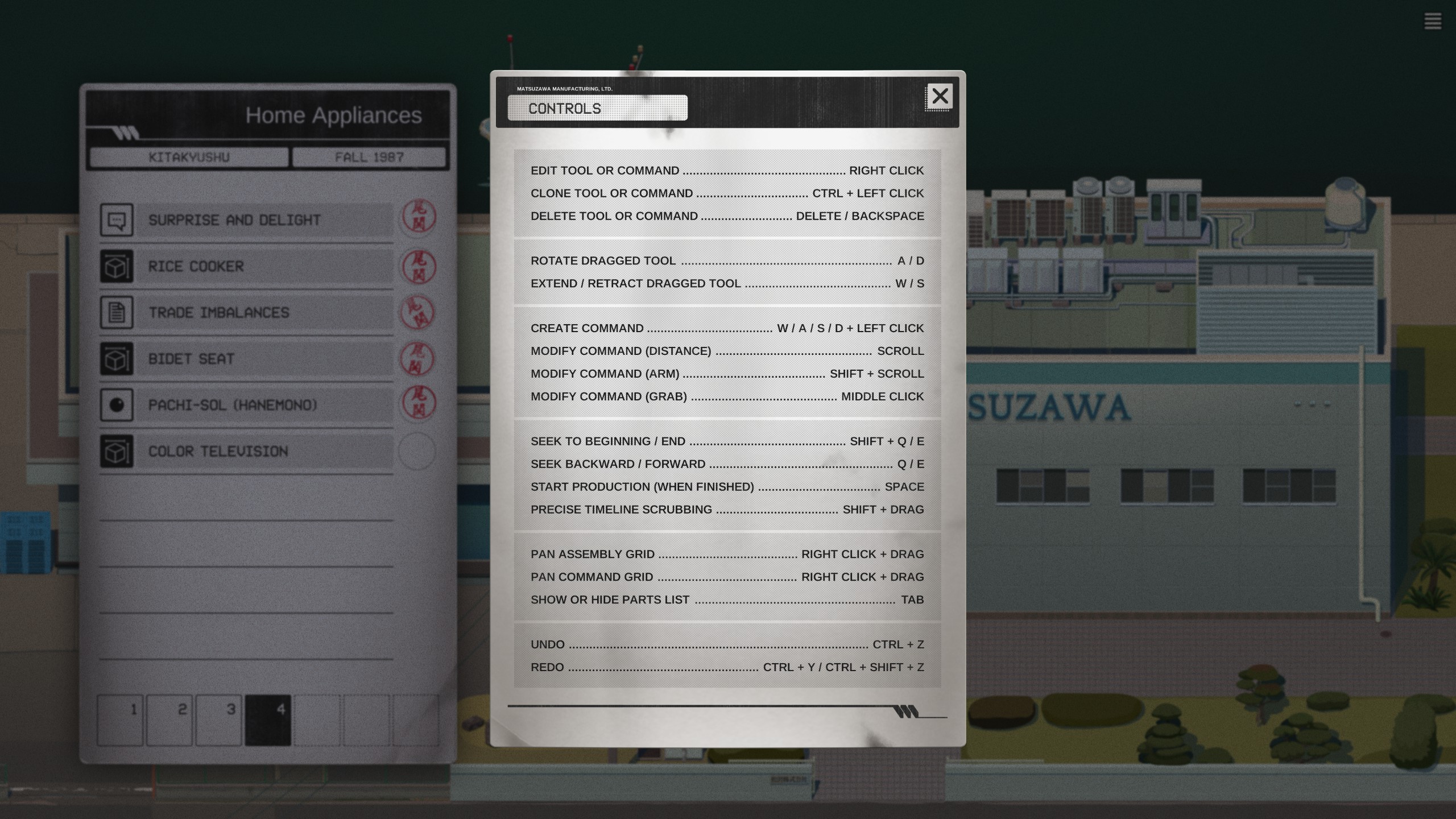
Remappable Controls: The game is keyboard and/or mouse only. The controls are not remappable. Everything can be done with the mouse alone, but there are intuitive hotkeys (CTRL+Z for undo, etc.) for faster solution editing.

- Little Rocket Lab Review - November 2, 2025
- Roadcraft Review - September 17, 2025
- Mashina Review - August 20, 2025