Build, Explore, Repeat

HIGH Unique linking of many roguelike mechanics.
LOW None of them working together in harmony.
WTF Prisons give me damage boosts?
Hi everyone! Eugene Sax here with another review from GameCritics.com!
The mythical harvest maiden is rumored to grant the desires of anyone who can find her. However, her power has been weakened by a group of dark wardens. She pleads for aid in ridding the world of these dark wardens, and she will be sure to repay anyone capable of the deed.
From Ant Workshop Ltd. and Wales Interactive comes Into The Restless Ruins, where players will take on the challenge of aiding the harvest maiden by delving into an ever-changing labyrinth and fighting the minions of the dark wardens.
In this roguelike deckbuilder, each run swaps between two modes — building and harvest.
In the building mode, players will use room cards to build pathways through a wide-open “labyrinth” space while searching for magical seals. Rooms can range in size and in orientation — some are straight hallways, others are large crossroads, some diagonal corridors, and so on. Each room has doorways that must be connected together in order to be able to travel between them. As more seals are found, more space will open up in the current labyrinth for more room cards to be placed, and eventually the player will make their way to the boss arena for that section. It doesn’t all happen in one go, though.
Once players have used all of their cards and built as much as they can, they start the harvest mode. This has the player controlling their character in a top-down isometric view of the dungeon they just built in Vampire Survivors-style combat. Players will move their character around, auto-attacking any enemies that come near them. Defeating these enemies grants players new room cards they can use in the building mode during the next round.
The challenge in Restless Ruins comes in a couple of ways.
In harvest mode, players have a torch that both lights the area and also acts as a timer that lets them know how long they have to fight and gather more cards before darkness closes in. As the torch timer decreases, so does the area that players can see. Since there’s no minimap in harvest mode, players must memorize how they built the dungeon in order to navigate it effectively. If they don’t manage to make it back to the starting point in time, players will take constant damage until they either escape, restore their torch, or die in that harvest.
In build mode, players need to manage how rooms are placed to effectively manage resources throughout the dungeon because some rooms offer abilities in harvest mode. For example, the armory room gives a temporary damage bonus, there’s a campfire that restores some of the torch timer, a magical grove that restores player health, and more. Proper placement in build mode allows players to take advantage of these things, and will then have a better shot of surviving during harvest mode.
Taking all this into account, Restless Ruins tries to marry several different mechanics and gameplay styles to create something unique in the genre. I do think this blending leads to some struggles, though.
Building a path through the dungeons is a unique way to progress in each level, but the random elements of the rooms players draw doesn’t always lend itself to successful runs. In one particular attempt, I only had one campfire in my deck and never got another one, which meant that I rarely had any way to restore my torch in harvest mode. Without that needed light, it was near impossible for me to get very far before the torch would burn out and the darkness would start to kill me.
In a similar vein, harvest mode can feel boring if the right rooms aren’t drawn. Specifically, the player’s attack starts as a basic melee swing in front of them. If players don’t find a room that gives an additional secondary weapon or new basic weapon, that melee swing gets tiresome and probably won’t lead to many successful escapes during harvest mode.
Overall, this randomness leads to a sense of soft gating for Restless Ruins. It’s like I’m being forced to grind through failed runs in order to unlock new permanent upgrades to future runs in the hopes that someday I’ll see some of the other content.
These upgrades are unlocked in a number of ways. Some are earned from the player leveling up, and others are earned by achieving specific tasks in a single run — things like having ten cards in hand at once, starting the boss fight with an empty torch, and so on. There are also difficulty modifiers that alter the amount of EXP gained in a given run, but even so it remains a repetitive, fairly punishing experience.
The current grind-heavy system also leads to boss fights that end up being lackluster. Every time I got to a boss, I had spent so much time on harvest runs beforehand that I usually defeated them without breaking a sweat. It just isn’t satisfying to stand in front of a boss and watch their health bar drop to zero within a few seconds. Those kinds of wins don’t feel earned.
So where does all this leave Into the Restless Ruins?
I personally enjoy the combination of mechanics it’s putting together, but the reliance on RNG and the resulting soft gating to success has left a sour taste in my mouth. Diehard roguelike fans may enjoy the challenge of dungeon memorization and slow progression, but I wouldn’t recommend it to casual roguelike fans, or those new to the genre.
For me: Into the Restless Ruins gets 6 punishing curses out of 10.
Disclosures: This game is developed by Ant Workship Ltd and published by Wales Interactive. It is currently available on PC, PS5, XBX/S, and Switch. This copy of the game was obtained via publisher and reviewed on the PC. Approximately 10.5 hours of play were spent playing the game, and the game was completed. There are no multiplayer modes.
Parents: According to the ESRB, this game is rated E10+ and contains Fantasy Violence and Mild Blood. Players will use fantasy weapons like a sword, axe, magical staff, bow and arrow, etc. to fight fantasy creatures (bats, skeletons, shadow monsters, etc). Some will have pixelated blood splatter as they are killed.
Colorblind Modes: There are no colorblind modes.
Deaf & Hard of Hearing Gamers: There is text in-game, but the text is not resizable. Audio is not needed for gameplay. (See video for examples.) The game is fully accessible.
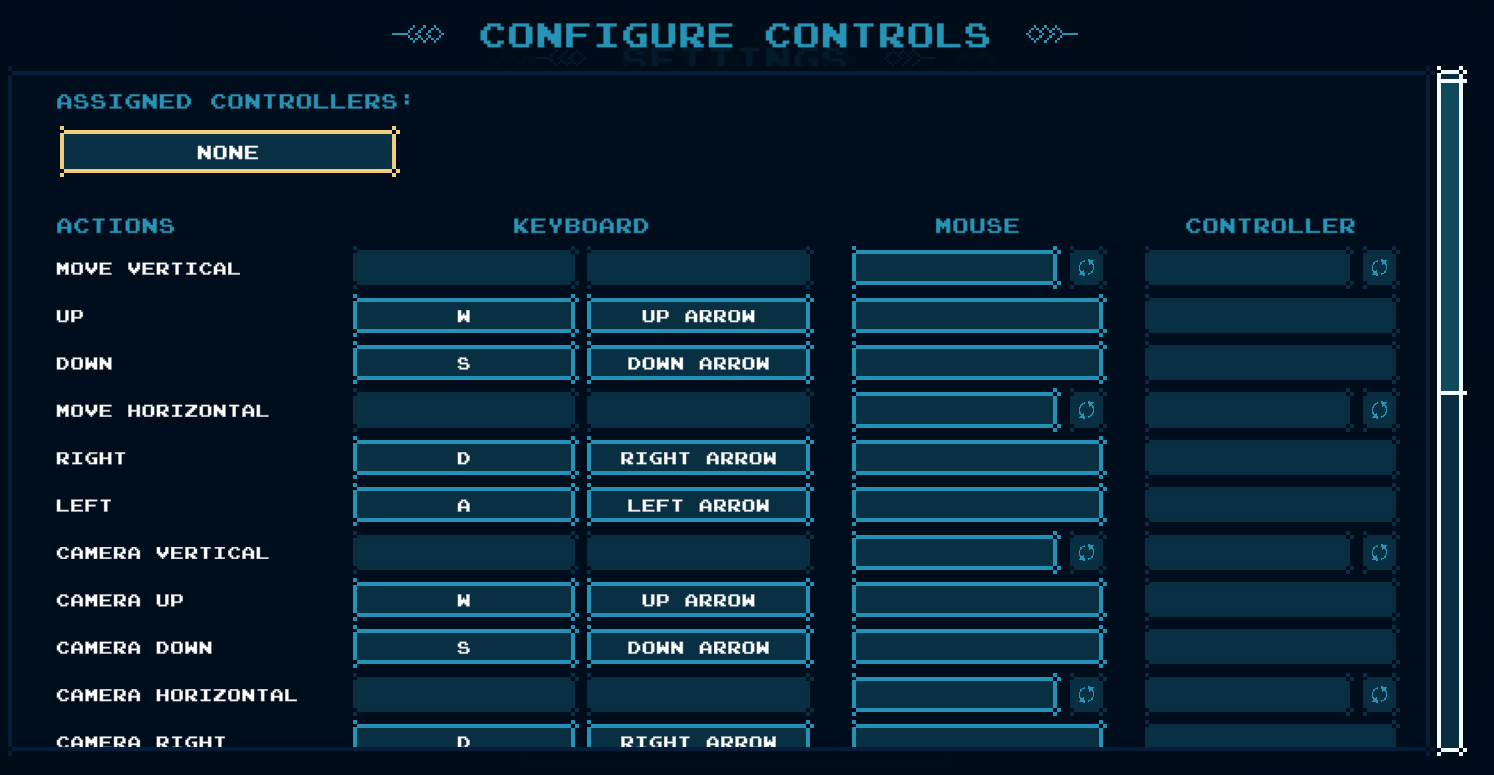
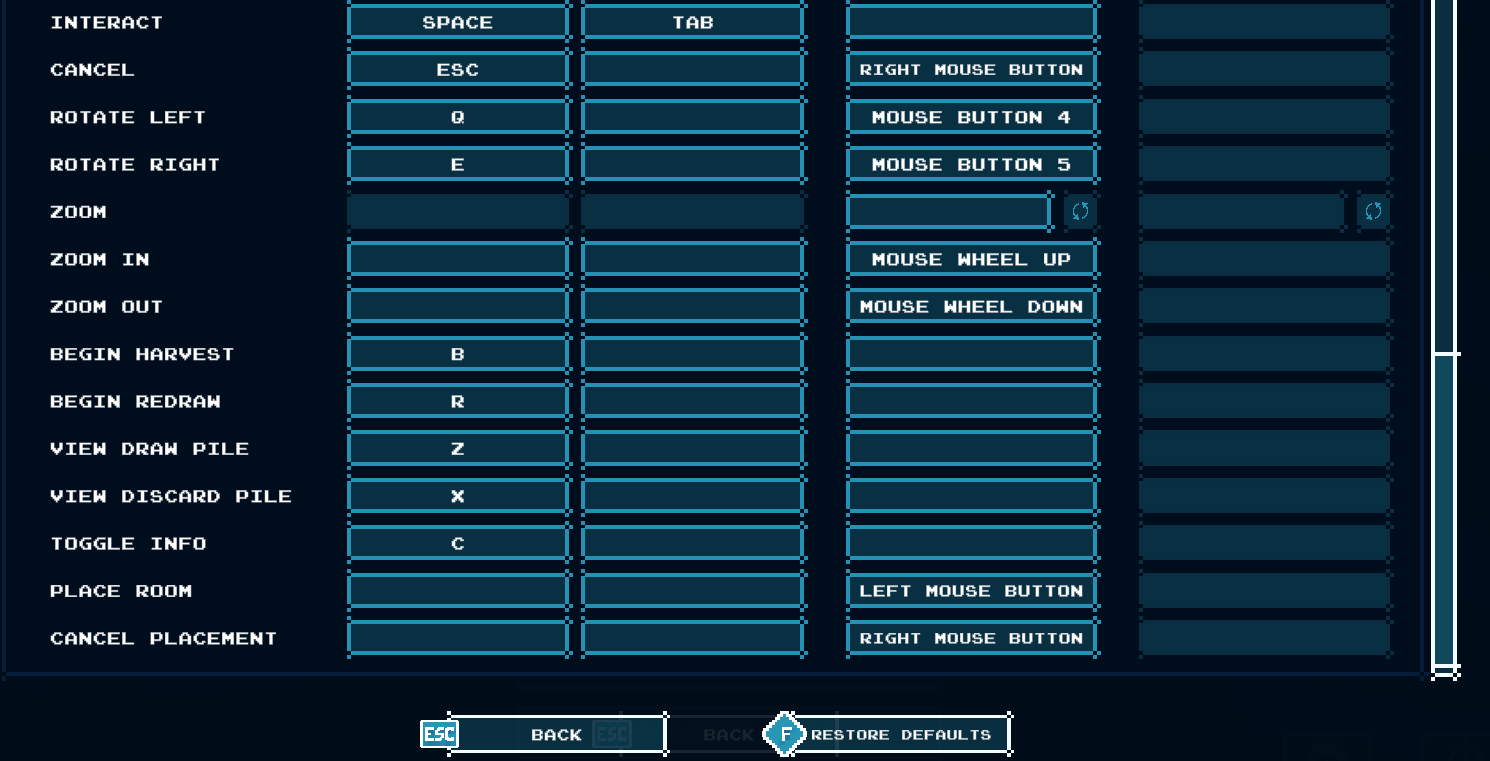
Controls: Controls are fully remappable.

While Sonic and Street Fighter were great places to start, his first love was Final Fantasy X when his dad bought a PS2. Ever since, that love for gaming has evolved -- there are a number of game worlds out there, and he intends to explore them all. RPG to horror, platformers to casual and everything in between -- if it’s available, he’ll play it.
While his time is short between writing reviews, tabletop gaming, and attempting to start a cheesecake business, he has caught all 806 pokemon and can speedrun Star Fox 64 in less than 40 minutes. He’s always looking for new things to try and new challenges to conquer. You can find him on Twitter -- @eugene_sax.
- Lumines Arise VIDEO Review - November 24, 2025
- LEGO Voyagers VIDEO Review - November 4, 2025
- No Sleep For Kaname Date VIDEO Review - October 26, 2025